
You switch the AC on and the room fills with the smell of a damp cellar. After a few minutes it fades, and the next morning it is back. Most advice online jumps straight to duct cleaning, which is the most expensive answer and often the wrong one. The smell comes from a specific part of the unit, and that part can usually be found with a torch and a few minutes of patience. This guide is about the AC itself. If the smell is in the whole apartment and you are not sure the AC is involved at all, start with our guide to the musty smell in a Dubai apartment, which covers wardrobes, drains and washing machines.
Where inside the AC does a musty smell come from?
From the places where water stands or stays damp. Air takes a fixed path through every AC, and the smell is picked up somewhere along that path.
- Filter: at the intake. A dirty filter holds dust, and in humid air that dust gets damp.
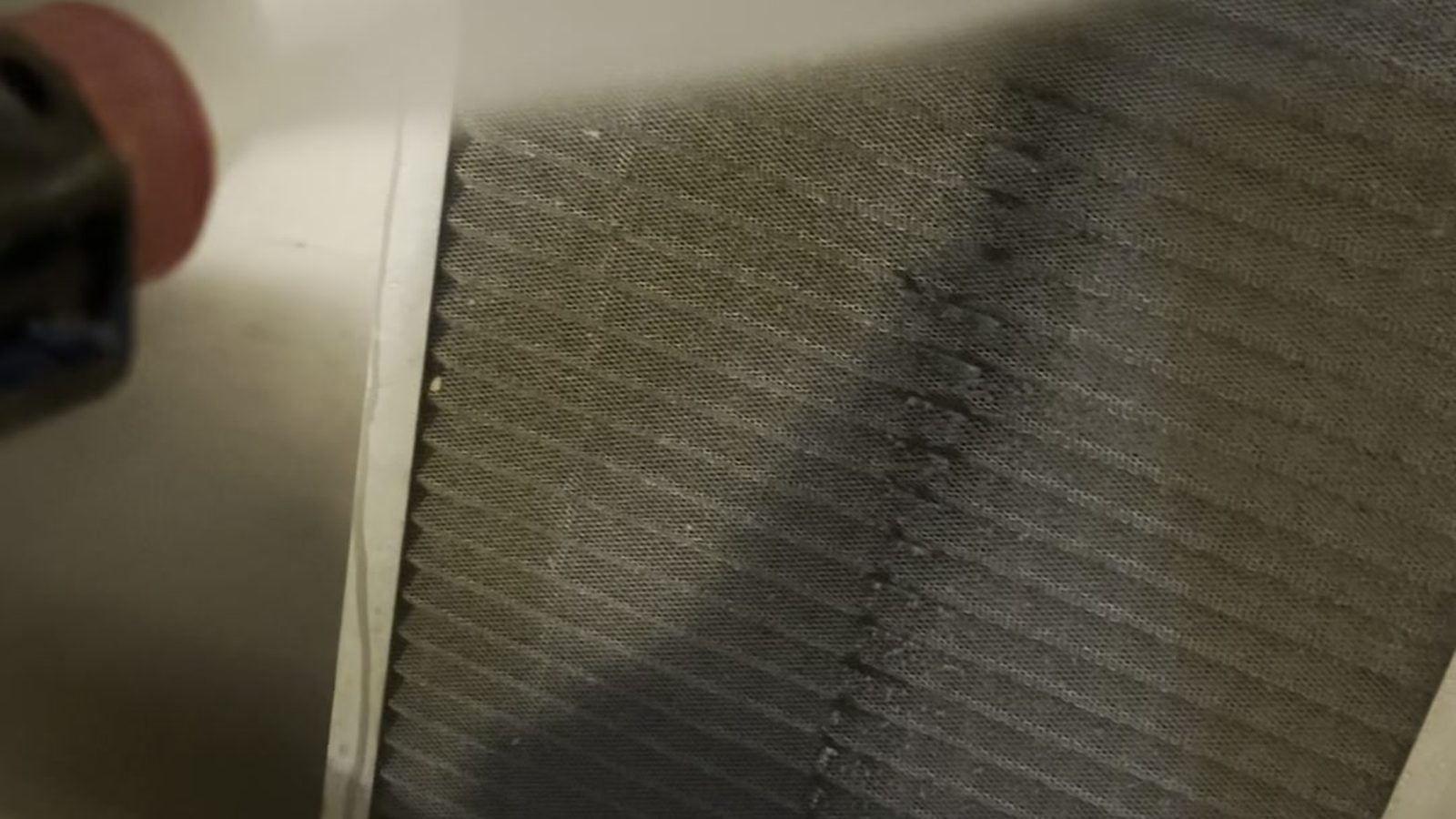
- Coil: the block of thin fins that cools the air. Water condenses on it every time the AC cools.
- Condensate tray: directly under the coil, catching that water.
- Drain: the pipe that carries the water away. If it is slow or partly blocked, the tray never empties.
- Blower wheel: behind the coil, in the damp air stream. Dust sticks to its blades.
- Duct or plenum: in ducted systems and fan coil units, the short run of duct to the grilles.
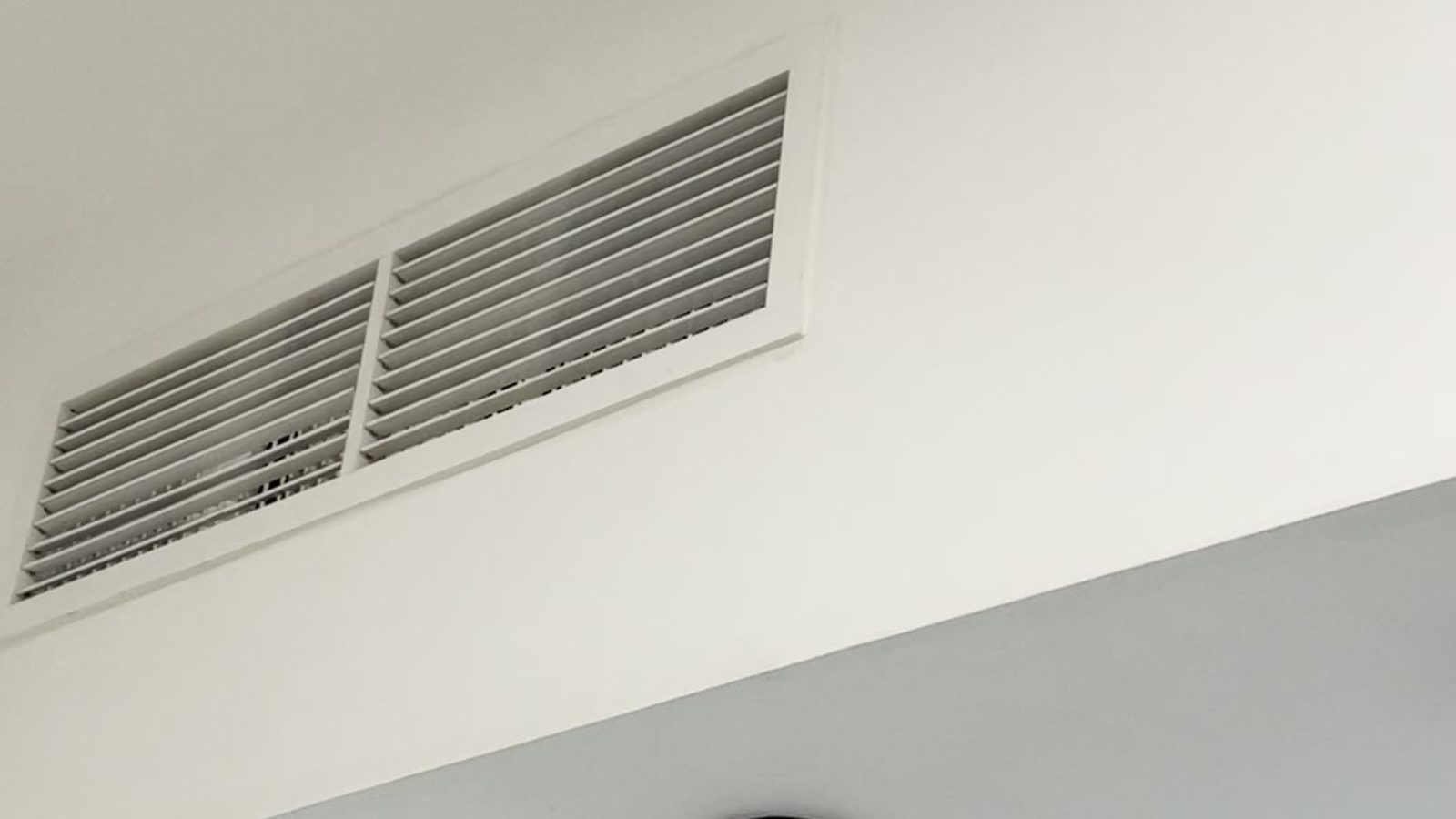
- Grille and outlet: where the air leaves, sometimes with dark spots of its own.
Dubai Municipality names the first suspects itself. Its indoor air quality guideline lists “microbiological growth in drip pans, humidifiers, ductwork, coils” among the sources of indoor air contamination, and advises to “clean drain pans often and ensure a proper slope to keep water draining”1. In our work, the tray and the drain are where we most often find the cause.
What does each smell tell you?
The type of smell narrows down the source before anyone opens the unit. Use the table as a first guide, not as a diagnosis.
| What you notice | Most likely source | What to do |
|---|---|---|
| Musty burst in the first minute, then it fades | Standing water in the tray, damp coil | Tray, drain and coil cleaning |
| Musty smell all the time the AC runs | Dirty coil and blower, sometimes the duct | Coil and blower cleaning, then inspect the duct |
| Sour or vinegar like smell | Dirty coil, standing water, old deposits in the tray | Coil and tray cleaning |
| Sewage smell from the AC | Drain line connected to a building drain without a working trap | Plumbing check, often the building’s job |
| Smell only in one room of a ducted system | That room’s duct branch or grille | Inspect that branch before cleaning all ducts |
| Burning, hot dust or electrical smell | Electrical fault, motor, or dust burning on a heater | Switch off and call a technician, not a cleaner |
| Smell plus water dripping from the unit | Blocked drain, overflowing tray | Switch off, clear the drain, then clean |
A musty smell that appears only after the AC has been off for a few days, and not during constant use, points strongly to water standing in the tray between cycles.
Why does it start when you switch on, and why in winter?
Because the water has been standing still. While the AC cools for hours in summer, condensate drains steadily and the tray rarely sits full. When the unit is off or cycles briefly, what is left in the tray stands, and the coil stays damp between runs. The first air through the unit carries whatever has formed there.
That is why musty AC smells often surface in December and January in Dubai. Units run less, and the outdoor air is wetter than people expect: in ten years of hourly ERA5 data, relative humidity in Dubai is higher in January than in July, even though the dew point is far lower2. Short cycles, damp mild air and a tray that does not empty completely are the usual combination behind the winter smell.
If your apartment has a fan coil unit above the ceiling rather than a split on the wall, the same logic applies with one difference: the unit is fed with chilled water from the building, and the drain often joins a shared line. Our guide to fan coil units explains which parts are usually yours and which belong to the building.
How can you narrow it down yourself in fifteen minutes?
With a torch, a cup of water and your nose. None of these steps needs tools, and none involves opening anything beyond the filter cover.
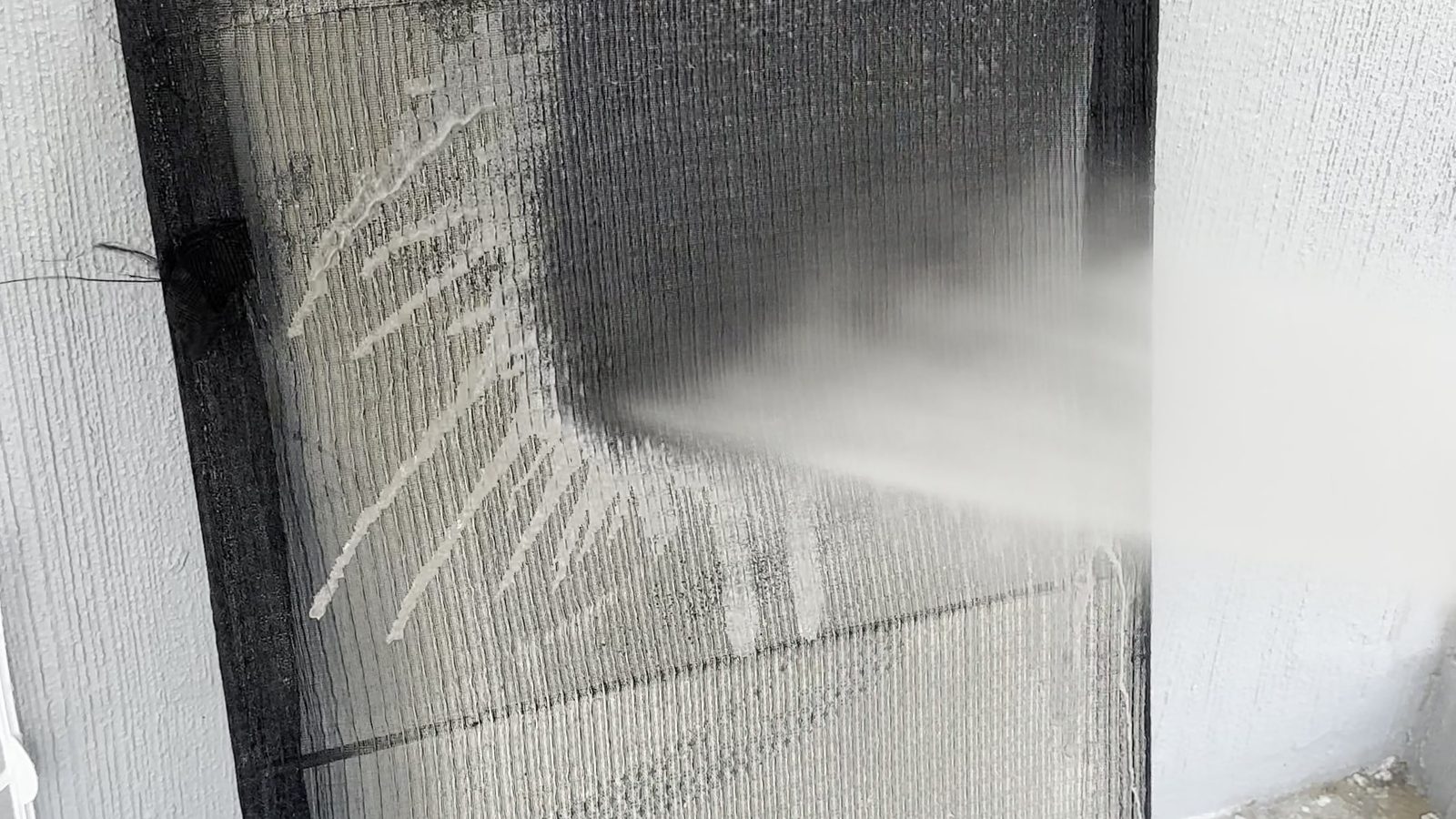
- Filter: switch the AC off, open the front cover or the return grille and take the filter out. Grey felt or a damp, sticky layer means it is overdue. Wash it, let it dry fully and put it back.
- Coil: with the filter out, shine the torch at the fins behind it. A grey or dark mat on the fins means the coil needs a professional clean.
- Drain outlet: find where the condensate leaves, usually a small pipe outside, on the balcony or into a bathroom drain. With the AC cooling, it should drip steadily. No water at all after half an hour of cooling suggests a blocked drain.
- Fan only test: if the unit has a fan mode, run it without cooling. A strong musty smell with the cooling off points to the blower, coil or duct rather than to fresh condensate.
- Grille swab: wipe the inside of the outlet with a white tissue. Black specks there are a different topic, covered in our guide to black spots around the AC vent.
Write down what you find. If the filter was the only problem, the smell should be weaker within a day. If it is not, the tray, drain and coil are next.
What does Dubai Municipality advise for trays and coils?
Regular cleaning on fixed intervals, with the tray most often. The indoor air quality guideline says coils and condensate pipes “should be cleaned at least every six months” and trays “at least every one month and based on condition”1. It also asks for records of all maintenance work, stating when and what was done1.
The guideline is written with “should”, and it lists residential buildings in its scope1. It is the most specific Dubai reference there is, and it says nothing about cleaning ducts at a fixed interval. It puts the tray and the coil first.
The US Environmental Protection Agency arrives at the same order from another direction. Even when a household books duct cleaning, the EPA advises asking the provider to “clean cooling coils and drain pans”, and its checklist for a finished job asks: “Is the coil drain pan completely clean and draining properly?”3
| Part | Dubai Municipality interval | Who usually does it |
|---|---|---|
| Filter | No fixed interval in the guideline; clean when dusty | You |
| Condensate tray | At least monthly, based on condition | Technician, as part of a unit clean |
| Coil and condensate pipes | At least every six months | Technician |
| Building and HVAC inspection | At least every three months | Building maintenance |
| Ducts | No interval given | Only when an inspection finds a reason |
When is it the duct, and when is a duct clean wasted money?
It is the duct when the unit is clean and the smell stays, or when an inspection finds something inside it. It is wasted money when the tray is still full of sludge.
The EPA does not recommend cleaning ducts routinely, only as needed, and names the reasons that justify it: substantial visible mould growth inside hard surface ducts, vermin, or ducts clogged with excessive dust and debris3. The duct cleaning industry’s own standard, NADCA’s ACR, also treats cleaning as condition based, with inspections at set intervals and cleaning when the inspection shows a need4.
In practice, the order is simple. Clean the filter. Have the tray, drain, coil and blower cleaned. Live with the AC for a week. If the musty smell is gone, the duct was never the problem. If it persists, or if dust and debris come out of the grilles, the duct is the next step. Our guide on whether AC duct cleaning is worth it goes through that decision in detail.
What should you not do?
Do not cover it, and do not spray chemicals into the unit. Fresheners, scented sprays and perfumed filter sheets hide the signal you need to find the source, and the smell returns as soon as they fade.
- No bleach on the coil or in the tray. It does nothing for a slow drain and can damage metal parts and seals.
- No household sprays into the outlet. What goes into the outlet ends up on the blower and in the room air.
- No foam cleaners pushed into a unit with a blocked drain. The foam and the dirt it loosens need somewhere to go; with a blocked drain that is your ceiling or wall.
- No running the unit with water dripping out. Switch it off and clear the drain first.
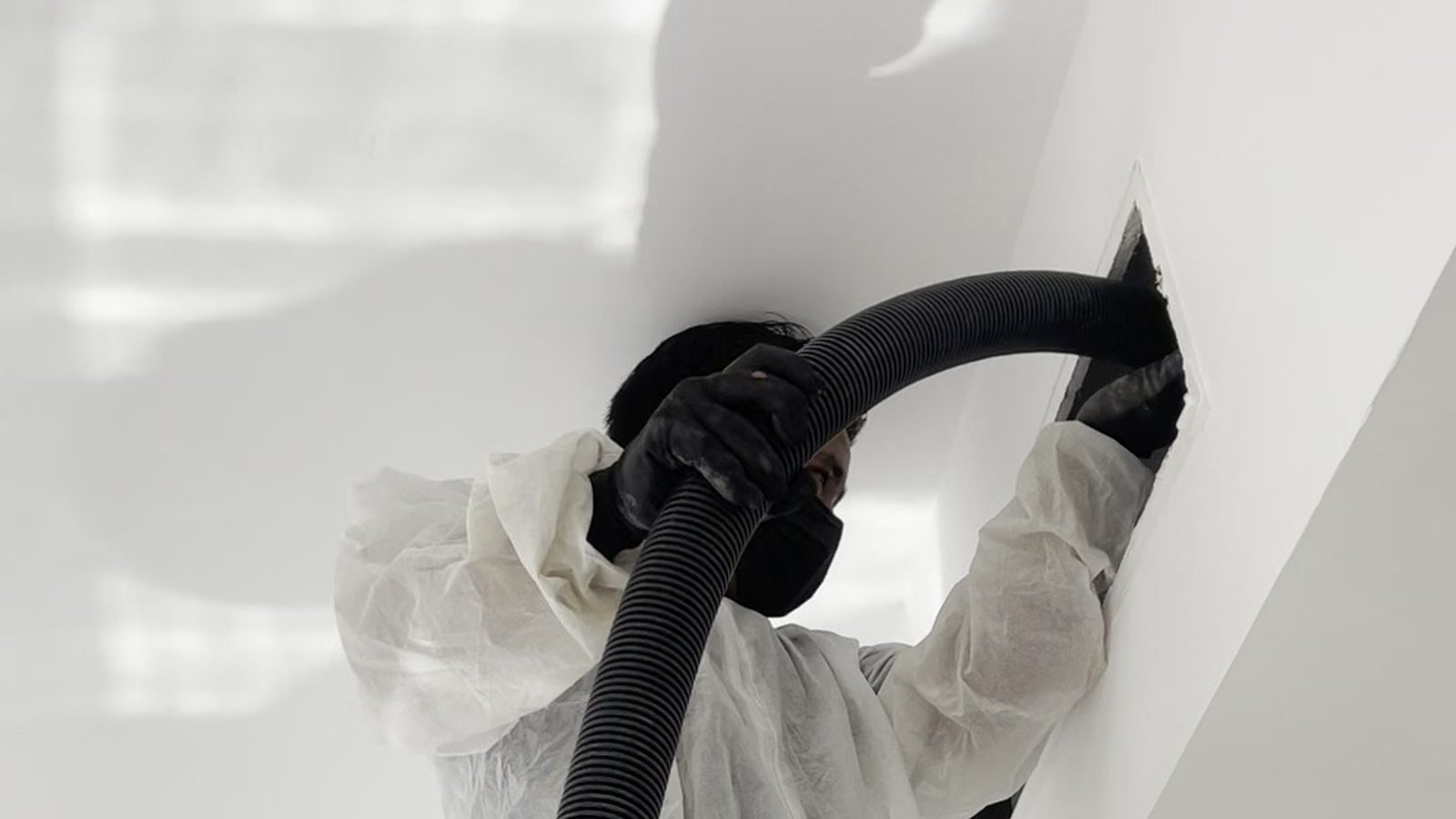
Washing the filter yourself is safe and useful. Everything behind the filter needs the unit switched off at the power supply and opened, and that is a technician’s job.
Which musty smells are not a cleaning job?
Some need a plumber, a technician or the building, and knowing that saves you a booking:
- Sweating or damaged insulation on the chilled water pipes of a fan coil unit, or on refrigerant lines. A maintenance repair.
- A wet ceiling board around the unit. The board has taken on water and usually needs replacing once the leak is fixed.
- A sewage smell from the drain line that returns after cleaning. The connection to the building drain needs a working trap.
- A smell from the building’s shared shaft that reaches you through the AC return. The building has to trace it.
- A broken tray or a cracked drain pipe. That is a repair, not a clean.
For everything that is cleaning, our AC cleaning in Dubai is done by our own technician: filter, coil, tray and drain, with the drain tested before and after, blower and grilles, and the ducts only where an inspection shows a reason. Repairs and gas refills are a separate job, agreed with you first. If the apartment also needs attention, the AC can be done on the same visit as a home deep clean, and we agree one fixed price on WhatsApp before we start.