
Ask on any Dubai forum for an AC deep cleaning company and the wish list is nearly always the same: a team that covers the furniture while it works, and that can show you the ducts and the coil before and after. Behind that wish sits a fair worry. You cannot see inside the unit, so you cannot easily tell a full clean from a filter rinse and a spray. This guide walks through a proper AC deep clean in the order it should happen, and what you can check yourself at each step.
What does an AC deep clean actually cover?
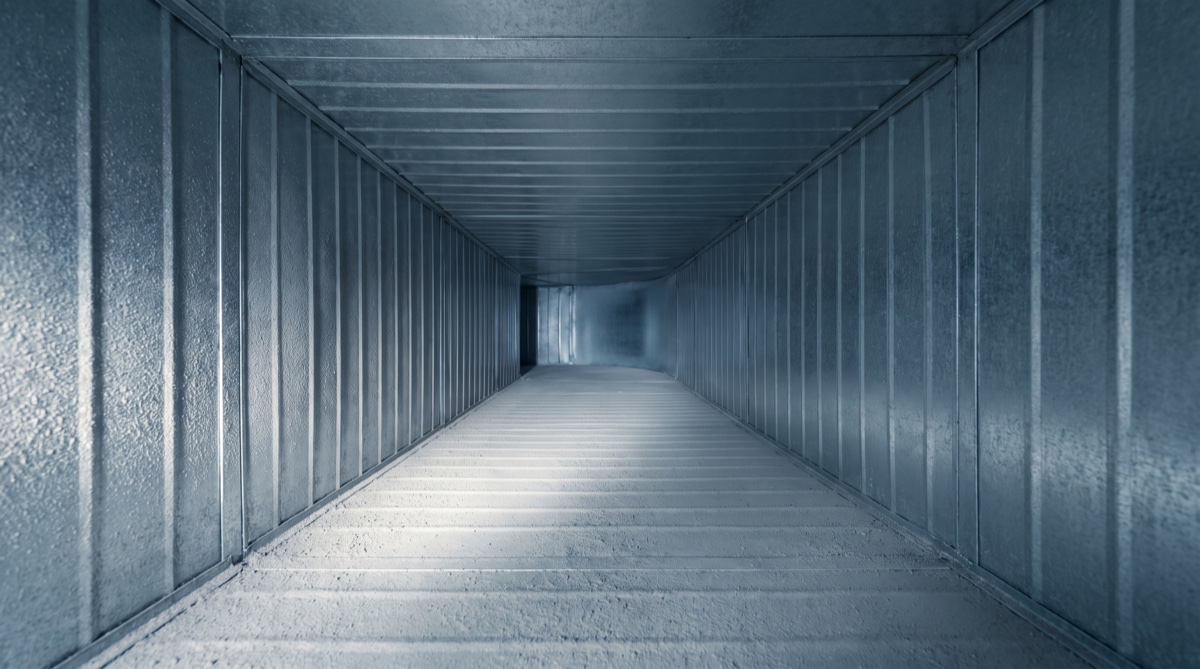
It covers every part of the system that collects dust and water: the filter, the cooling coil, the condensate tray and drain, the blower, the grilles and, on a ducted system, the ducts when they need it. Refrigerant, electrics and faults are a different job. If you are not sure which of the three AC jobs you need, start with AC service vs AC cleaning vs duct cleaning.
The most detailed public description of how the cleaning should be done is Section 4 of ACR, The NADCA Standard, 2021 edition1. NADCA is the National Air Duct Cleaners Association, and its standard sets out the work in a fixed sequence. We work to that method. We are not NADCA certified ourselves, and we say so, because working to a method and holding a certificate are two different claims.
For Dubai, the yardstick for how often is Dubai Municipality’s indoor air guideline. It asks for condensate trays to be cleaned at least every month and based on condition, and coils and condensate pipes at least every six months2. That is why the coil and the tray sit at the centre of every step below.
What should happen before anyone opens the ceiling?
A short survey, and one test most people never see: the drain test. Before anything is cleaned, the technician should pour water into the condensate tray and watch whether it drains. NADCA asks for the drain to be checked before and after cleaning1. The first test protects both sides. If the drain was already slow, the clean should not take the blame afterwards, and a line that is broken rather than blocked is a repair, not a clean.
The survey also settles what kind of system you have: a wall split unit without ducts, a ducted split above the false ceiling, or a fan coil unit on the building’s chilled water, whose valves and supply belong to building maintenance.
Then the system is switched off. Nothing should be cleaned while air is still moving through it.
Your part is small but useful. Before the team arrives:
- clear the space under every indoor unit and every access panel
- take fragile items off shelves directly below the units
- arrange the service lift or building NOC a day ahead, and roof access if the outdoor unit is up there
- take your own photos of each grille, the ceiling around it and any drip marks, so you have a before record whoever does the job
How should your furniture and floors be protected?
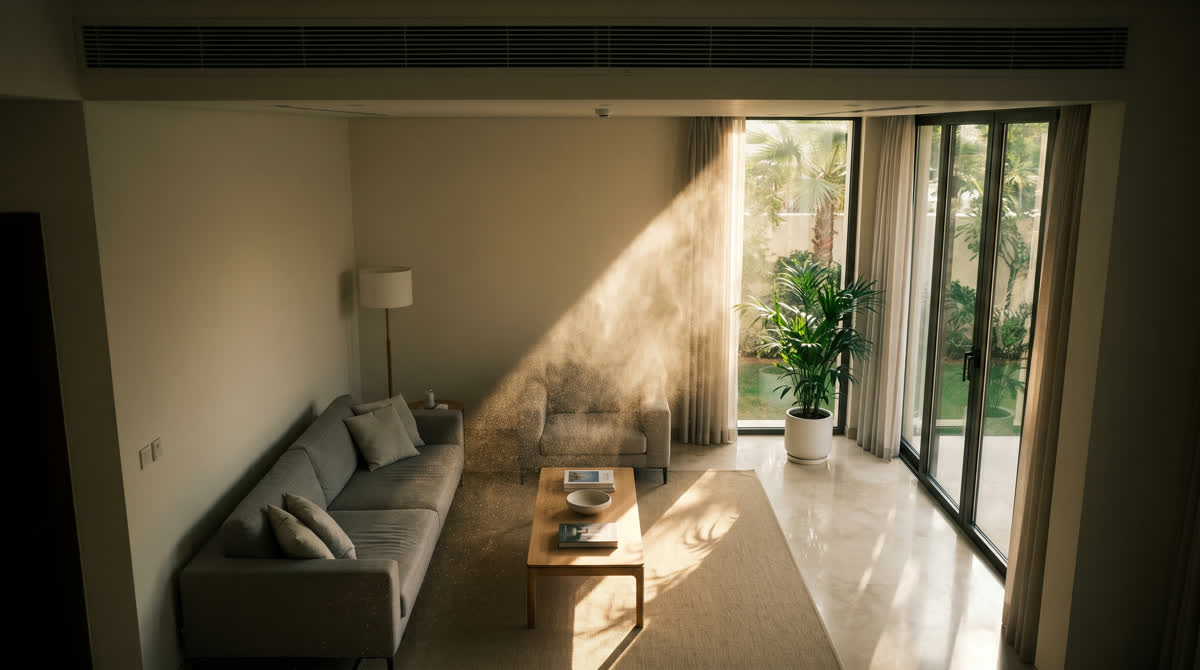
Everything under the work area should be moved or covered before the first panel comes off. AC work releases dust, and on a split unit the rinse water runs downwards. Both land on whatever sits below.
Good protection is easy to recognise:
- furniture moved out from under each unit where possible, the rest covered with sheets
- floors protected where ladders stand and where parts are taken apart
- smoke detectors near the work area protected, a step the NADCA sequence lists in its own right1
- on a wall split unit, a catch cover fitted under the unit so rinse water and sludge run into a bucket rather than down the wall
- grilles washed in a bathroom or outside, not over the sofa
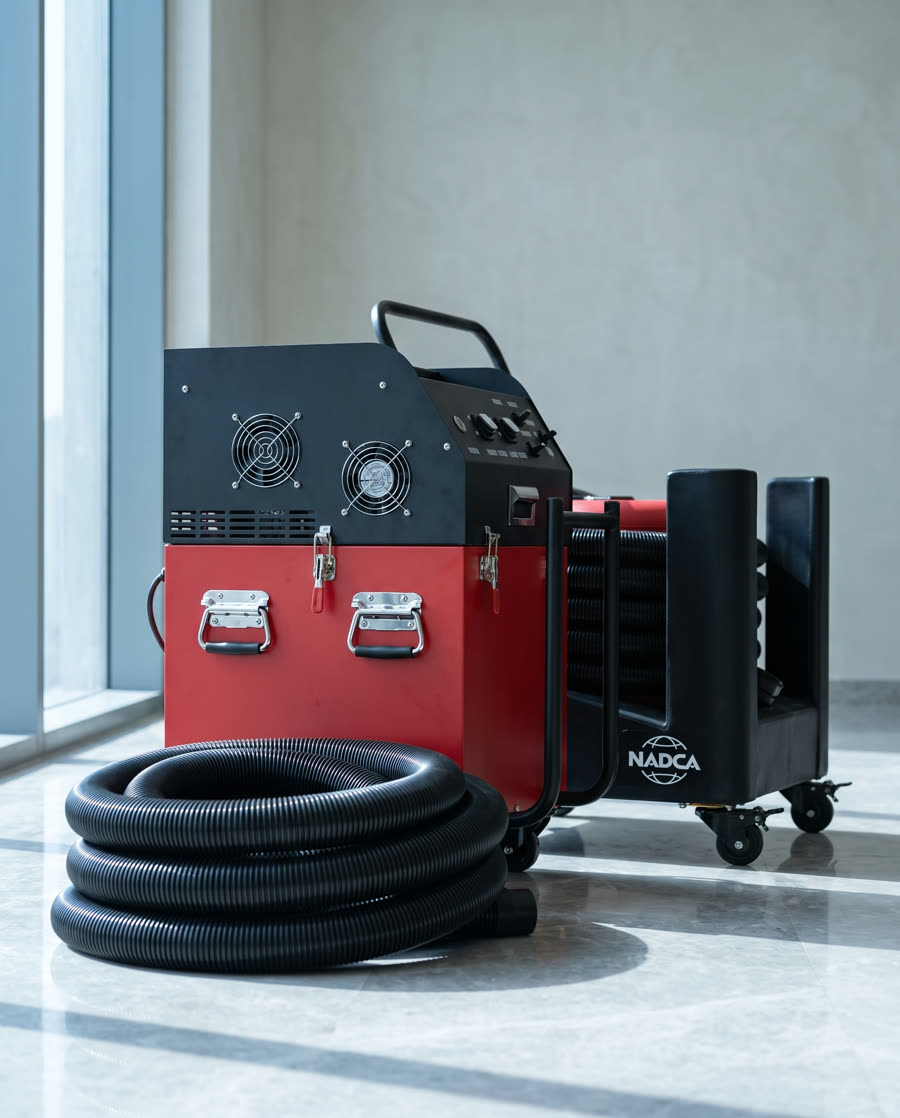
On a ducted system the sheets are the smaller part of the protection. The bigger part is suction. The NADCA standard requires the collection equipment to run the whole time anything is being loosened1. Without it, brushing a duct simply pushes dust further along and out of a grille in another room. On a furnished job we move, protect and put back, and we would rather spend the time there than on cleaning dust off a sofa afterwards.
What are the steps inside the system, in order?
The order matters because each step relies on the one before. The sequence below follows NADCA ACR 2021, Section 41, with what you can see at each step and what a shortcut looks like.
| Step | What happens | What you can see | Shortcut to watch for |
|---|---|---|---|
| 1 | Negative pressure set up and checked | Collection hose connected at an access opening, machine running before brushing starts | Brushing with nothing running, dust drifting from grilles in other rooms |
| 2 | Access openings used, damper positions marked | Marks on damper rods or collars | Dampers moved and not reset, one room cooler than before |
| 3 | Ducts agitated with brushes, then vacuumed | A rotating brush or air whip fed into the duct | A vacuum nozzle at the grille and nothing else |
| 4 | Grilles and diffusers removed and washed | Grilles taken down and washed away from the room | Grilles wiped in place |
| 5 | Blower wheel cleaned | Blades of the wheel cleaned, not only the casing | Housing wiped, blades still coated |
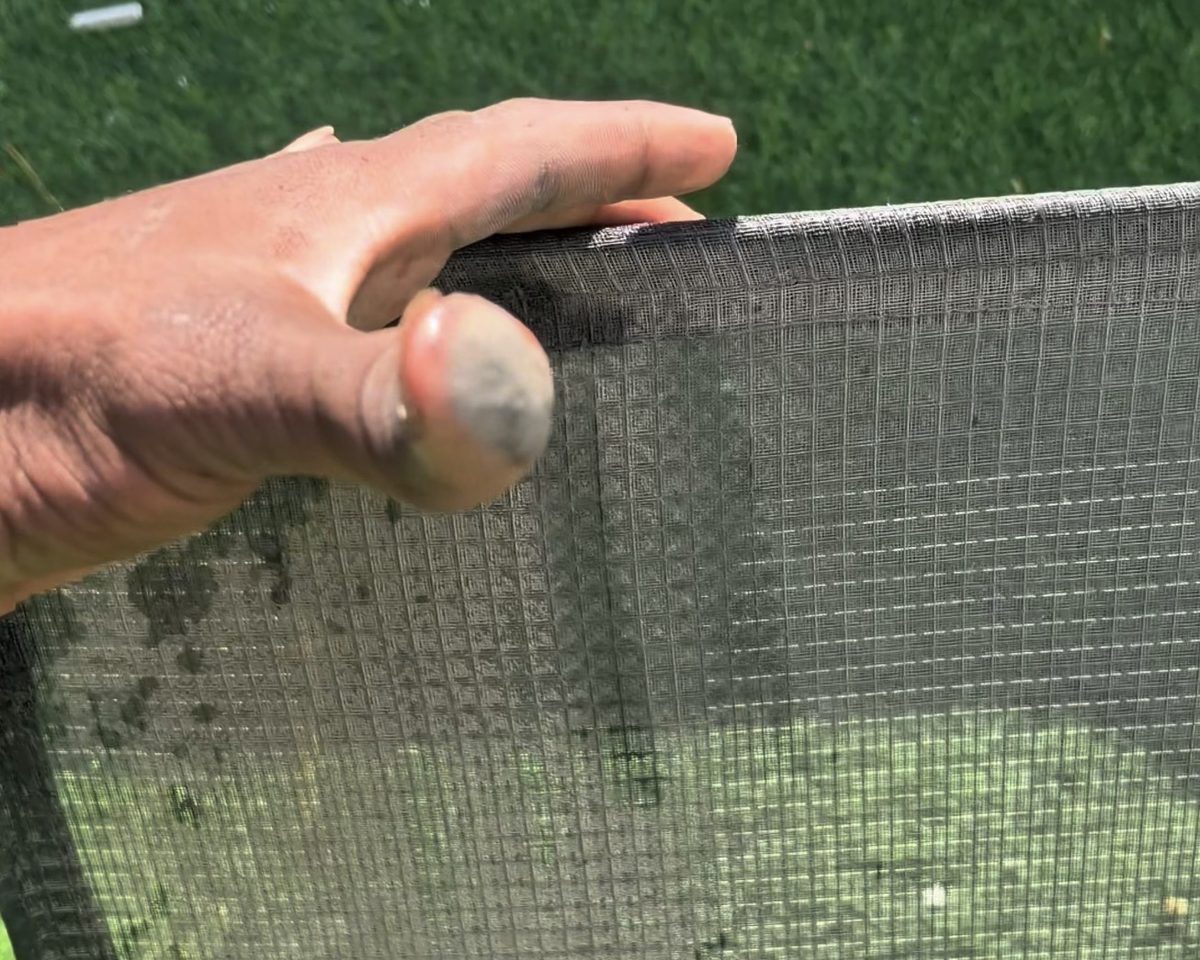
| 6 | Coil made accessible and cleaned, with a pH neutral cleaner where possible | Coil cleaned across its face, on both sides where reachable | A spray on the front face only |
| 7 | Condensate tray cleaned, drain flushed | Sludge lifted out of the tray, drain flushed through | Tray wiped, drain not touched |
| 8 | Drain tested again | Water poured in runs away freely | No test at the end |
| 9 | Filter cleaned or replaced and seated correctly | Filter flush in its frame, no gaps at the edges | Filter pushed back in crooked |
| 10 | Everything refitted, system restarted, final check | Unit runs, no drip, no rattle | Team leaves before the restart |
Two rules from the standard are worth knowing because they protect the equipment. Water and cleaning agents never go onto electrical, fibreglass or porous parts. And suction runs throughout, as above1. Fogging with a biodegradable agent can be added at the end as a finishing step. It never replaces brushing, suction, the coil or the drain.
On a wall split unit
There are no ducts, so steps 1 to 3 fall away and the work concentrates on the unit. The cover comes off, the filters come out, the electrics are protected, the catch cover goes on, and the coil and blower wheel are rinsed into it. Then the tray and the drain are flushed and the drain is tested. The blower wheel is the part a quick clean most often leaves. When a split unit blows black flecks after a clean, we often find them coming from the wheel rather than the coil.
On a ducted unit or fan coil
All ten steps apply. In a villa there are usually several units, often one per floor or wing, and each one gets the full sequence. Our villa deep cleaning in Dubai plans the AC technician and the cleaning team for the same day, with the AC work first because it releases dust.
Which parts deserve the most attention in Dubai?
The coil and the tray, because that is where dust and water meet. Dubai Municipality gives them the shortest intervals in its guideline and lists “microbiological growth in drip pans, humidifiers, ductwork, coils” among the sources of indoor air contamination2. The same guideline advises: “Clean drain pans often and ensure a proper slope to keep water draining.”2
A tray set at the wrong angle holds water however clean it is. Cleaning cannot fix that, but a good technician notices it and tells you.
The US Environmental Protection Agency points to the same parts from the other direction. Even when you book duct cleaning, it advises asking the provider to “clean cooling coils and drain pans” as well3. A quote that is vague about the coil, the tray and the drain is vague about the most important half of the job.
How do you check the result before the technician leaves?
Walk round with the technician before the last panel is closed. You need a torch and this list, not technical knowledge.
| Check | How | What a good result looks like |
|---|---|---|
| Drain | Ask to see water poured into the tray | It runs away freely, nothing stands in the tray |
| Coil | Torch on the coil face where it is reachable | Even metal colour, no grey felt between the fins |
| Blower wheel | Torch through the outlet of a split unit | Individual blades visible, not caked |
| Grilles | Look at the back and between the louvres | Clean behind, refitted straight and firm |
| Filter | Look at the edges of the frame | Flush, no gaps where air could bypass it |
| Dampers | Compare with the marks made at the start | Back in the marked position |
| Rooms | Walk through each one | Covers removed, furniture back, no dust trails, no wet patches |
The EPA’s own checklist for a finished job asks one question we would put at the top: “Is the coil drain pan completely clean and draining properly?”3
If you will not be at home, photos of the coil, the tray and the inside of a duct taken before and after are the substitute for your own eyes. Ask any company you consider whether and how it provides them, before you book rather than after.
For completeness: the NADCA standard also defines a measured result. A duct surface counts as clean when a vacuum test over a set template collects less than 0.75 mg of dust per 100 cm²1. That is a laboratory method used where formal proof is required. On homes, the practical standard is the visual check above, and it is honest to say so.
Finally, keep a record. Dubai Municipality advises that “records should be kept of all maintenance work”, noting when and what was done2. A message with the date, the units and the parts cleaned is enough, and it makes the next booking easier.
What is normal in the days after the clean?
The technician should tell you on the day when each unit can run again. On the first run, look below each indoor unit: water should leave through the drain, not appear on the ceiling or the wall.
Dust that keeps coming from the grilles after a day or two is not normal. Take a photo and send it to the company that did the job. With us, a photo on WhatsApp brings the technician back.
After that, the routine is simple. Look at the filter regularly in the warm months, keep an eye on the tray and drain where you can reach them, and plan the next coil clean around six months later, in line with Dubai Municipality’s interval2. Our guide on how often AC ducts and units should be cleaned in Dubai sets out the full schedule.
What is not part of an AC deep clean?
A clean removes dirt. Some things it finds need another kind of work, and it is better to know that before the day.
- Repairs and gas refills are a separate job, agreed with you first. If the technician finds a fault, a corroded tray or a drain line that is broken rather than blocked, you hear about it before anything else happens.
- Mould grown into porous material, such as duct insulation or ceiling boards, is beyond a clean. Dubai Municipality advises discarding porous material with a persistent musty odour2, and a good company will say so rather than spray over it.
- Pests in ducts or ceilings need licensed pest control first. We do not do pest control.
- The chilled water side of a fan coil unit, meaning valves, pipes and the building plant, belongs to building maintenance.
- Duct cleaning that is not needed. The EPA advises cleaning ducts “only as needed”3. When an inspection shows clean ducts, the money is better spent on the unit. Is AC duct cleaning worth it explains when it is.
If you want the whole sequence done in one visit, our AC cleaning in Dubai covers filter, coil, tray, drain, blower and grilles with our own technician, and the ducts when an inspection shows they need it. Combined with a home deep clean on the same day, the dust the AC work releases is cleaned up before the team leaves.