
Search for how often AC ducts should be cleaned in Dubai and you get many near identical articles with answers that cannot all be true. Some providers say every three months, others every year, others every three to five years, and at least one article manages two different intervals in the same text. None of them tells you where its number comes from. This guide does: it puts Dubai Municipality’s guideline, the NADCA standard and the market claims side by side, and then explains why, in Dubai’s climate, the interval that matters most is not the one for the ducts.
What is the short answer?
There is no official fixed interval for cleaning AC ducts, in Dubai or in the international standard. Ducts are inspected, and cleaned when the inspection finds a reason.
The fixed intervals that do exist apply to the unit. Dubai Municipality’s indoor air guideline asks for condensate trays to be cleaned at least every month, coils and condensate pipes at least every six months, and the building and its HVAC system to be inspected at least every three months1. NADCA’s standard recommends inspecting residential ducts every two years2. Everything else you read is somebody’s interpretation of these two documents, or a number without a source.
What does Dubai Municipality actually say?
Dubai Municipality’s Technical Guidelines for Indoor Air Quality, version 3 of July 2024, contain the most specific maintenance intervals published for buildings in the UAE1. Section 9-4 reads, in the guideline’s own words:
| Component | What the guideline says | Interval |
|---|---|---|
| Condensate trays | “The trays should be cleaned at least every one month and based on condition” | Monthly1 |
| Coils and condensate pipes | “should be cleaned at least every six months” | Six months1 |
| Fans and dampers of air handling units | “should be cleaned at least every six months” | Six months1 |
| Unit ventilators | “more frequently … (such as every month)” | Monthly1 |
| Building and HVAC system | “should be inspected at least every Three months or as need seasonally” | Inspection, three months1 |
| Ducts | No cleaning interval given | None |
Two more points from the same section are worth knowing. Maintenance should be documented: “Records should be kept of all maintenance work”, including when and what was done. And the guideline names Dubai’s own hazard directly, asking for “proper shielding of outdoor air intakes to prevent entry of wind driven rain and sandstorms”1.
Two caveats keep this honest. The guideline is written with “should”, not “shall”, so it is a standard to work to, not a law with fines attached. And its scope covers public facilities and buildings “for example and not limited to Hotels, Residential building, office premises”1, so apartment towers are included, while private villas are not mentioned separately. We use it as the yardstick for both, because nothing more specific exists. Sharjah has no comparable published guideline that we could find, so for AC cleaning in Sharjah we work to the same Dubai Municipality yardstick.
What does NADCA say?
NADCA, the National Air Duct Cleaners Association, also does not set a cleaning interval. Table 1 of its standard lists inspection intervals, and it is the most misquoted table in the industry2.
| System type | Air handling unit | Supply ducts | Return ducts |
|---|---|---|---|
| Residential | Inspect every year | Inspect every two years | Inspect every two years |
| Commercial, industrial, healthcare | Inspect every year | Inspect every year | Inspect every year |
Source: NADCA ACR 2021 Edition, Table 12.
Cleaning follows when an inspection finds a reason: debris build up, reduced performance, odours, visible discharge from outlets, water or fire damage, infestation or construction debris2. The standard also allows more frequent inspection where “geographical, human, or mechanical conditions make it necessary”2. That sentence is the honest basis for inspecting more often in Dubai. It is not a basis for cleaning more often by default.
Where do the intervals in the market come from?
Almost every number you see is a real interval from one of the two documents, attached to the wrong job.
| What you read | Where it probably comes from | The correct reading |
|---|---|---|
| “Clean your ducts every 3 months” | Dubai Municipality’s three month interval | That is an inspection of the building and HVAC system |
| “Clean your AC every 6 months” | Dubai Municipality’s six month interval | Correct for coils and condensate pipes, not for ducts |
| “Clean your ducts every year” | NADCA Table 1 | One year is the inspection interval for the unit |
| “Clean your ducts every 2 years” | NADCA Table 1 | Two years is the inspection interval for residential ducts |
| “Clean your ducts every 3 to 5 years” | No source found | Neither document says it |
| “Only clean ducts when needed” | US EPA | Matches the EPA, which advises cleaning “only as needed”6 |
The last row is the one closest to both documents. It also sounds the least like a sales line, which may be why it is the least repeated. Whether a given reason justifies the cost is covered in is AC duct cleaning worth it.
Why do trays and coils matter more than ducts in Dubai?
Because Dubai combines the two things that foul a cooling coil fastest: a lot of fine mineral dust and a lot of water in the air, at the same time of year.
The dust peaks in summer, not in spring
Our own averaging of three years of hourly Copernicus air quality data for Dubai shows coarse particulate (PM10) highest in July and August, when the AC also runs hardest3.
| Month | PM10 (µg/m³) |
|---|---|
| January | 54.3 |
| March | 83.6 |
| May | 82.8 |
| June | 107.0 |
| July | 170.8 |
| August | 178.2 |
| September | 123.4 |
| November | 60.6 |
Source: Copernicus CAMS reanalysis via Open-Meteo, 09/2022 to 08/2025, own monthly averages3.
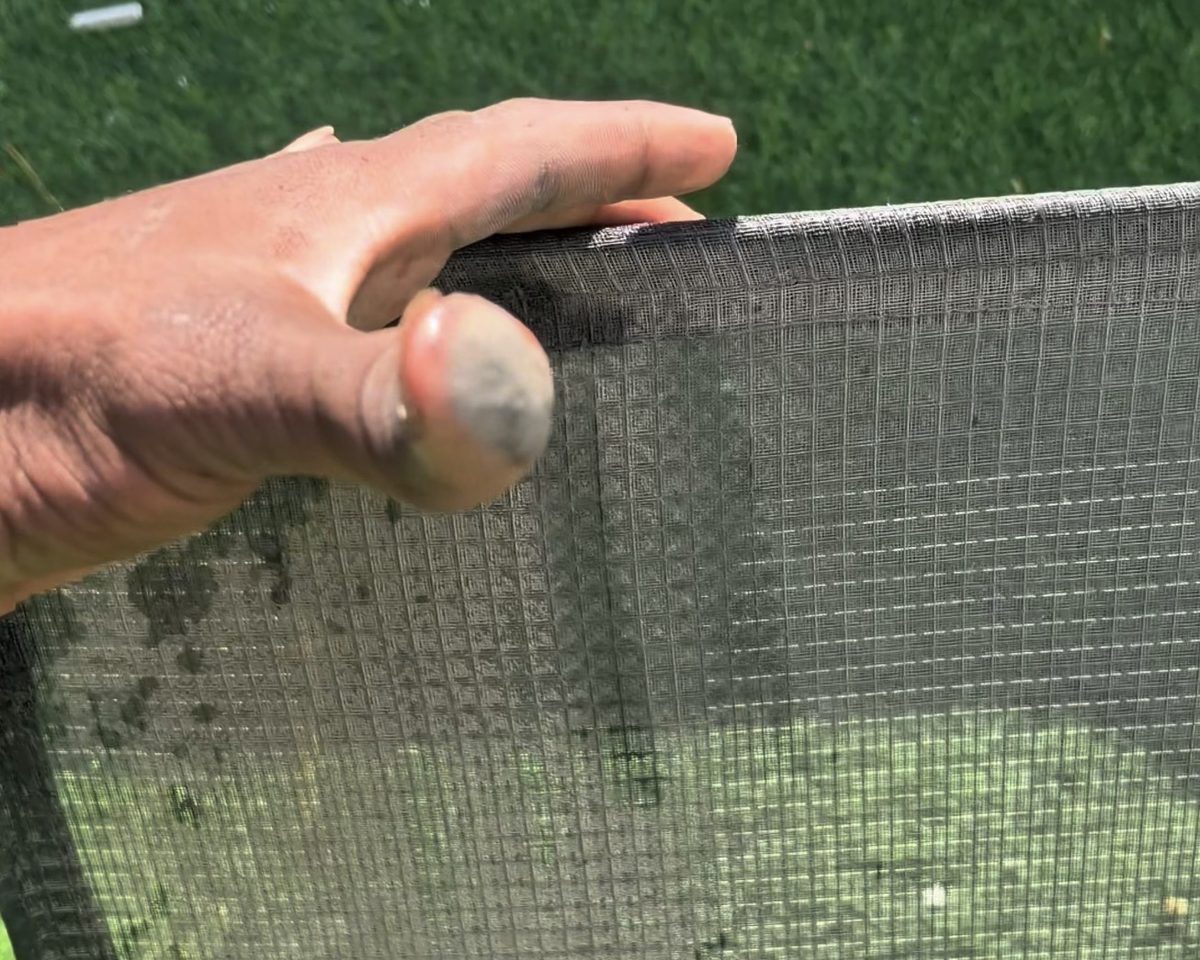
What the filter lets through lands on the coil. A 2023 study of indoor dust in Dubai homes found it largely mineral, with calcium alone at an average of 14,170 mg/kg5. Mineral dust on a dry surface can be vacuumed. On a wet coil it sticks.
The coil is wet for most of the summer
A cooling coil is colder than the air passing over it, so it condenses water all day. How much depends on the dew point of the air. Our analysis of ten years of hourly ERA5 data for Dubai shows the outdoor dew point at or above 24 °C in 40 percent of hours in June, 54 percent in July, 52 percent in August, 53 percent in September and 24 percent in October, and in none from December to April4.
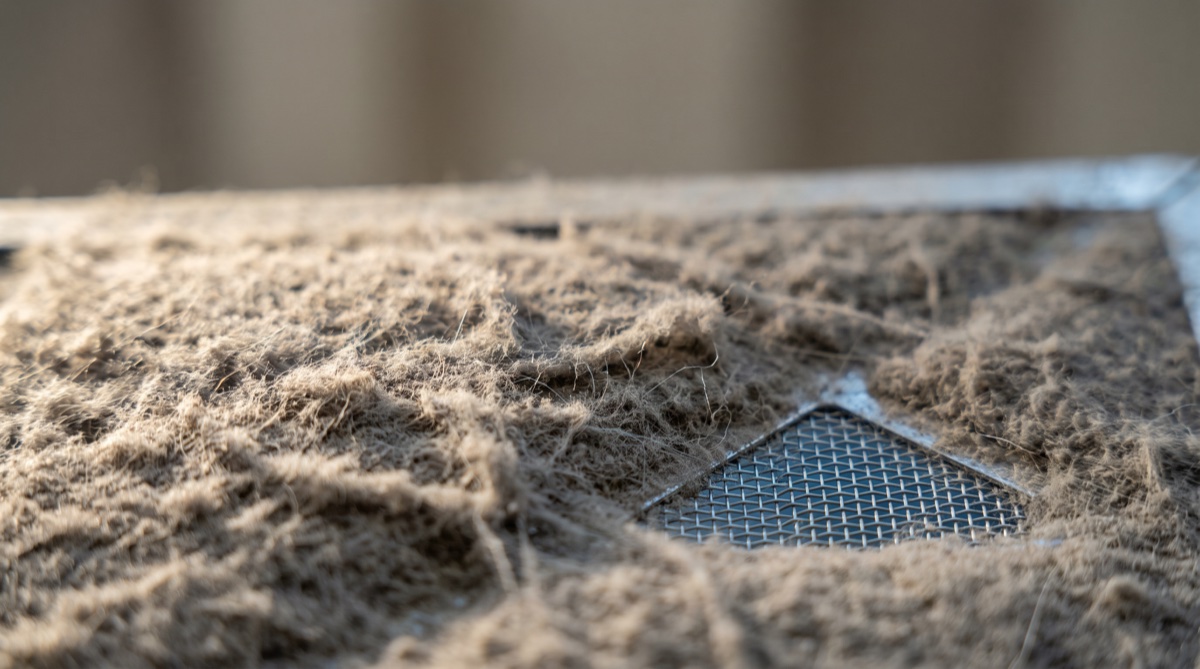
Put the two tables next to each other and the summer months stand out: most dust in the air and the most water on the coil, at the same time. The tray collects the result. A tray that drains slowly holds a mixture of water and mineral sludge, which is why Dubai Municipality gives trays the shortest interval of all and lists “microbiological growth in drip pans, humidifiers, ductwork, coils” among the sources of indoor air contamination1.
The ducts downstream of a clean filter and coil see far less of this. That is why the interval that matters most in Dubai is the one for the tray and the coil, not the one for the duct.
What schedule makes sense for a Dubai home?
Built from the two documents and the climate data above, this is the schedule we would use for a typical apartment or villa:
| When | What | Who |
|---|---|---|
| Every month, from May to October at least | Check the filter, look at the tray and drain where you can reach them, watch for drips | You |
| Every three months | Inspection of the unit: filter, coil face, tray, drain, grilles | You or a technician |
| Every six months | Professional clean of coil, tray, drain, blower and grilles | AC cleaning team |
| Every two years | Inspection of the ducts through access points | Duct technician |
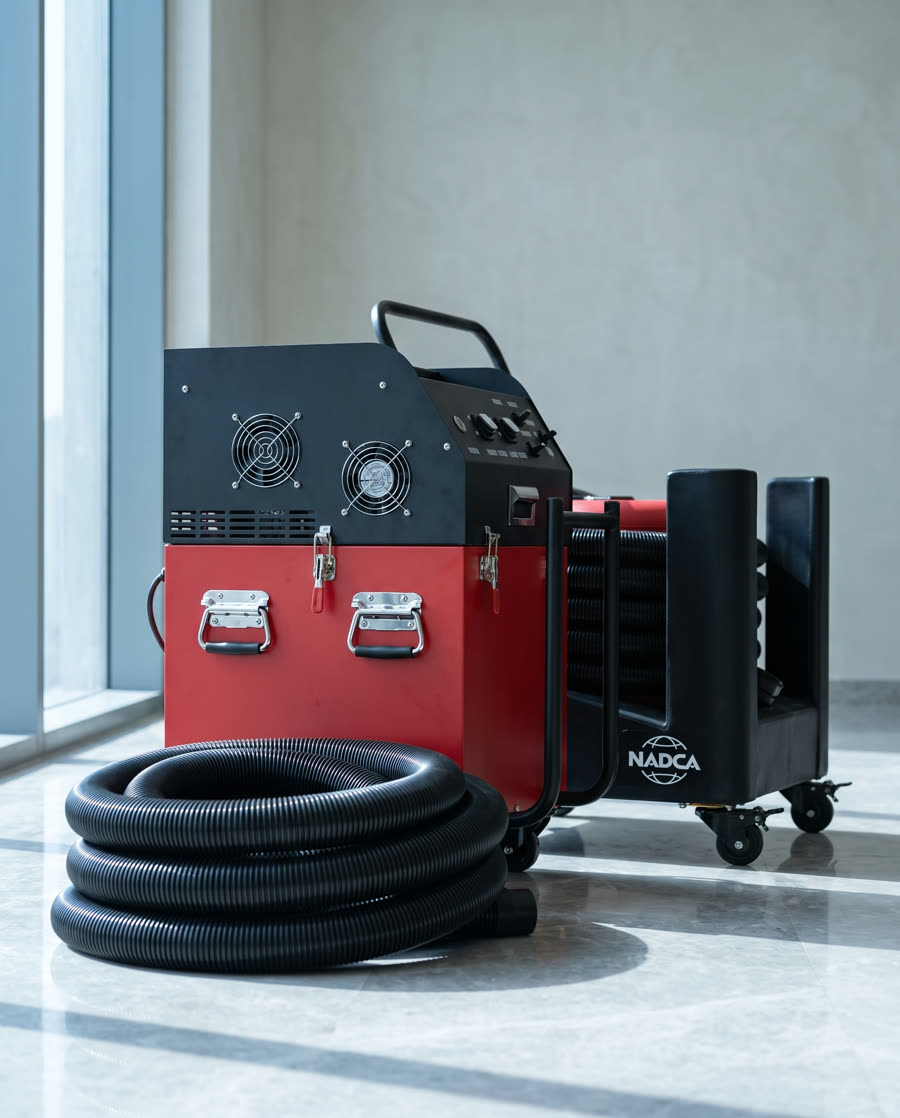
| When the inspection finds a reason | Duct cleaning with brushes and suction under negative pressure | Duct cleaning team |
For the six monthly clean, timing helps. Late spring prepares the coil and tray for the hardest months. September or October removes what July and August left behind, as the dew point starts to fall4.
Some events bring the duct inspection forward, whatever the calendar says:
- renovation, sanding or tiling while the AC was running
- a leak above the ceiling or an overflowing tray
- a sandstorm with doors or windows open
- dust that keeps coming from the grilles after the unit has been cleaned
- signs of pests, which need licensed pest control before any cleaning
What does this mean when you book?
Book the unit on a schedule and the ducts on evidence. Ask any provider which of the intervals above their recommendation is based on. If the answer is “Dubai Municipality requires duct cleaning every three months”, you now know that is an inspection interval.
Our AC cleaning service in Dubai covers filter, coil, tray, drain, blower and grilles, and the ducts when an inspection shows they need it. If you are not sure which of the three AC jobs you need in the first place, start with AC service vs AC cleaning vs duct cleaning.