
It starts as a grey shadow in the top corner of the bedroom, or a line of black dots along the shower silicone, or a dark bloom behind the wardrobe you only notice when you move it. You wipe it, and three weeks later it is back. At that point two questions come up together: can a cleaner get rid of this, and is it actually your problem or the landlord’s? This guide answers both. It is about walls, ceilings, silicone and window frames, and about who is responsible. If your marks sit around the AC grille, start with our guide to black spots around the AC vent instead.
Why does mould grow in an air-conditioned Dubai apartment?
Because air conditioning makes surfaces cold, and Dubai air carries a lot of water. Wherever humid air touches a surface colder than its dew point, water condenses, and Dubai Municipality’s indoor air guideline sums up what follows: “Mold thrives in the presence of water. The secret to controlling mold is to control moisture and relative humidity”1.
Outdoors, the dew point in Dubai sits at 24 °C or above in 54 percent of all hours in July and 53 percent in September, according to our analysis of ten years of ERA5 data2. A wall, a window frame or a pipe kept cooler than that by the AC gets wet as soon as that air reaches it. In practice, the water comes from one of three places.
Condensation on cold surfaces
Upper corners of external walls, the strip of wall behind a wardrobe or a headboard, the inside of aluminium window frames and the glass itself. The pattern is typical: the marks follow the coldest spots and get worse in humid months. The US EPA lists “the surface of walls behind furniture (where condensation forms)” among the places where hidden mould grows3. Dubai Municipality’s answer is a building one: “Adequately insulate exterior walls or ceilings to avoid condensation on cold surfaces” and “Insulate cold water pipes to avoid sweating”1.
Leaks and wet building fabric
A bathroom above you, a failed shower tray, a cracked pipe in the wall, a chilled water line above the false ceiling, rainwater at a balcony door. The pattern is different: a tide mark with a brown edge, bubbling paint, plaster that feels soft or cool, marks low on the wall next to a wet room, or a stain that grows regardless of the weather.
Bathrooms and kitchens without enough exhaust
Steam from a shower has to leave the room. If the exhaust fan is weak, blocked or never switched on, the water settles on grout, silicone and the ceiling. Dubai Municipality asks buildings to “provide sufficient exhaust in showers or kitchen areas producing steam”1. If your whole flat feels damp rather than one room, our guide on why an apartment stays humid with the AC on goes through the causes in order.
Is it surface mould or a wet wall?
Surface mould sits on top of a dry, sound material and wipes off, at least mostly. A wet wall is the cause, and the mould is only what you see of it. Telling the two apart decides whether you need a cleaner, the landlord, or both.
Check these before you clean anything:
- Press the surface. Paint and plaster that feel firm and dry point to surface growth. Soft, crumbly, cool or swollen material points to water inside the wall or board.
- Look at the edge. A diffuse grey cloud in a corner is typical of condensation. A sharp brown tide line is typical of a leak.
- Note the position. High on external walls and around windows usually means condensation. Low on a wall next to a bathroom or kitchen, or under a ceiling below another flat, often means water from somewhere else.
- Measure the room. Dubai Municipality advises keeping relative humidity “below 60% (50%, if feasible, to control dust mites)”1. A cheap hygrometer read morning and evening for a few days tells you whether the air itself is the problem.
- Clean once and watch. Marks that return within weeks in the same shape, although the humidity is in range, come from a moisture source that cleaning does not reach.
If the trail leads to a musty smell rather than a visible mark, our guide to the seven sources of a musty smell helps you find it.
What can a cleaning really remove, and what can it not?
A clean removes visible growth from hard, washable surfaces and dries them. It does not reach mould that has grown into soft or porous material, and it does not change the moisture that caused it. The US EPA guidance is the clearest summary we know: “Scrub mold off hard surfaces with detergent and water, and dry completely”, while “absorbent or porous materials, such as ceiling tiles and carpet, may have to be thrown away if they become moldy”3.
| Surface | What cleaning can do | Where cleaning stops | Who usually deals with the cause |
|---|---|---|---|
| Washable wall paint | Remove visible growth, dry the surface | Stains in matt paint, growth under the paint film | Landlord if it is a leak or insulation fault; ventilation is shared |
| Tiles and grout | Remove growth, steam where the surface allows | Dark grout that is stained deep or cracked | Regrouting is a repair, set by your contract |
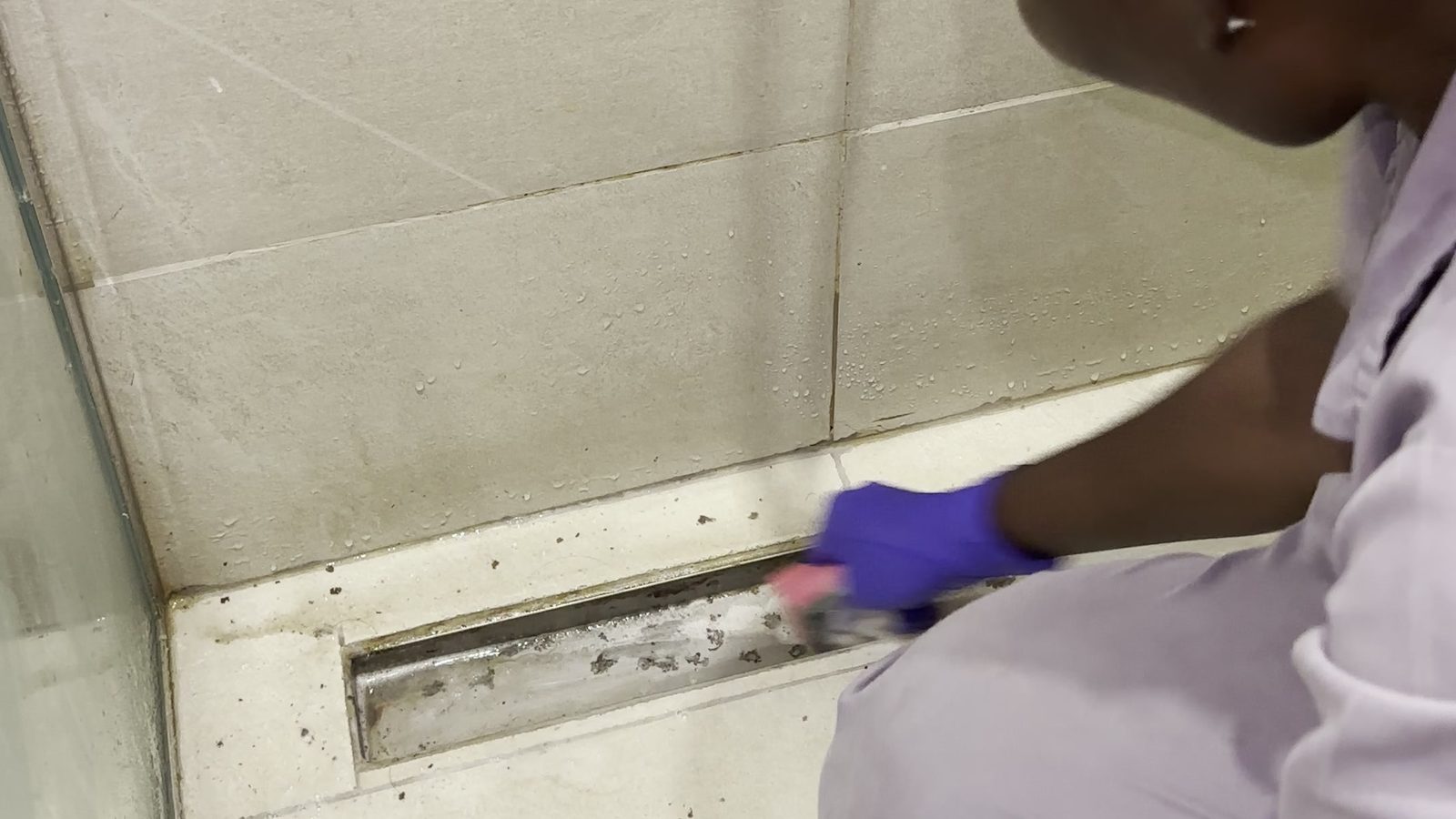
| Silicone sealant | Remove growth on the surface | Black staining inside or under the silicone | Replacing sealant is a small repair, not cleaning |
| Window frames, sills and glass | Remove growth and residue, clear drainage slots | Failed seals, water getting in from outside | Landlord or building maintenance |
| Wardrobe and cupboard back panels | Clean and dry the inside, leave a gap to the wall | Swollen or persistently smelly MDF | Landlord if the furniture is fitted |
| Gypsum board ceilings and walls | Wipe light surface growth on sound, painted board | Stained, soft or swollen board | Landlord, the board needs replacing |
| Wallpaper | Very little | Almost always | Landlord, the paper has to come off |
| AC grilles, tray and coil | Clean, flush the drain, test it | Cracked tray, broken drain line, sweating pipes | AC cleaning; repairs are a separate job |
| Insulation and false ceiling voids | Nothing | Always | Landlord or facilities management |
Two more lines from the guidance are worth knowing before you book anyone. The EPA notes that “mold may cause staining and cosmetic damage. It may not be possible to clean an item so that its original appearance is restored”3. That is often the case with grout and silicone. And for ceilings, Dubai Municipality is direct: “Discard ceiling tiles with visible water stains”1.
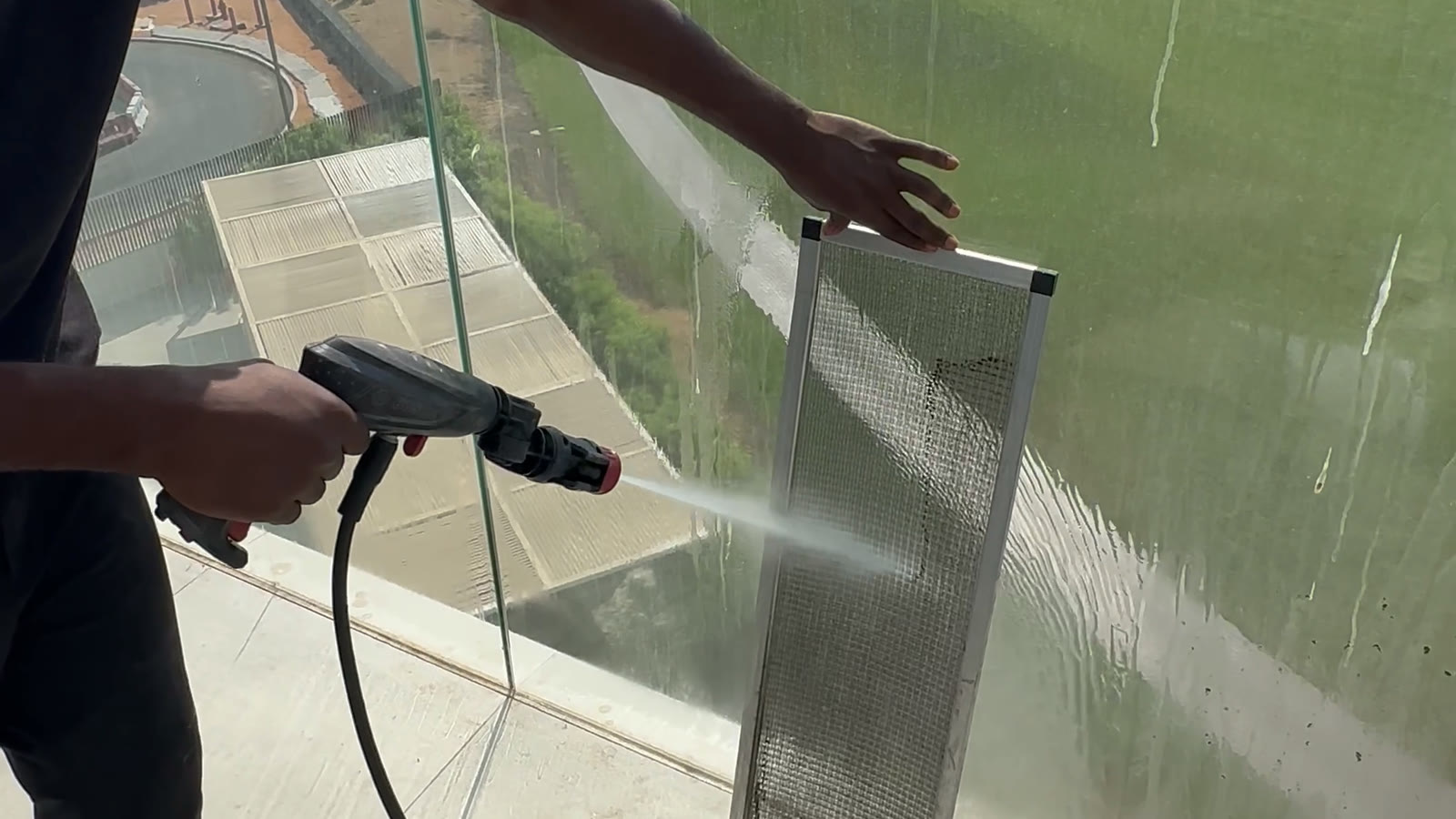
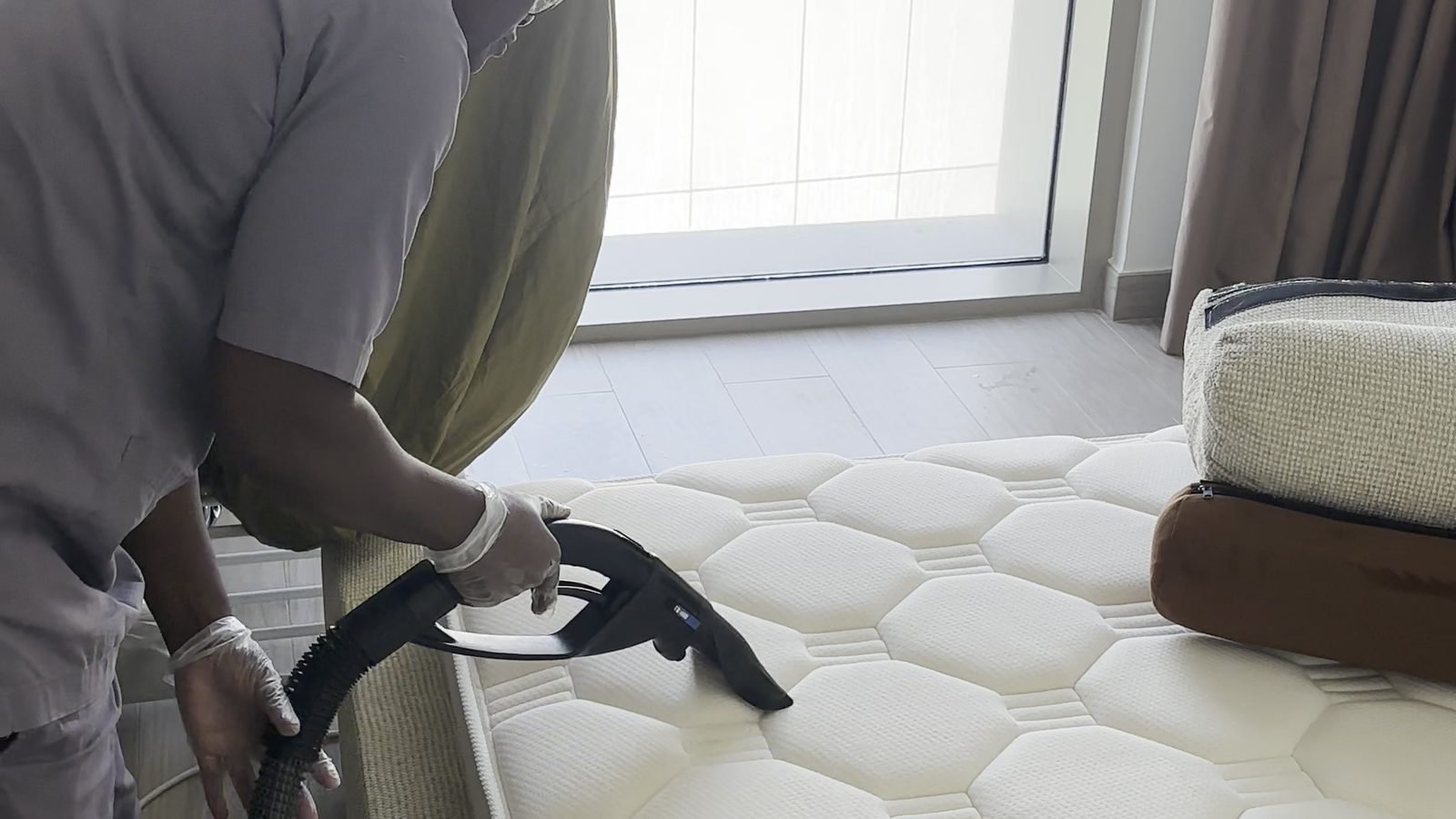
On our mould cleaning in Dubai visits we remove visible growth from tiles, grout, frames, sills and the inside of wardrobes on outside walls, use steam up to 180 °C where the surface can take it, clean the AC grilles, tray and coil with our own technician, and photograph what we find for you or your landlord. What we do not do is promise that it will never come back. The EPA explains why: “If you clean up the mold, but don’t fix the water problem, then, most likely, the mold problem will come back”3.
What is the landlord’s job, and what is the tenant’s?
Under Dubai’s tenancy law, maintenance and repairing defects are the landlord’s job unless your contract says otherwise. Everyday care of the flat is yours. Article 16 of Law No. 26 of 2007 says: “Unless otherwise agreed by the parties, the Landlord will, during the term of the Lease Contract, be responsible for the Real Property maintenance works and for repairing any defect or damage that may affect the Tenant’s intended use of the Real Property”4.
Article 17 adds that the landlord is responsible for “any defect, damage, deficiency, and wear and tear occurring to the Real Property for reasons not attributable to the fault of the Tenant”4. The tenant, under Article 19, must maintain the property “in such a manner as an ordinary person would maintain his own property”4.
The Rental Disputes Center explains the same split in its own words. Maintenance that “directly affects the tenant’s ability to fully enjoy the intended benefits of the property” is the landlord’s, while “non-essential maintenance is the responsibility of the tenant”6. Applied to mould, that usually means:
- Typically the landlord or the building: leaks, failed waterproofing in wet rooms, broken window and door seals, sweating chilled water pipes, missing insulation, an exhaust fan that does not work, damaged plasterboard or ceiling boards, a faulty AC unit.
- Typically you: running the bathroom exhaust, keeping balcony doors shut while the AC runs, wiping condensation off glass and frames, leaving a gap behind furniture on external walls, regular cleaning of grout and silicone, reporting a problem early.
Dubai’s public health law adds a second layer. Law No. 5 of 2025 defines the “Owner” as a person “who owns or has actual control over the Built Environment or any part thereof”5. Article 33 obliges that person, among other things, to “respond immediately to any health Risks or issues”, to keep indoor air quality within acceptable limits, and to “carry out periodic maintenance of the Built Environment”5. Because the definition covers whoever is in actual control, it does not settle the split inside a rented flat on its own. Your tenancy contract and the tenancy law do that.
This is general information, not legal advice. The Rental Disputes Center itself states that it “does not provide legal advice”6, so for your own case read the contract and its additional terms first.
How do you document mould for your landlord?
Before anyone cleans, so the evidence still exists. A wiped wall proves nothing.
- Photograph it with the date. One wide shot that shows the room and position, one close up with something for scale, such as a coin or a ruler.
- Photograph the context. The window, the ceiling above, the bathroom wall on the other side, any tide mark or bubbling paint.
- Note humidity and dates. A few days of hygrometer readings show whether the air or the building is the issue.
- Write it down. Where, since when, what you have already done, whether it returns after cleaning.
- Send it in writing. Dubai’s tenancy law defines a notice as “a written notification sent by either party to the Lease Contract to the other through the Notary Public, or delivered by registered post, by hand, or by any other technological means approved by law”4. For a first report, an email to the landlord or the agent with the photos is the usual start. Keep a copy.
- Check that your contract is registered. Under Article 4 of the same law, authorities may not consider a dispute about a lease contract “unless such Contract is registered with RERA”4. In practice that is your Ejari registration, and the Rental Disputes Center lists “a copy of the last lease contract (Ejari)” first among the documents for a case6.
- Keep the record after the repair. Photos of the fixed wall and an invoice or photo report from the clean belong in the same folder.
That folder also matters on the day you leave. Article 21 asks the tenant to hand the property back in the condition in which it was received “except for ordinary wear and tear or for damage due to reasons beyond the Tenant’s control”4. Our guide to moving out, cleaning and the deposit in Dubai explains how that plays out at handover. If you cannot agree with your landlord, the Rental Disputes Center is the place for landlord and tenant disputes in Dubai.
When is it no longer a cleaning job?
When the material is damaged, the area is large, or the water keeps coming. Booking a clean in those cases costs you money and removes the evidence while the cause stays in place.
- The wall or ceiling feels soft, crumbles or has swollen.
- There is a tide mark, bubbling paint or water dripping from above.
- Mould returns within weeks in the same place although humidity is under control.
- The black is inside the silicone or behind tiles, not on them.
- The patch is large. The EPA treats areas over about 10 square feet, roughly 1 m by 1 m, or anything after a lot of water damage, as a case for its more detailed remediation guidance3.
- The water came from sewage or another contaminated source. The EPA advises calling in a professional with experience of contaminated water3.
- There is a musty smell but no visible source, which can mean hidden growth behind board or above a ceiling3.
We make no health claims here. The World Health Organization’s guidelines on dampness and mould recommend preventing persistent damp and microbial growth in buildings rather than dealing with it afterwards7. That puts the repair first, every time.
In which order should repair, cleaning and painting happen?
Fix, dry, clean, then paint. Any other order brings the marks back, usually by the next humid season.
- The landlord or building fixes the moisture source: the leak, the seal, the insulation, the exhaust.
- Wet material is dried or replaced. Soft board and stained ceiling tiles come out.
- The surfaces that can be cleaned are cleaned and dried. If the AC tray and coil are part of the problem, they are cleaned in the same visit through our AC cleaning in Dubai.
- Only then is the wall repainted. The EPA is clear on this point: “Do not paint or caulk moldy surfaces. Clean up the mold and dry the surfaces before painting. Paint applied over moldy surfaces is likely to peel”3.
Then keep the conditions that stop it returning: the hygrometer in sight, the fan on Auto, the exhaust running after showers, a finger’s width between furniture and external walls. If you are moving into a new flat, our move-in inspection checklist shows where to look for old marks before you sign the handover.