
You have found the apartment, the cheques are written and the movers are booked. The temptation is to get the keys, carry the boxes in and deal with details later. In Dubai that order costs people money and nerves, because a leak found after the sofa is in place is harder to prove, harder to repair and harder to clean around. This guide covers the days between signing and moving in: how to view, what to check, what to photograph, how to report defects, and when a move-in deep clean is worth booking.
Why do the first days in a new apartment matter so much?
Because everything you hand back later is measured against what you received now. Dubai’s tenancy law asks the tenant to return the property “in the same condition as handed over to him at the time of contracting”, apart from normal use.1 On the other side, the amended law obliges the landlord to hand over the property in a good condition that allows the tenant to use it fully.2
Both rules depend on one thing: a record of the condition at the start. If nobody wrote it down, the starting point becomes a matter of memory, and memories differ. The checks and photos below create that record. They also give you the strongest position to have problems fixed while the apartment is still empty.
What happens at the other end of the tenancy is covered in our guide to what Dubai law says about cleaning and your deposit. This page is about the beginning.
When should you view the apartment, and why with the AC running?
View it with the air conditioning switched on, ideally for some time before you arrive, and in daylight. A common piece of advice among Dubai renters is never to view a place without the AC running, and it holds up for a simple reason: most moisture problems in Dubai homes come from the AC and only show while it works.
The season matters too. In our analysis of ten years of hourly data for Dubai, the outdoor dew point was at or above 24 °C in more than half of all hours from July to September, in 24 percent of hours in October, and in none from December to April.3 A high dew point means surfaces cooled by the AC get wet. An apartment viewed in November or winter can look perfectly dry and still have grilles that drip, cupboards that smell and ceilings that stain once summer arrives.
So in the cooler months, look for traces of last summer rather than current symptoms: water marks around grilles, repainted patches on ceilings, swollen skirting boards, and a musty smell when you open wardrobes on outside walls.
Three things are worth bringing to a viewing:
- A small hygrometer. Dubai Municipality’s indoor air quality guideline recommends keeping relative humidity below 60 percent, and below 50 percent where feasible.4 A reading well above that with the AC running is worth asking about.
- A torch. For under the sink, inside the AC return grille and the back corners of wardrobes.
- Your phone with the camera date switched on. For the photos described below.
What should you check, room by room, before you take the keys?
Check what cleaning cannot fix first: water, smell, function and damage. Dirt can be removed in a day. A leak, a blocked condensate drain or a broken fitting is the landlord’s to repair, and it is far easier to arrange before you move in.
| Area | What to check | What it can tell you |
|---|---|---|
| AC indoor units | Water on or under the unit, drips from grilles, noise, smell when it starts | Blocked condensate drain, dirty coil, or a duct or insulation problem |
| AC grilles and ceilings | Dark rings, water marks, bubbling paint around vents | Past condensation or leaks; ask what was done about it |
| Thermostats | Each room reaches its set temperature and the fan responds | Whether the system works in every room, not only the living room |
| Ceilings and walls | Brown stains, fresh paint patches, cracks near the bathroom above | Old or ongoing leaks from above or from pipes |
| Kitchen sink and cupboard below | Damp base board, swollen panels, smell, drips at the trap | Slow leaks that will not show for weeks |
| Wardrobes on outside walls | Musty smell, spots on the back panel, damp shelves | Surfaces cooled below the dew point in summer |
| Bathrooms | Black spots deep in the silicone, loose tiles, drains that smell or drain slowly, water heater | Resealing or plumbing work, which is a repair and not cleaning |
| Windows and sliding doors | Doors run smoothly, locks work, seals intact, drainage holes clear | Where sand and water will get in |
| Appliances | Oven, hob, fridge, dishwasher and washing machine switch on and work | Faulty appliances are for the landlord to repair or replace |
| Electrics | Sockets, switches, lights, extractor fans | Simple faults are easier to list now than to chase later |
| Signs of pests | Droppings in cupboards, gaps around pipes | A matter for the landlord and a licensed pest control company, not for a cleaner |
Write down everything you find, even small items. A loose cupboard hinge does not matter today, but it will matter if someone asks about it at move out.
Which photos and videos should you take on day one?
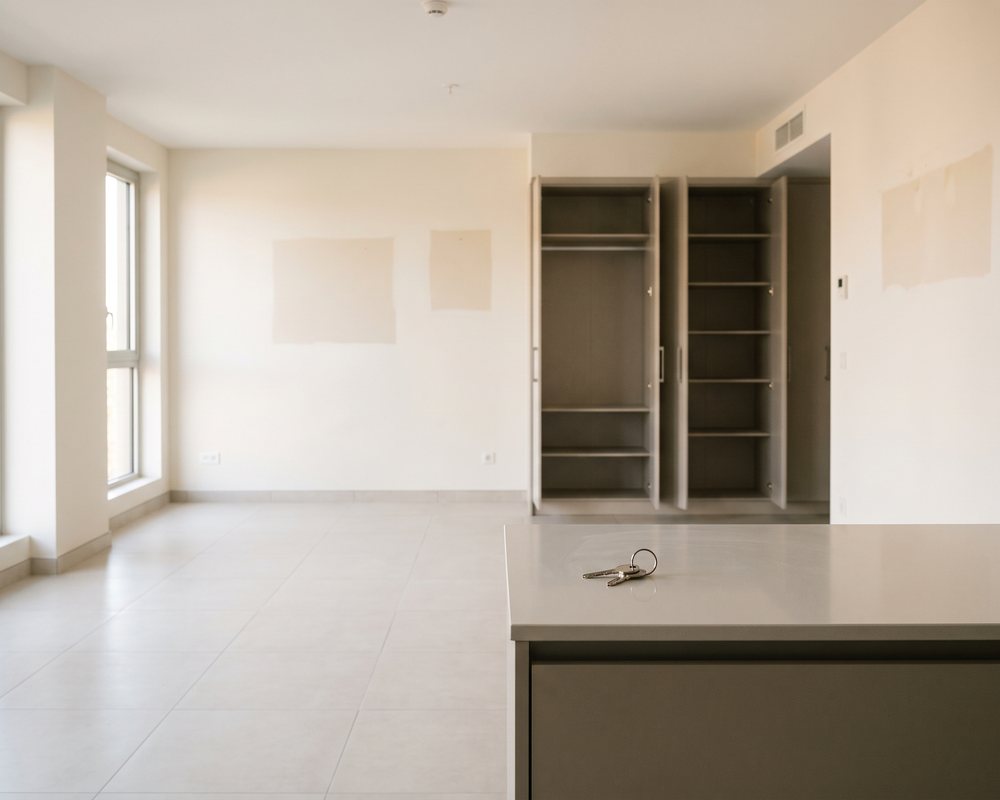
Take a full set on the day you receive the keys, before any furniture or boxes come in. An empty apartment photographs clearly, and nothing hides behind your things.
| Shot | Why it matters later |
|---|---|
| Each room from the doorway, then from the opposite corner | Overall condition, with nothing in the way |
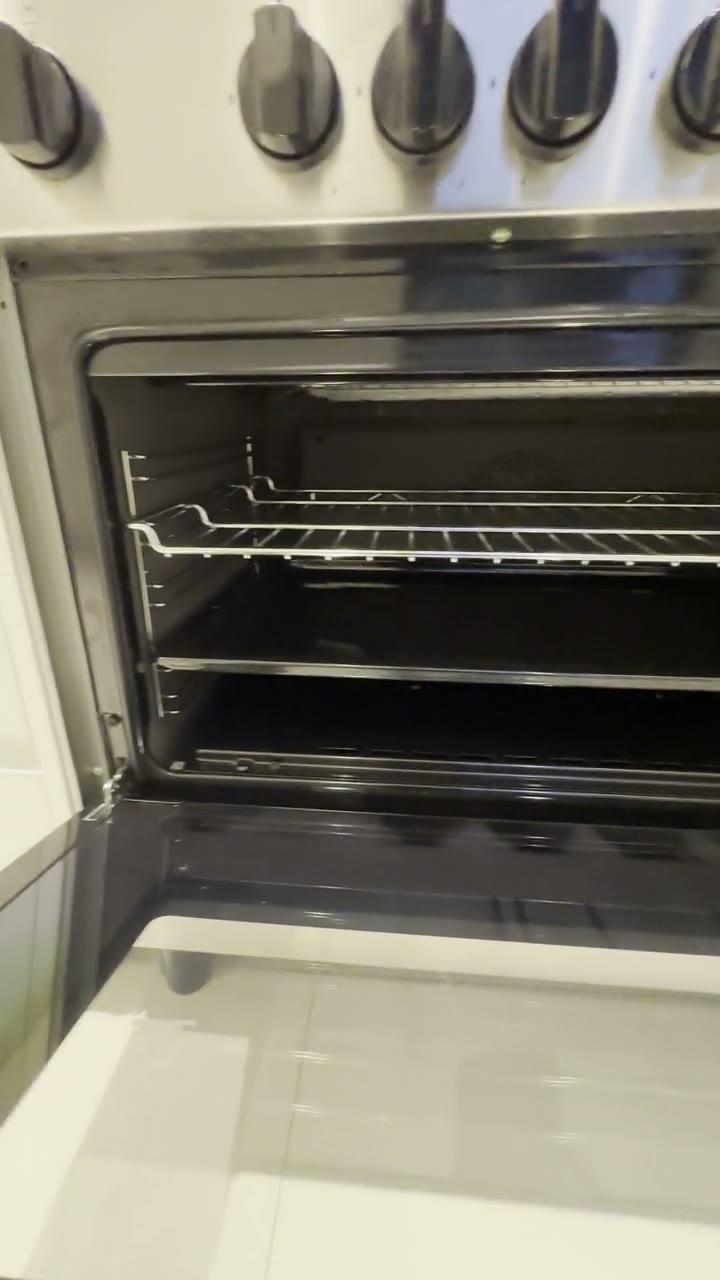
| Inside the oven, on the hob, the hood filter, the fridge and freezer | The items most often argued about at move out |
| Every cupboard and wardrobe with doors open | Shows the insides were empty and in this condition |
| Shower glass against the light, taps, grout and silicone close up | Existing limescale, stains and black spots in the silicone |
| AC grilles, the return grille with the filter, ceilings around vents | Existing marks and dust before your first summer there |
| Walls with marks, holes or scuffs, with something for scale | Existing damage you will not be blamed for |
| Sliding door tracks and the balcony floor | Existing sand, stains and drainage |
| Meter readings, keys, access cards and remotes on the counter | What you received |
A slow video walk through every room is a useful addition, with you saying aloud what you see. Then email the photos, or a link to them, to the landlord or agent. The email itself is your timestamp, and the other side has seen the same record.
How do you report defects before moving in?
In writing, in one email, as a list. Phone calls and voice notes are quickly forgotten and hard to show later. A short, specific email gets results faster than a long complaint.
A structure that works:
- One line per item, with the room and what you saw: “Master bedroom AC, water dripping from the grille once the unit has run for a while.”
- A photo reference for each item, attached or numbered.
- What you are asking for: repair of the cause, not only cleaning of the surface. Cleaning a water stain under a leaking pipe only moves the problem a few weeks.
- A proposed date, ideally before your move-in day, so the work happens in an empty apartment.
- A request for written confirmation of what will be done and when.
Keep the reply. If something is not fixed, you have a dated record that it was reported before you lived there. In Dubai, disputes between landlords and tenants go to the Rental Dispute Settlement Centre, and they are decided on the contract and the evidence. This is general information, not legal advice.
Is a move-in deep clean worth it, or is a normal clean enough?
It is worth it when the insides are dirty, when the apartment stood empty through summer, or when the AC grilles and filters have not been touched. If the cupboards, appliances, grilles and tracks are already clean, a normal clean before you unpack is enough.
| What you find | Normal clean is enough | Move-in deep clean makes sense |
|---|---|---|
| Inside cupboards and wardrobes | Clean, no smell | Dust, crumbs, sticky shelves, musty smell |
| Oven, hood filter, fridge | Clean or nearly new | Grease, burnt residue, smell in the fridge |
| Bathrooms | Glass and taps clear | Limescale film, dark grout, residue in drains |
| AC grilles and filter | Clean | Grey grilles, clogged filter, dust on the ceiling around vents |
| Sliding door tracks and balcony | Clear | Sand in the tracks, dirty balcony floor |
| History | Previous tenant had it professionally cleaned with a scope | Apartment stood empty for weeks, especially over summer, or after renovation |
A newly built or freshly renovated apartment is a special case. It can look clean and still carry fine construction dust on every horizontal surface, inside cupboards and in the AC. That is a post-construction clean rather than a normal one.
The empty days before your furniture arrives are the easiest time for this work. Cupboards, the floor under where the bed will stand and the space behind where the sofa will go are only this accessible once.
In which order should you inspect, repair, clean and move in?
Repairs first, cleaning second, furniture last. Done the other way round, the repair team leaves dust and footprints on a clean floor, and a leak fixed after cleaning can leave a new stain.
- Viewing with the AC running, notes and questions.
- Key handover, with the full photo set and meter readings.
- Defects reported by email, with photos and a proposed date.
- Landlord repairs, including AC maintenance if a unit drips or smells.
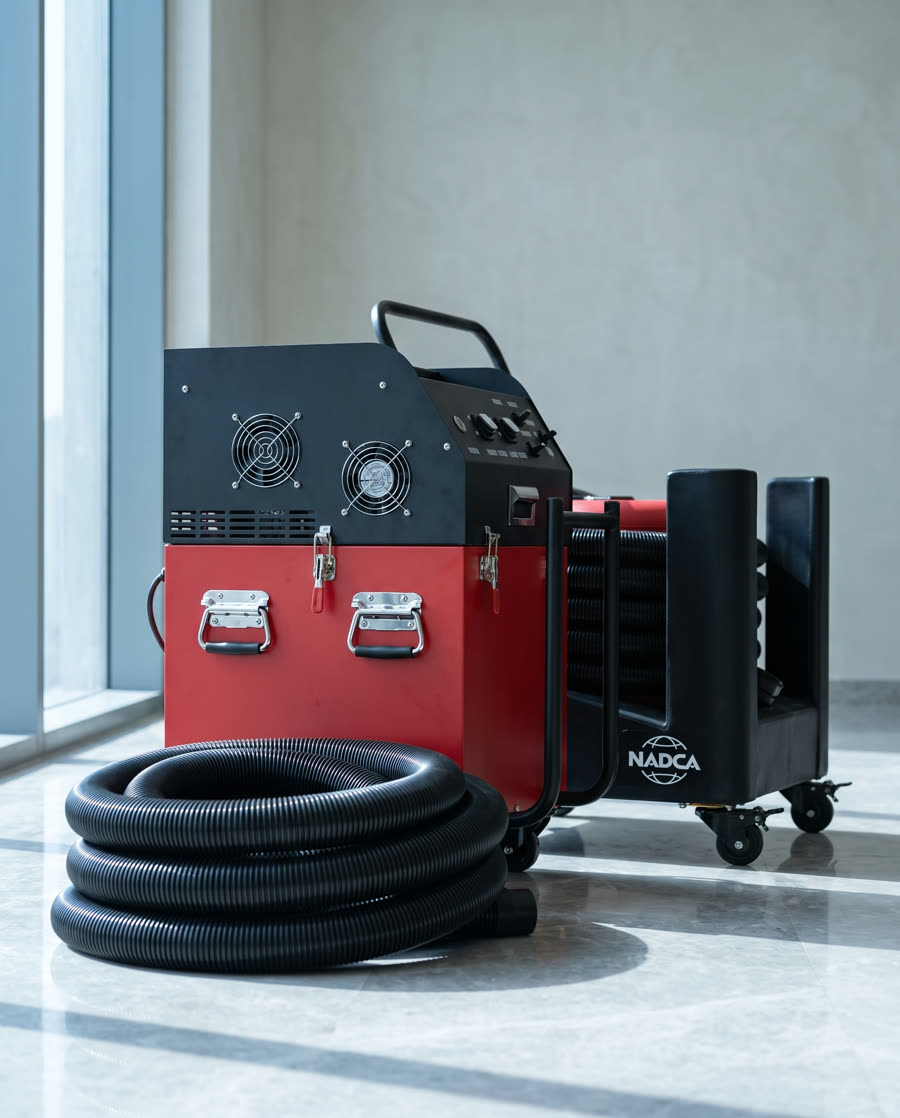
- AC grilles, filters and, if needed, the unit cleaned, before the deep clean, because opening the AC releases dust into the room.
- Move-in deep clean of the empty apartment, top to bottom, inside out.
- A second short photo set after the clean, for your own records.
- Furniture and unpacking.
If the AC turns out to need more than a filter wash, our guide to AC service, AC cleaning and duct cleaning explains which of the three you actually need, and who to call for each.
What can a cleaning company take off your hands at move in?
The cleaning, the AC grilles and units, and the unpacking, but not the landlord’s repairs. A good company will tell you which items on your defect list it can solve and which belong to the landlord, a plumber or an AC contractor.
At The Clean Fox, a move-in deep clean covers the kitchen with cupboards inside and out, bathrooms with descaling, window sills, doors and frames, switches and sockets, skirting boards, floors, cupboards and drawers inside, and the balcony or terrace. AC cleaning by our own technician can be planned for the same visit. Repairs and gas refills are a separate job, agreed with you first. If you want help beyond cleaning, we can also support you on moving day itself: putting clothes into wardrobes, organising kitchen cupboards and ironing. Send us a few photos on WhatsApp and we agree one fixed price before we start, with no extra charges on the day.
For the full list of what a deep clean covers and what it does not, see what a home deep clean includes.