
The move-out email from your agent says the apartment must be “professionally deep cleaned” and that the cost will otherwise come out of your deposit. A friend tells you that is illegal. Another says it is standard in Dubai. Both are partly right, and the difference between them is not in the law but in your contract and your evidence. This guide walks through what the tenancy law actually says, what it leaves open, and how to keep a cleaning question from turning into a deposit dispute.
Does Dubai law require professional cleaning when you move out?
No. Dubai’s tenancy law, Law No. 26 of 2007, sets a standard for the condition of the property, not a cleaning obligation.1 The relevant article asks you to return the property “in the same condition as handed over to him at the time of contracting except, shortages resulting from normal use or for reasons beyond his control”. That is Article 21.1
Two more articles frame it. Article 19 expects you to look after the property during the tenancy the way an ordinary person would. Article 20 allows the landlord to take a security deposit “to ensure maintenance of the Real Property” and to return it, or what remains of it, when the contract ends.1 The 2008 amendment, Law No. 33 of 2008, changed several articles but did not add a cleaning duty.2
Read all of it and one thing stands out: the words clean and cleaning do not appear anywhere. The law also does not set the amount of the deposit. Percentages you see quoted online are market practice, not a legal cap.
So the honest answer has two halves. The law does not make professional cleaning compulsory. But the law does measure you against the condition at the start, and a dirty oven was very probably not part of that condition.
What counts as normal wear and tear, and what is simply dirt?
Normal wear is what happens to a home that is lived in carefully. Dirt is what builds up when it is not cleaned. Damage is something broken, burnt or marked beyond what cleaning can fix. Most move-out arguments come from mixing these three up, so it helps to sort them before the inspection.
| What the inspector finds | Usually treated as | Why |
|---|---|---|
| Paint slightly faded where a picture or sofa stood | Normal wear | Comes from ordinary use over time |
| Light scuffs on floor tiles in walkways | Normal wear | Everyday foot traffic |
| Door handles and switches worn smooth | Normal wear | Ordinary use |
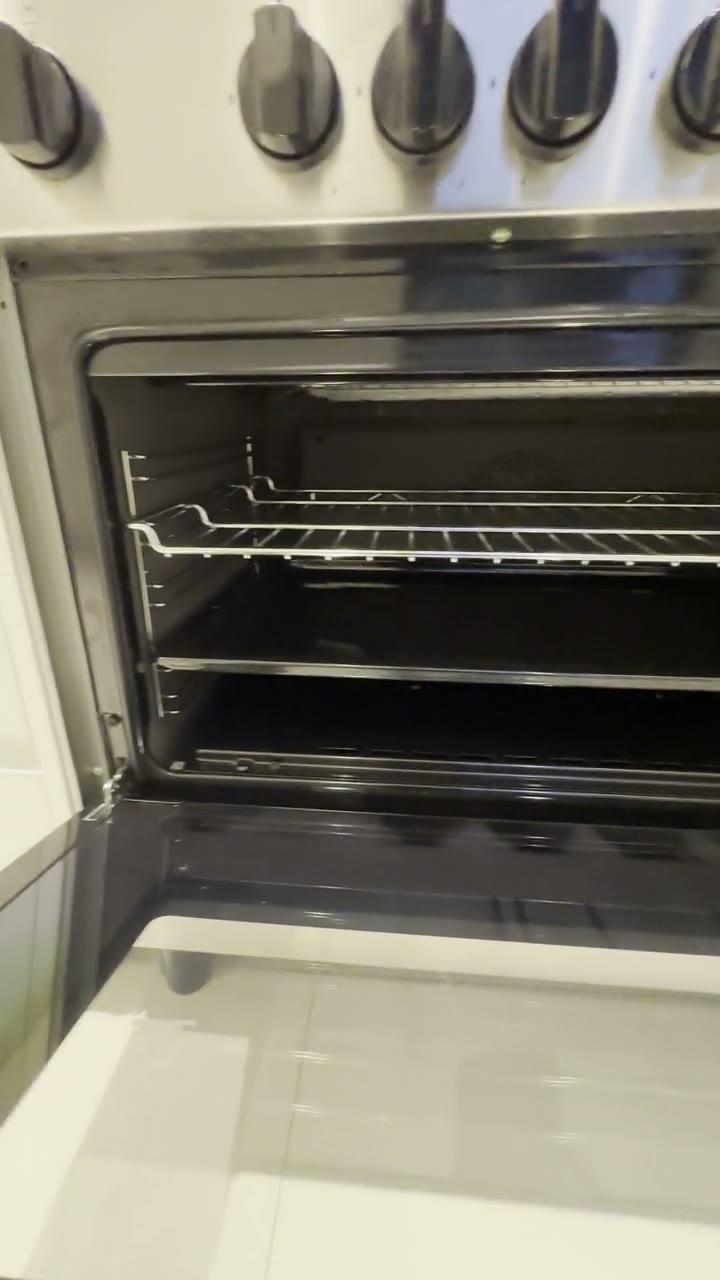
| Burnt grease inside the oven, on trays and on the hood filter | Cleaning | Comes off with the right method, so not wear |
| Limescale on shower glass, taps and tiles | Cleaning | Builds up when not removed regularly |
| Dust and marks inside wardrobes and kitchen cupboards | Cleaning | Was clean at handover, can be cleaned again |
| Sand and dirt in sliding door tracks | Cleaning | Removable, though often missed |
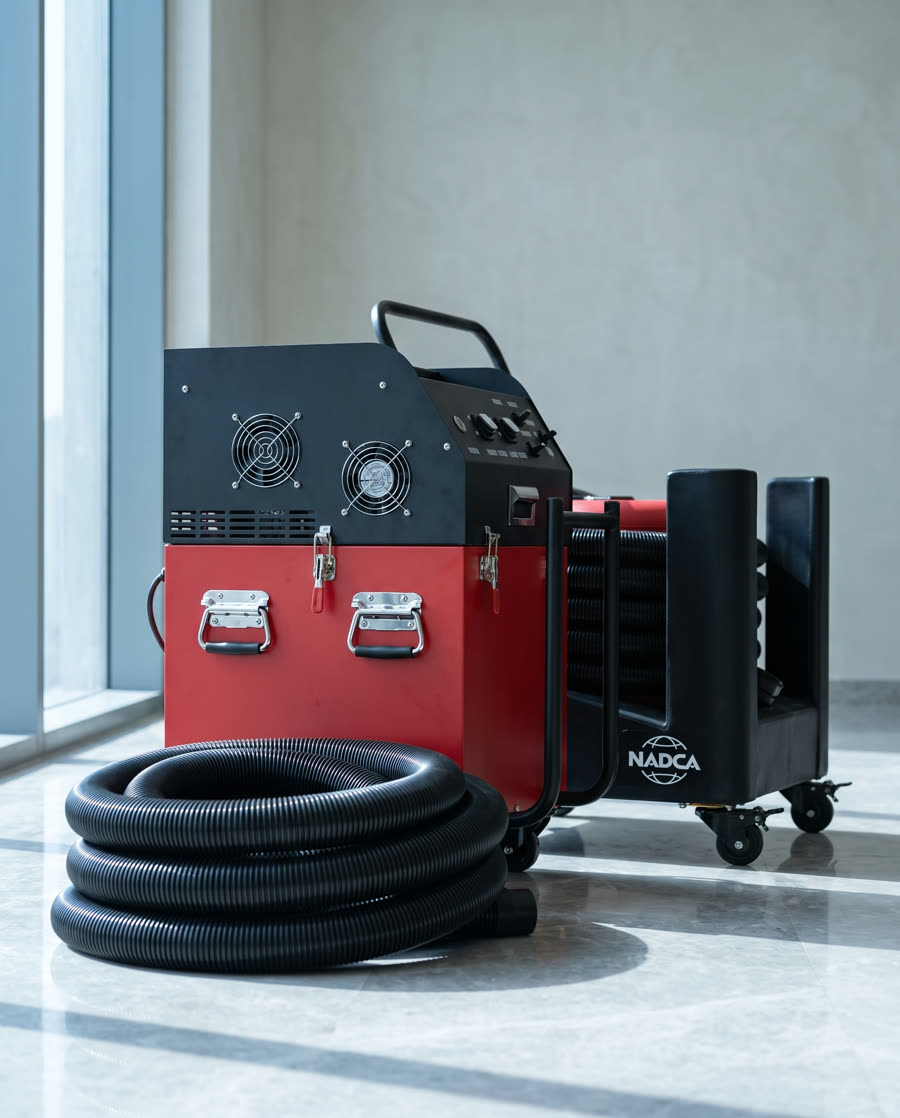
| Grey AC grilles and a clogged filter | Cleaning | Grilles and filter can be cleaned; the system itself is maintenance |
| Nail holes, larger scrapes, crayon on matt paint | Damage or repair | Needs filling or paint, not cleaning |
| Burns on worktops, chipped tiles, broken blinds | Damage | Needs repair or replacement |
The table is a practical guide, not a legal definition. The law itself only uses the phrase “normal use”. At the far end of the scale, the 2008 amendment lets a landlord seek eviction where a tenant damages the property through a deliberate act or gross negligence.2 Ordinary dirt at move out is a long way from that, and it is worth keeping the two apart in any conversation.
If the law is silent, what decides the cleaning question?
Your contract decides it, together with what was recorded when you moved in. These are the three documents that matter more than anything you read online, including this page.
The additional terms of your tenancy contract
The standard Dubai tenancy contract leaves room for additional terms, and many landlords attach an addendum. That is where a cleaning clause lives, if there is one. Wordings vary a lot. Some say only that the property must be returned in the same condition. Some say it must be returned “clean”. Some require a professional clean and ask for the invoice. Some name AC duct cleaning or repainting separately.
Each wording means something different. “Same condition” repeats the law. “Clean” sets a standard but not a method, so a careful clean you do yourself can meet it. “Professionally cleaned, with invoice” requires a company. If you signed that, booking one is cheaper than arguing about it later.
The move-in inspection report
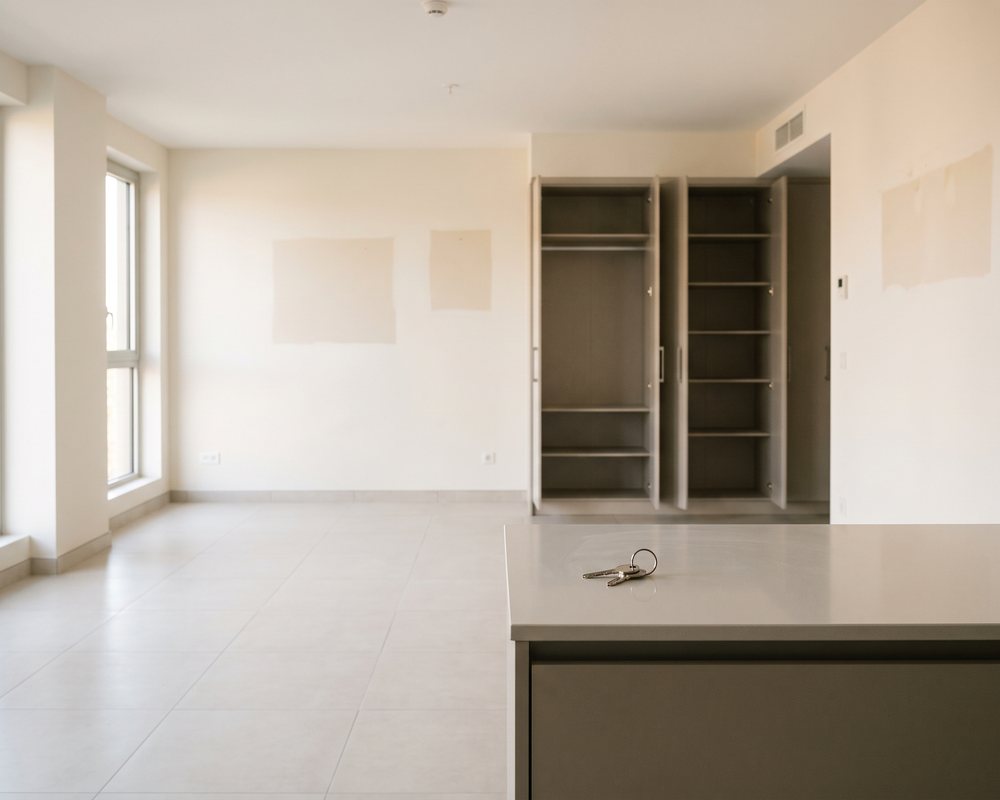
Article 15, as amended, obliges the landlord to hand over the property in a good condition that allows you to use it fully.2 The move-in report is the record of what that condition was. If the report says the oven was clean and it now is not, you are measured against that. If the report is missing or vague, the starting point becomes a question of evidence.
Your own photos and emails
A dated photo set from the first day, sent by email to the landlord or agent, is the strongest thing a tenant can have. It turns “it was already like that” from a claim into a record.
What evidence protects your deposit at move out?
The same kind of evidence you hopefully collected at move in, taken the same way, on the last day. Two matching photo sets make a dispute short.
- Photograph in the same order and from the same angles as at move in: each room from the door, then close-ups of the oven, hob, hood filter, inside the fridge, cupboards open, bathrooms, shower glass, AC grilles and sliding door tracks.
- Take the photos after the clean and before you hand back the keys, with the date visible in the file data. A slow video walk-through is a good addition.
- Keep the scope and the invoice of any professional clean. If your contract requires a professional clean, the invoice is your proof. A written scope also shows what was done room by room.
- Ask for a joint inspection and for the result in writing on the day. A short email that says “inspection done, items noted: none” is worth more than a friendly handshake.
- Note the meter readings and photograph the keys, access cards and remotes you return.
A handover sheet signed without details protects nobody. A report only helps you if it lists what was actually seen, room by room.
How do you keep a cleaning question from becoming a dispute?
Talk early, in writing, and in specifics. Most deposit disagreements about cleaning are settled before anyone thinks about a tribunal, and they are settled faster when both sides look at the same list.
- Ask for a pre-inspection well before your last day, or at least for the landlord’s checklist. You then know what will be looked at.
- Read the cleaning clause again and decide which of the three wordings above you have.
- Fix the cleaning items before the inspection, not after. A re-clean after keys are returned is harder to arrange and to prove.
- If a deduction is proposed, ask for it itemised, with a photo for each item and an invoice or quote for the cost. A single round figure for “cleaning” is hard to check.
- Offer a remedy. If an item was genuinely missed, offering to have it cleaned promptly is often accepted, and it is cheaper than a deduction.
- Keep everything in one email thread. Calls and voice notes are easy to forget and hard to show later.
None of this requires a lawyer. It requires the contract, the photos and a bit of patience.
Where do you go if you and your landlord still disagree?
In Dubai, rental disputes go to the Rental Dispute Settlement Centre at the Dubai Land Department, usually called the RDC. It decides on the basis of your contract and the evidence both sides bring, not on general statements about what is common practice.
Before filing, collect the tenancy contract with its addendum, your Ejari registration, the move-in report, both photo sets, the correspondence about the deduction and any cleaning invoice. Filing carries fees and takes time, so look honestly at the amount in dispute. For a small cleaning deduction, a well documented email to the landlord often achieves more for less effort than a case.
If your property is in Sharjah, the picture is different. Sharjah has its own tenancy law, Sharjah Law No. 2 of 2007 with an executive regulation, and disputes go to the rental dispute committee of Sharjah Municipality.3 The Dubai articles quoted above do not automatically apply there.
This is general information, not legal advice. For a specific dispute, read your contract with someone qualified to advise on it.
What does this mean when you book a move-out clean?
It means booking for the right reason and with the right scope. If your contract requires a professional clean with an invoice, book one, keep the invoice and keep the written scope. If it only requires the original condition, a thorough clean you do yourself can be enough, as long as it covers the places inspections look at.
Either way, cleaning has limits. It returns surfaces to their condition. It does not fill nail holes, repaint walls, repair burns or service the AC system. Those belong to a handyman, a painter or a licensed AC contractor, and confusing them with cleaning is where many deductions start.
If you want to do the work yourself, our room-by-room move-out cleaning checklist follows the order in which handovers are typically inspected. If you would rather hand it over, our move out cleaning service in Dubai covers kitchens, bathrooms, cupboards inside, windows and floors, with AC grilles and ducts by our own technician on the same visit if you need them. For the full list of what a deep clean does and does not cover, see what a home deep clean includes. We agree one fixed price on WhatsApp before we start, with no extra charges on the day, and we will not promise you your deposit back, because only your landlord and your contract can decide that.