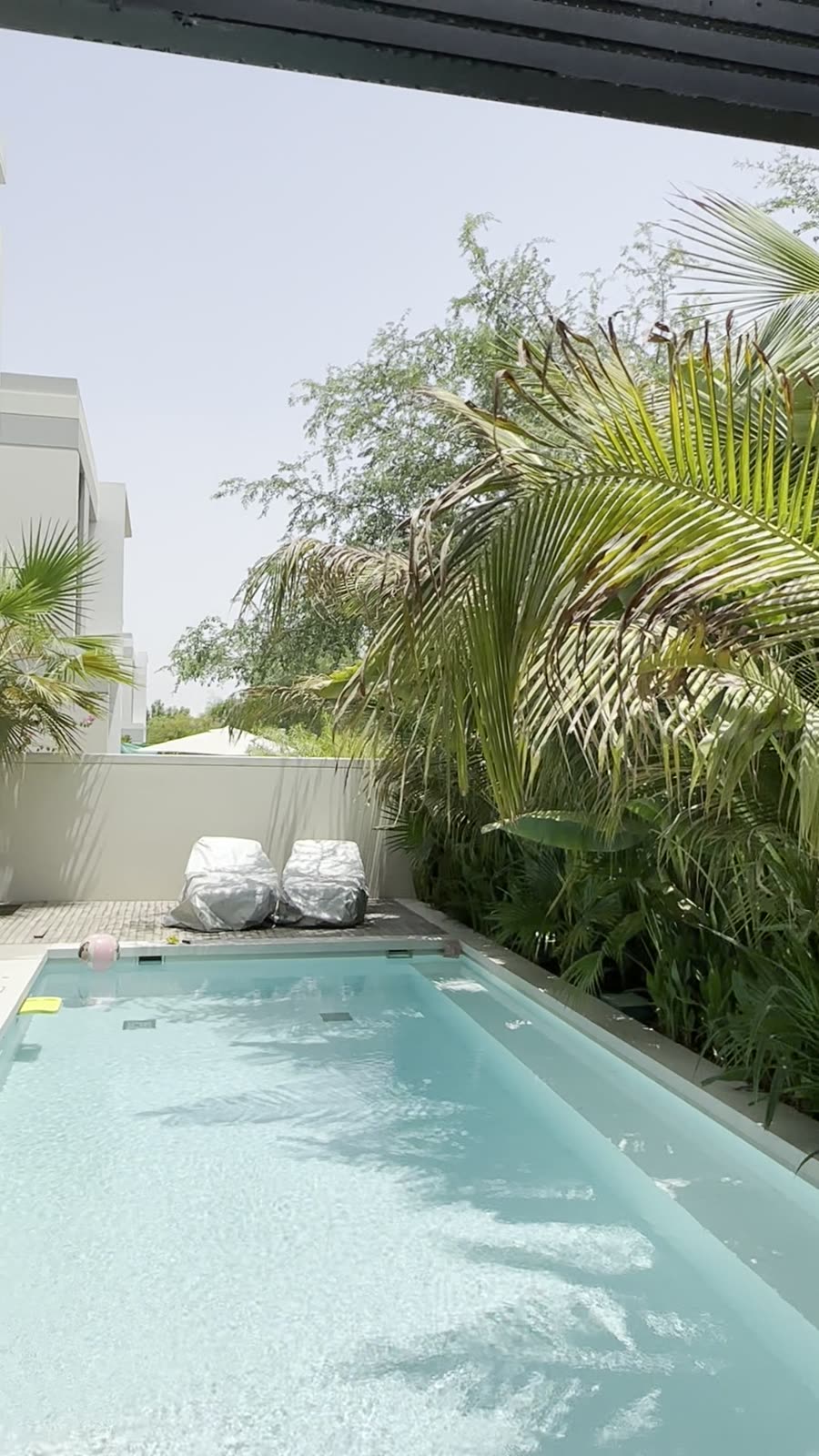

From May to September the terrace mostly belongs to the dust. Cushions go into a cupboard, or stay outside under a cover, the umbrella stays folded and the table collects a fine beige film that comes back a day after you wipe it. Then the evenings cool down and everyone wants to sit outside again, usually the same weekend. This guide is about getting the furniture, cushions and umbrellas ready for the outdoor season without scratching surfaces or ruining fabric, and about which jobs are better done by hand than with a pressure washer.
Why is October and November the right time?
Because the dustiest months are over and the weather finally lets things dry gently. In our own analysis of three years of Copernicus CAMS data for Dubai, airborne dust is highest in July and August, with monthly PM10 averages of 170.8 and 178.2 µg/m³, against 60.6 µg/m³ in November1. Whatever stood outside through the summer has been exposed to the heaviest dust of the year.
Clean too early, in September, and the next dusty week undoes the work. Clean in October or November, and the furniture stays presentable through the season with simple weekly care. There is also a practical side: the UAE’s midday break bans outdoor work in direct sun between 12:30 and 15:00 from 15 June to 15 September2. From mid September, outdoor jobs can be planned for the whole day again, and demand rises quickly.
What is actually on the furniture after a Dubai summer?
Mostly fine mineral dust, which matters for how you clean it. A study of indoor dust samples from Dubai found calcium, potassium, magnesium, aluminium and iron as its main elements3. Outdoor dust from the same desert is no softer. Fine mineral grit behaves like a polishing powder: wipe it with a dry cloth and you drag it across the surface.
On top of the dust there are usually three other things:
- Bird droppings, which etch some coatings and stain stone if they sit for long.
- Sunscreen, body oil and food residue on armrests, cushions and table tops, which hold dust and turn grey.
- Spots on fabric where dirt and moisture met: on cushions left outside after rain, irrigation or humid nights.
So the first step is always the same, whatever the material: take off the loose dust dry, with a soft brush or a vacuum, before any water touches the surface.
How do you clean outdoor furniture by material?
Dry dust off first, then wash with mild soap and plenty of water, and rinse well. The table gives the safe starting point for the common materials. Where the maker’s care instructions say something different, they win.
| Material | Clean with | Avoid | Note |
|---|---|---|---|
| Powder coated aluminium | Soft brush, mild soap, soft cloth, rinse | Scouring pads, solvents | Check for chips where water can reach the metal |
| Teak and other hardwoods | Soft brush along the grain, mild soap, rinse | Pressure washer at short range, wire brushes | A strong jet lifts the soft grain and roughens the wood |
| Synthetic rattan and wicker | Vacuum or brush the weave, then soap and rinse | Soaking cushions inside the frame | Dust collects deep in the weave |
| Plastic and resin | Mild soap, soft brush, rinse | Abrasive powders | Scratches hold dirt afterwards |
| Glass table tops | Rinse loose grit off first, then glass cleaner | Dry wiping | Grit scratches glass when wiped dry |
| Stainless steel | Mild soap, soft cloth along the grain, dry off | Chlorine bleach, steel wool | Wipe dry to avoid water marks |
| Stone and concrete tops | Mild soap, soft brush, rinse | Acidic cleaners on marble and limestone | Acids etch calcareous stone |
Work from top to bottom, rinse each piece fully before the soap dries in the sun, and let it dry before cushions go back on. In the cooler months that takes far less time than in summer, but wooden furniture still needs a dry day before it is used again.
How do you clean outdoor cushions without ruining them?
Gently, evenly and with patience for the drying. Cushions are the part most often damaged by cleaning, because foam holds water and covers shrink.
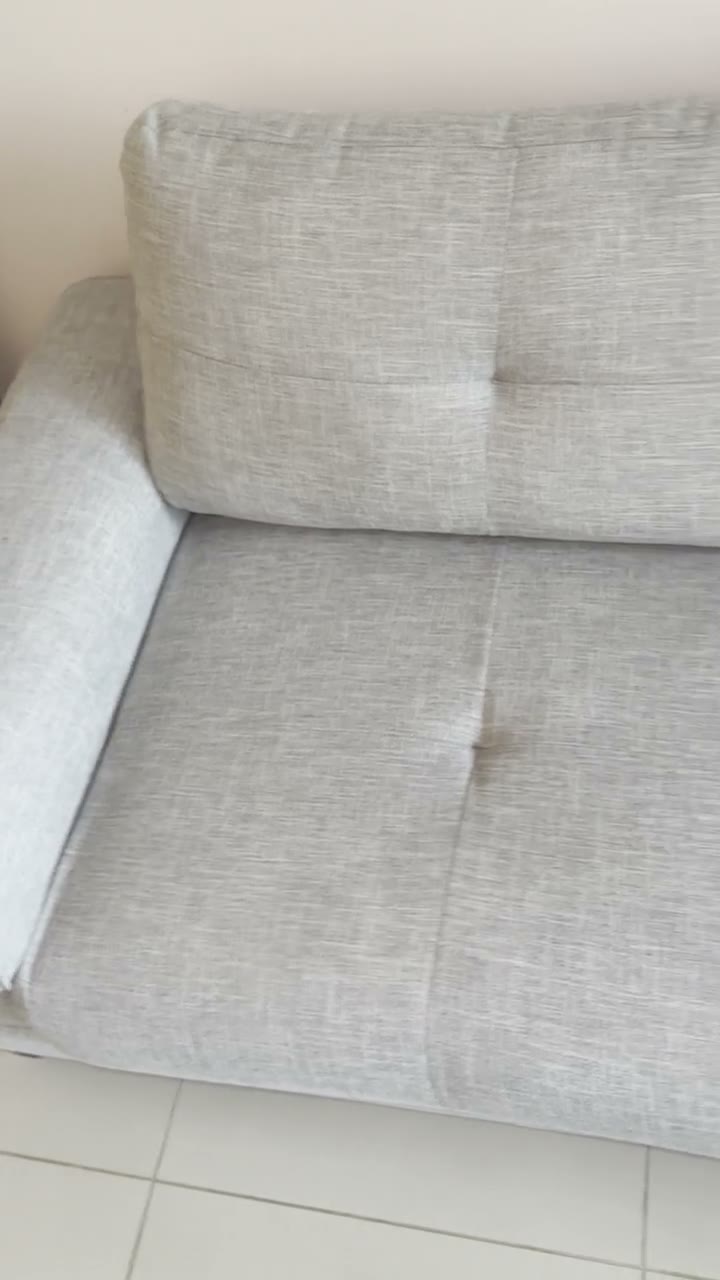
For acrylic outdoor fabrics, the most detailed instructions come from Sunbrella, one of the common makers. For non removable covers it recommends a solution of “1/4 cup mild soap per gallon of lukewarm water”, a soft bristle brush, a thorough rinse to remove all soap residue, and air drying4. It advises cleaning “from seam to seam” rather than rubbing one spot in circles, to avoid water rings4. Removable covers can be soaked in the same solution, and some can be machine washed in cold water on a delicate cycle, but only after consulting the furniture maker, “as cushion construction may vary”4.
Three points from the same guidance are worth repeating because they go against common habits:
- Air dry only. Sunbrella states its fabric “should only be allowed to air dry”4. No tumble dryer.
- No steam. Sunbrella says: “DO NOT use a steamer or an iron set to the steam setting”4. For this kind of fabric we do not use our steam cleaner either.
- Spots grow on dirt. Sunbrella states its fabrics “do not promote mildew growth, however, mildew may grow on dirt and other foreign substances if not removed from the fabric”4. Keeping cushions clean is the best way to keep them free of spots.
For cushions of other makes, look for the care label under the zip. If there is none, treat them as delicate: mild soap, little water, even cleaning across the whole panel and full drying standing on their edge in the shade. A cushion that is put back damp inside a cover will smell within days.
What about umbrellas, shade sails and gazebos?
Clean them open, dry them open, store them dry. A folded umbrella holds dust and moisture in the folds, and that is where marks and smells start.
- Open the umbrella fully and brush the dust off both sides with a soft brush.
- Wash with mild soap and a soft brush, from the top down, and rinse thoroughly.
- Leave it open to dry completely, ideally in light shade, before folding.
- Check the frame: hinges, ribs and the crank collect sand and should be rinsed and left to dry.
- Shade sails and gazebo roofs: clean them where they are, with soft brushes and low pressure water, and never stand on the fabric or the frame.
Fabric labels for umbrellas differ a lot. Some are acrylic like outdoor cushions, others are polyester with a coating that a hard brush or a strong jet can damage. When in doubt, treat the fabric gently and test on a hidden corner.
Where does the pressure washer help, and where does it harm?
It helps on hard, porous floors and harms almost everything soft. Stone paving, interlock, concrete and pool decks are where a pressure washer earns its place, because sand and grime sit deep in the joints and pores. On teak it raises the grain, on painted and powder coated metal it can lift paint at chips, on cushions it drives dirt into the foam, and on fabric it can open seams and strip coatings. Sunbrella’s cleaning guidance for its upholstery does not mention pressure washing at all and relies on soap, brushes and rinsing4.
On a balcony in a tower, there is a second limit: water running onto the balcony below. Many buildings restrict how much water may be used outside. Our guide to cleaning after a sandstorm covers how to get sand out of balconies and tracks without flooding the neighbours.
How do you keep the terrace ready through the season?
With a short weekly routine and covers that breathe. Once the big clean is done, the work stays small:
| How often | What | Why |
|---|---|---|
| Weekly | Brush or vacuum dust off furniture and cushions | Dust left to sit gets ground in |
| Weekly | Shake out and stand cushions on edge after humid nights | They dry faster and do not stay damp underneath |
| After rain or irrigation | Bring cushions in or let them dry fully before covering | Damp plus dust is where spots start |
| After a dusty or sandstorm day | Rinse table tops before wiping | Avoids scratching with grit |
| Monthly | Rinse umbrella and shade fabrics, check frames | Keeps folds and hinges free of sand |
| End of season | Full clean, dry, store covered | Starts next season clean |
Breathable covers protect against dust without trapping moisture. Airtight plastic covers on cushions that are not completely dry do the opposite.
What can The Clean Fox take off your hands?
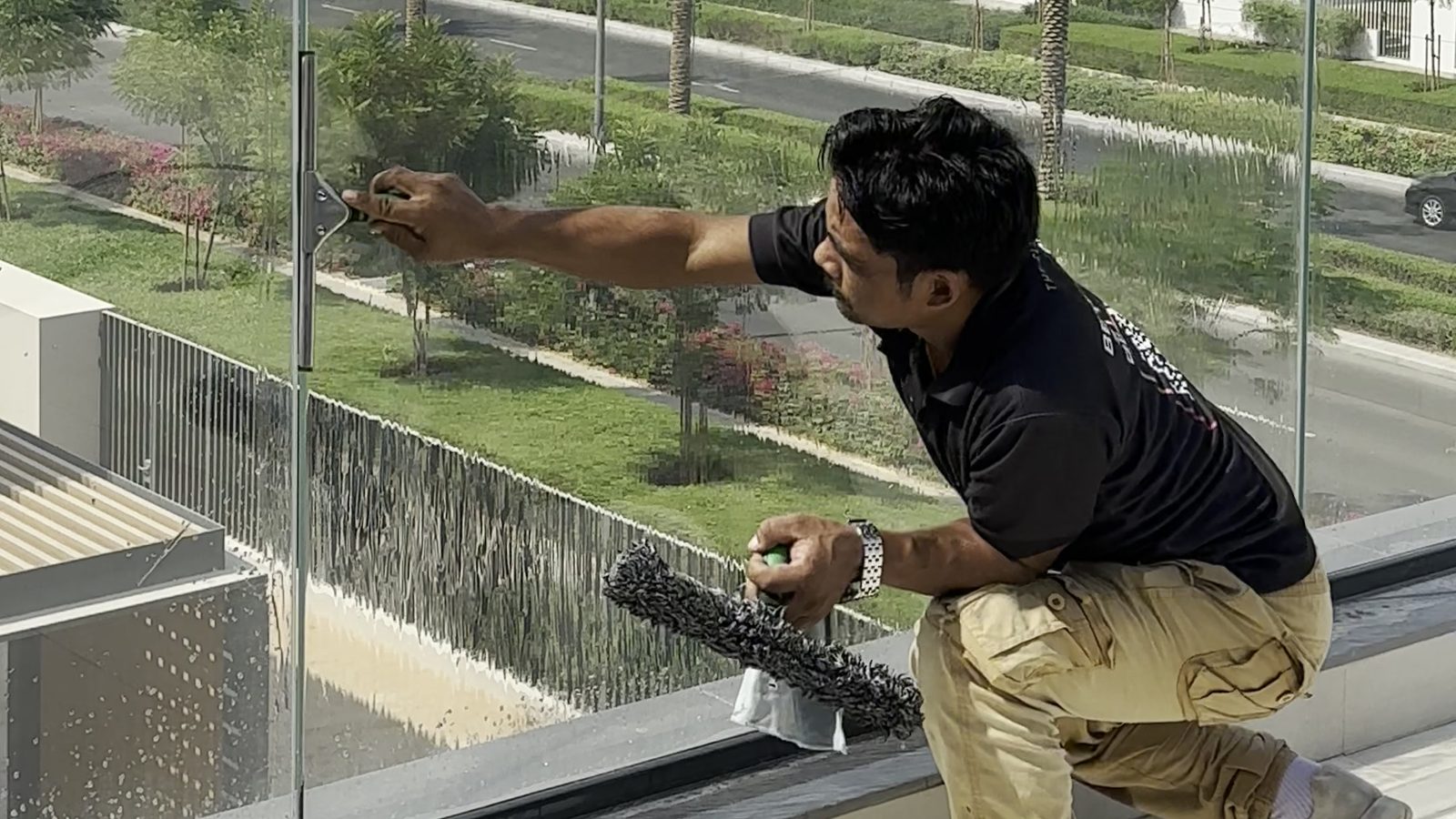
The heavy part of the job before the season starts. We clean terraces and pool areas, garden furniture, outdoor cushions, umbrellas, gazebos and paving, with pressure washing where the surface takes it and by hand where it does not. Gardening and technical pool maintenance are not part of what we do. Our outdoor cleaning in Dubai covers apartments and villa terraces, and for a villa that is getting ready for guests, the outdoor areas can be done together with a villa deep clean. If you are hosting over the holidays, our Christmas and New Year cleaning timeline shows where the outdoor clean fits. We agree one fixed price on WhatsApp before we start, based on the number of pieces, their size and their condition.