
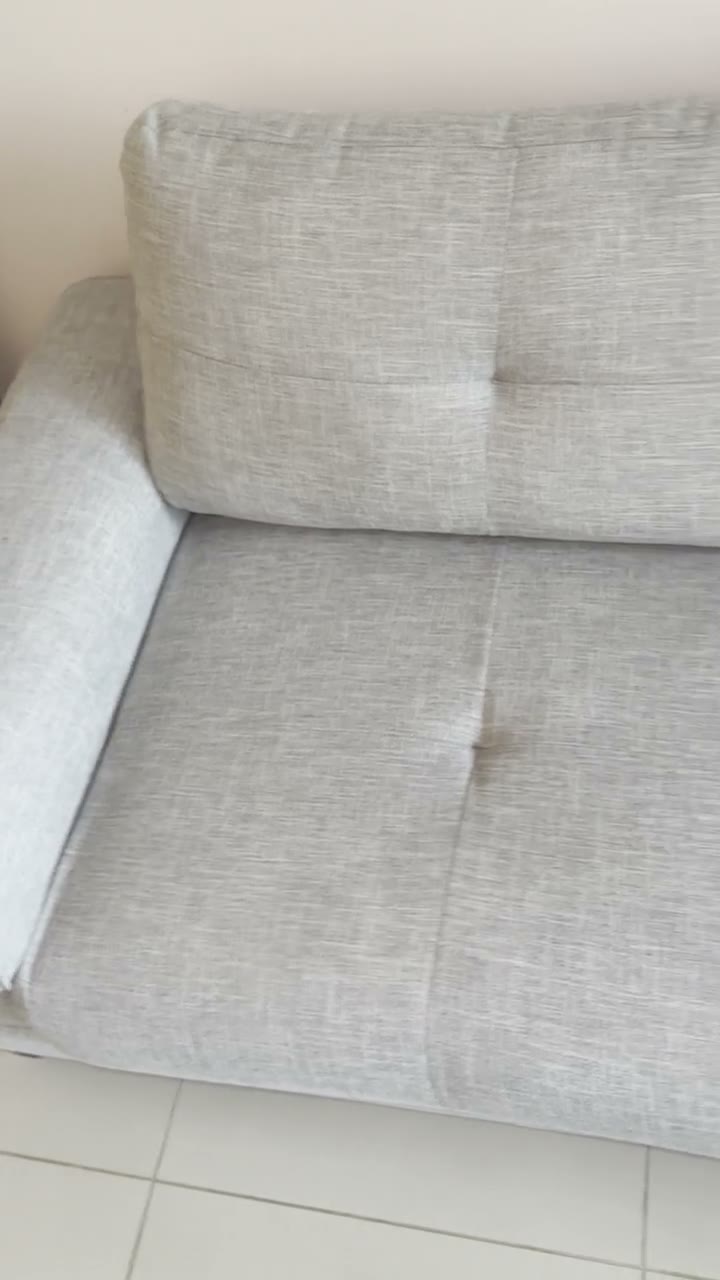
National Day means family, neighbours and friends in the majlis, often for two days in a row and often with more guests than any other weekend of the year. The seating that has carried a whole summer of everyday life is suddenly the centre of attention: long runs of sofas along the walls, floor cushions, a large rug in the middle and tables with coffee, dates and sweets. Most people think about cleaning a few days before, when every cleaning company is already booked. This guide sets out when to clean, how each part of a majlis is handled, and why drying time, not cleaning time, decides your date.
When is National Day this year, and when should you clean?
National Day is a public holiday on 2 and 3 December1, which in 2026 fall on a Wednesday and a Thursday. Under Cabinet Resolution No. 27 of 2024, a holiday that falls on a weekend “cannot be transferred to another day”1, so the dates do not move. Many families also stretch the celebrations into the following weekend.
Work backwards from the first guests:
| When | What | Why |
|---|---|---|
| Early to mid November | Book the clean, agree the date | Late November slots fill first |
| Week before the clean | Check labels, note stains and their cause | Lets us choose the right method in advance |
| Last week of November | Clean sofas, floor cushions, rugs and curtains | Leaves several dry days before 2 December |
| Day after the clean | Check that everything is dry, cushions back in place | Damp filling is felt by pressing, not seen |
| 1 December | Vacuum, arrange, final touches | Only light work so close to the guests |
| 2 and 3 December | Blot spills immediately | The first minutes decide whether a stain sets |
| Weekend after | Spot clean what happened during the celebrations | Spills are easier while fresh |
The evening before is the worst moment. A sofa that is still damp when guests sit on it attracts dirt from clothes, and a rug that is folded or covered while damp underneath will smell.
What makes a majlis different from a normal sofa?
Its size, its use and the way it is built. A majlis often has long continuous seating along two or three walls, separate back cushions leaning against the wall, floor cushions or a floor level seating set, and a large central rug. Fabrics are frequently velvet, chenille or textured weaves, sometimes with embroidery or metallic threads.
This has three consequences for cleaning:
- More fabric than it looks. Seat, back and side cushions, bolsters and arm covers add up quickly. The time needed depends more on the number of pieces than on the number of “seats”.
- Back cushions and walls. Cushions leaning against a wall pick up marks where hair and hands touch them, and the wall behind them collects dust. Both are best cleaned together.
- Heavy use in a short time. Food, coffee and tea on the coffee table, children on the floor cushions and long evenings all happen in the same room. A clean before and a spot clean after is often the most sensible plan.
How are majlis sofas and floor cushions cleaned?
According to the fabric, and with as little moisture as it needs. Before any water touches a cushion, the label tells us what the fabric tolerates.
Many sofas carry the furniture industry’s W, S, WS or X code. The standard behind these codes says the code refers to whether the colours stay fast in water or solvent, and “does not reflect the ability of that fabric to withstand specific cleaning methods”2. For WS fabrics the same standard states: “Hot water extraction or steam cleaning is not a recommended cleaning method”2. Our guide to sofa cleaning codes explains each code in detail.
Two rules from that standard apply to every code: do not over wet the fabric, and do not remove cushion covers to wash them separately2. Covers washed on their own can shrink, change colour against the rest of the set and no longer close over the foam. That matters especially for a majlis, where a dozen matching cushions sit side by side and any difference shows.
So a typical majlis clean runs in this order:
- Dry soil removal: thorough vacuuming of every cushion, seam and fold, with the cushions lifted out.
- Pre treatment: stains noted beforehand are treated according to their cause and the fabric.
- Cleaning on the cushion: extraction or low moisture cleaning, depending on the label and a colour test on a hidden spot.
- Grooming: the pile of velvet and chenille brushed in one direction while still slightly damp.
- Drying: cushions stood on edge, air moving, AC running.
How are rugs and carpets handled?
With the same care for drying, and with attention to the edges. The large rug in the centre of a majlis takes the most traffic and, because it is often wool or a wool blend, holds more moisture than synthetic fabric when cleaned.
Two things are worth looking at before the clean:
- Dark lines along the edges or under doors. They are usually filtration soiling, fine dust filtered out of air that moves through the edge of the carpet. They need targeted treatment and do not always come out fully. Our guide on dark lines along carpet edges explains why.
- Old spills. A spot that reappears days after a clean is often residue that wicks up from the backing. The IICRC upholstery standard describes this effect, wicking, as one of the results of slow drying3.
For fitted carpet and loose rugs around the majlis, our carpet cleaning in Dubai and carpet cleaning in Sharjah use extraction where the fibre allows it and keep the rug flat and ventilated until dry.
Why does drying time decide the date?
Because a fabric that dries slowly can change, and December air holds water. The IICRC upholstery standard calls for fast drying, as slow drying risks “cellulosic browning, dye migration, shrinkage, and wicking”3. It also notes that drying time depends on the fibre, the fabric, the amount of moisture and the temperature and humidity of the room3.
Here Dubai’s winter works against you. In ten years of hourly ERA5 data, relative humidity in Dubai is higher in January than in July4, even though the air feels fresher. Cool, humid air dries upholstery more slowly than the dry heat of summer, so the same clean needs more time to dry in late November than in June.
What helps after a clean:
- Keep the AC running in the room, as it removes moisture from the air.
- Keep air moving with a fan, and leave doors to the room open.
- Stand cushions on their edge and do not stack them.
- Do not cover anything with throws or plastic until it is dry right through.
- Keep children and pets off until the fabric feels dry to the hand and the cushion feels dry when pressed.
What should you do about spills during the celebrations?
Act within minutes, and get anything that soaked in cleaned within a day. Dubai Municipality’s indoor air guideline advises to “thoroughly clean and dry liquid spills on porous surfaces such as carpet within 24 hours or discard the material”5.
| Spill | First step | What to avoid |
|---|---|---|
| Arabic coffee, tea | Blot with a dry white cloth, then blot with a little cold water | Rubbing, hot water |
| Sauces, oil, ghee | Lift solids with a spoon, blot, leave for a professional | Water alone spreads oil |
| Dates, sweets, syrup | Lift what you can, blot with lukewarm water | Scraping into the pile |
| Juice and soft drinks | Blot, then blot with cold water | Coloured cloths that transfer dye |
| Henna or perfume | Blot only and call us the same day | Any household remover |
Never use household stain removers with bleach on a majlis fabric, and test anything on a hidden spot first. When in doubt, blot, leave it and send us a photo on WhatsApp.
How do we fit into your National Day preparations?
We clean the majlis in the last week of November so that it is dry and ready on 2 December. Our sofa cleaning in Dubai covers sofas, majlis seating, floor cushions and bolsters, cleaned on the cushion according to their label, and rugs and curtains can be done on the same visit. In Ajman, our sofa cleaning in Ajman works the same way. We agree one fixed price on WhatsApp before we start, based on the number of pieces, the fabric and the condition, with no extra charges on the day.