
Most office deep cleans are ordered with a single line on a purchase order: “deep cleaning of office premises”. Then the team arrives at night and the security desk has no names, the server room is locked, nobody knows whether the whiteboards may be wiped, and the next morning one manager finds the chairs untouched while another finds the pantry perfect. None of that is bad cleaning. It is a missing contract. This guide is a checklist of what to write down before an office deep clean in Dubai, so that everyone means the same thing by “done”.
It is written for office managers, facility coordinators and business owners who book a deep clean once or at intervals, not for daily cleaning staff contracts. This is general information, not legal advice. For anything that touches liability or your lease, your lawyer or your landlord is the right person to ask.
What should an office deep cleaning contract cover?
Ten points, most of which fit on one page. The contract does not need legal language. It needs to be specific enough that a new person on either side could read it and do the job.
| # | Clause | What to write down | Why it matters |
|---|---|---|---|
| 1 | Scope | Every area and item, room by room, with counts | “Office” means different things to different people |
| 2 | Exclusions | What is explicitly not part of the job | Prevents the most common argument on the day |
| 3 | Time window | Date, start, latest finish, building curfew | Your team needs the office back on time |
| 4 | Building rules | Who applies for the NOC, lift booking, parking, by when | The most common reason a night clean fails to start |
| 5 | Access | Keys, cards, alarm, locked rooms, return | Security of your premises |
| 6 | Confidentiality | What staff may not read, move, photograph or empty | Protects your business and your clients |
| 7 | AC | Who cleans which parts, and what record you get | Often subcontracted, often missing from the scope |
| 8 | Acceptance | Walkthrough or photos, by whom, when | Defines when the job is finished |
| 9 | Complaints and damage | How to report, deadline, what happens next | Turns a dispute into a re-clean |
| 10 | Price and changes | Fixed price for the scope, how changes and cancellations work | No surprises on either side |
How do you define the scope so nobody argues afterwards?
Count things, list them by area, and attach a floor plan if you have one. The more specific the scope, the more accurate the quote and the easier the acceptance.
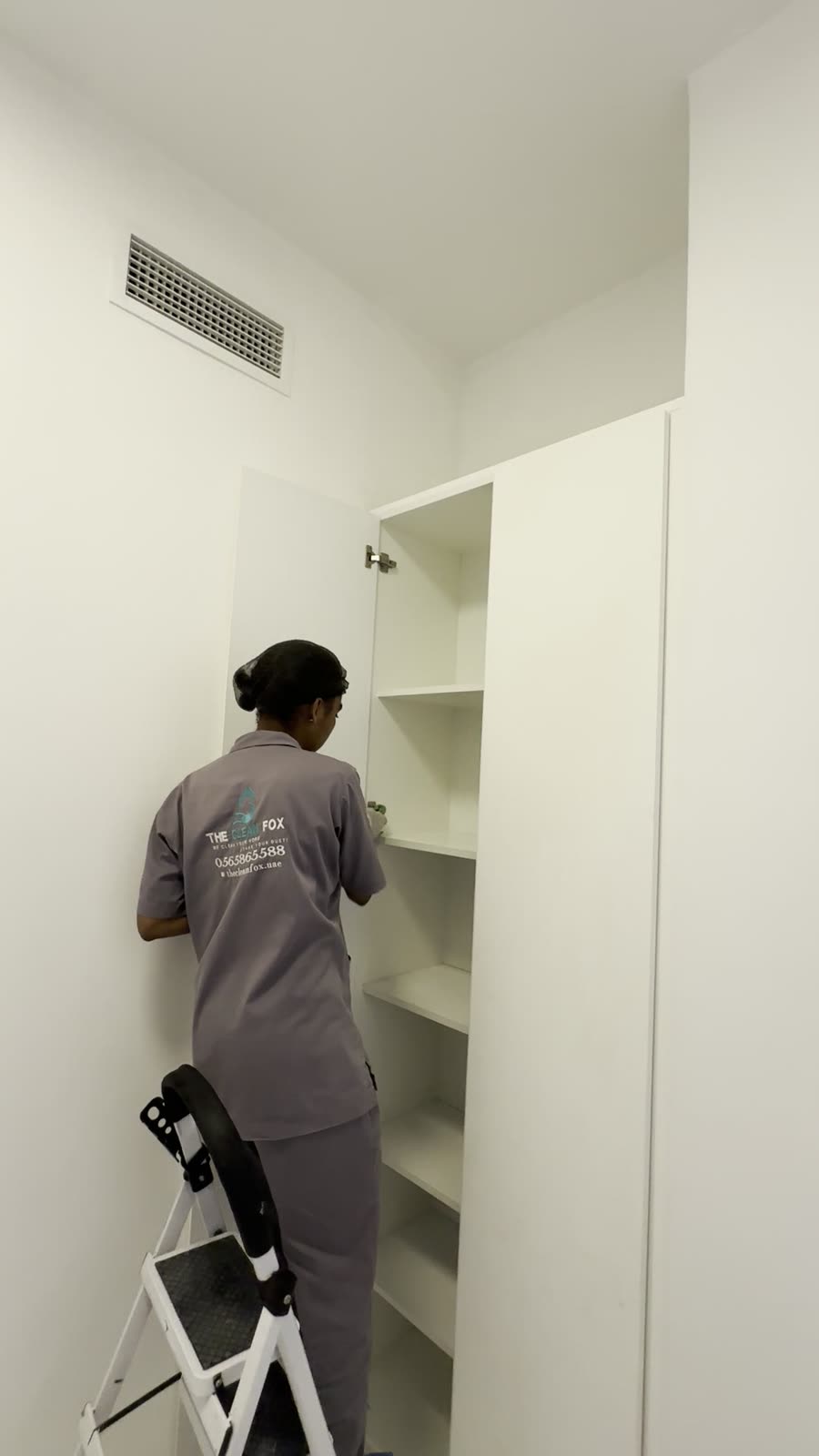
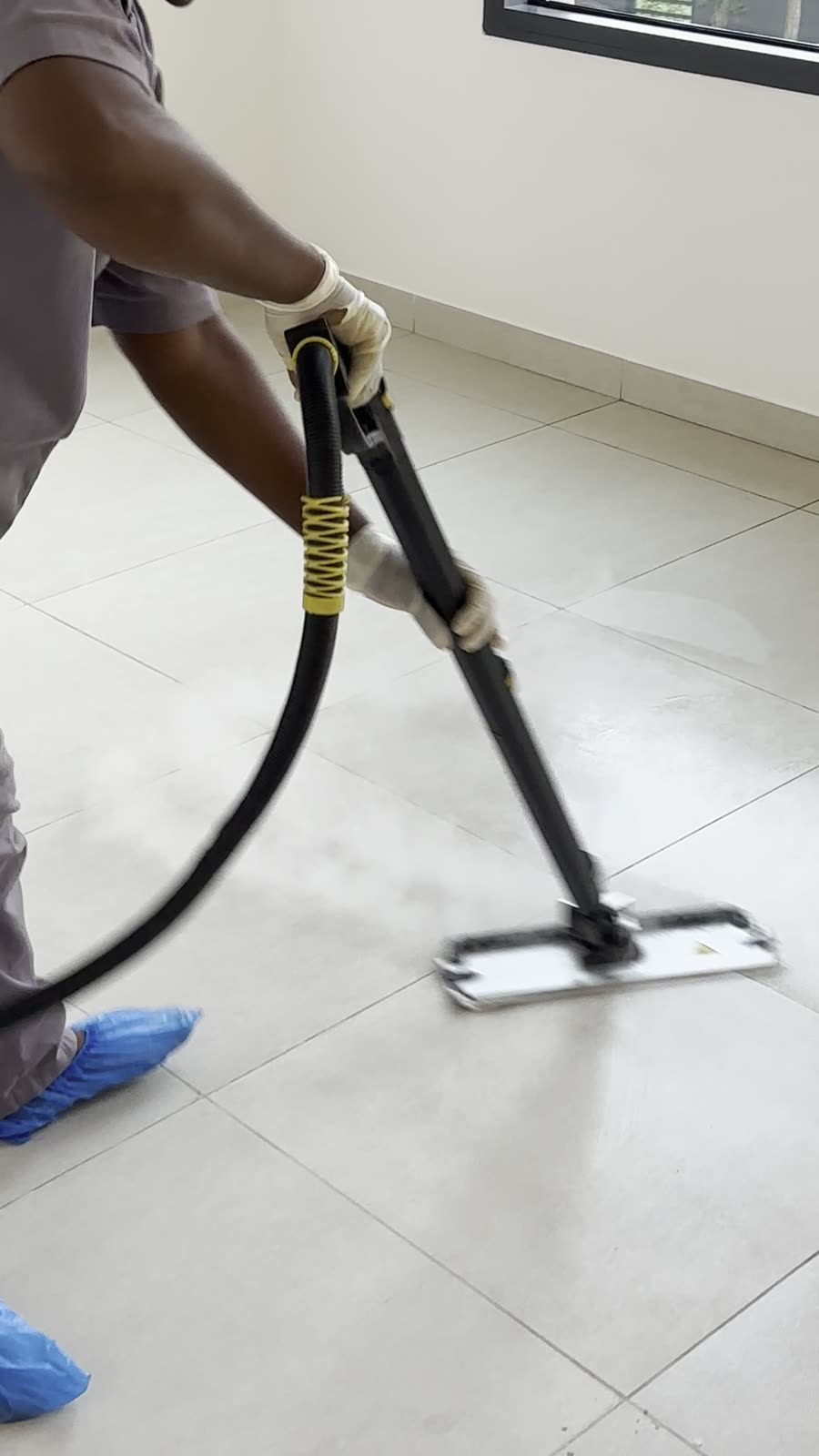
A good scope lists, per area: the number of workstations, meeting rooms, pantries and washrooms; the floor types, such as carpet tiles, vinyl, stone or timber; the number of upholstered chairs, sofas and acoustic panels; glass partitions and internal windows within safe reach; and the number of AC grilles. Then the details people forget: inside the pantry fridge and microwave or only outside, cupboards inside or only fronts, whether chairs are cleaned by extraction or only vacuumed.
Write down what staff may and may not handle:
- Electronics: outside of screens, keyboards and phones only, nothing unplugged or opened.
- Server and communications rooms: excluded, or cleaned only with your IT person present.
- Personal items on desks: cleaned around, not moved.
- Plants, artwork, display items: cleaned around unless listed.
- Heights: what is reachable from a standard ladder, and what is not, such as atrium glass or high ceilings.
Then the exclusions. Typical ones for an office deep clean: daily cleaning, external facades needing rope access, pest control, repairs and painting, and technical AC repairs. If anything on that list matters to you, it needs its own contract with the right company.
What should the contract say about timing and building rules?
It should name the window and who arranges each permission. Office deep cleaning happens outside working hours, in the evening, overnight or at the weekend, so the building’s rules decide more than the cleaning company does.
Many Dubai buildings ask for some or all of the following before work outside office hours: a permit or NOC from building management, the names and ID copies of everyone coming, a service lift booking, a loading bay or parking slot for the van, and rules on noise and on using the building’s water points. Requirements differ from building to building, and some need several working days’ notice.
Write down who does what. In practice the tenant submits the request to building management, because the tenant has the relationship with the building, and the cleaning company supplies the documents. Add a latest date for each step, and agree what happens if the building refuses or delays: the clean moves to the next possible date at no charge, or whatever you both agree, but agreed in advance.
For scheduling across the year, it helps to know that airborne dust in Dubai peaks in summer: our evaluation of three years of Copernicus data shows a monthly mean of coarse particulate (PM10) of 178.2 µg/m³ in August against 54.3 in January.1 Many offices therefore book one deep clean after the summer and another before the busy months, and fix both dates in the same contract.
How should keys, access cards and alarms be handled?
With a written handover in both directions. Night work means someone outside your company holds the way into your premises for a few hours, and both sides should be able to show who had what, when.
- One named contact on each side, with a phone number that answers during the clean.
- A handover record listing each key and card issued, signed out and signed back in.
- Alarm codes: a temporary code if your system allows it, changed or deleted afterwards.
- Locked rooms stay locked unless the contract lists them; no one borrows a key to “just do” an extra room.
- What happens if a card is lost: who reports it to building security, and who pays for a replacement.
- Leaving the premises: lights, AC settings, windows, doors and alarm, in a checklist the team lead confirms.
What belongs in a confidentiality clause?
A short list of things the team must not do, and one or two things your own staff must do before the clean. Confidentiality in cleaning is mostly about behaviour, not paperwork.
For the cleaning company:
- Documents are not read, moved or sorted. Papers left out are cleaned around.
- Screens, whiteboards, flipcharts and documents are not photographed. Any photo report shows cleaned surfaces, not work material.
- Whiteboards and flipcharts are not wiped unless the contract says so. It sounds minor until a strategy session from the day before is gone.
- Confidential waste bins and shredding consoles are not emptied.
- Nothing is removed from the premises except ordinary rubbish, as agreed.
For your team: clear desks before the clean, lock away sensitive files, and log off screens. If your business handles sensitive client data, such as legal, medical or financial records, a separate non disclosure agreement with the cleaning company is reasonable to ask for.
Who handles the AC, and what should the contract say about it?
Name the parts, the person and the record. An office deep clean that leaves the AC untouched leaves the source of much of the dust in place, and an AC clean booked separately often means a second night, a second permit and a second company.
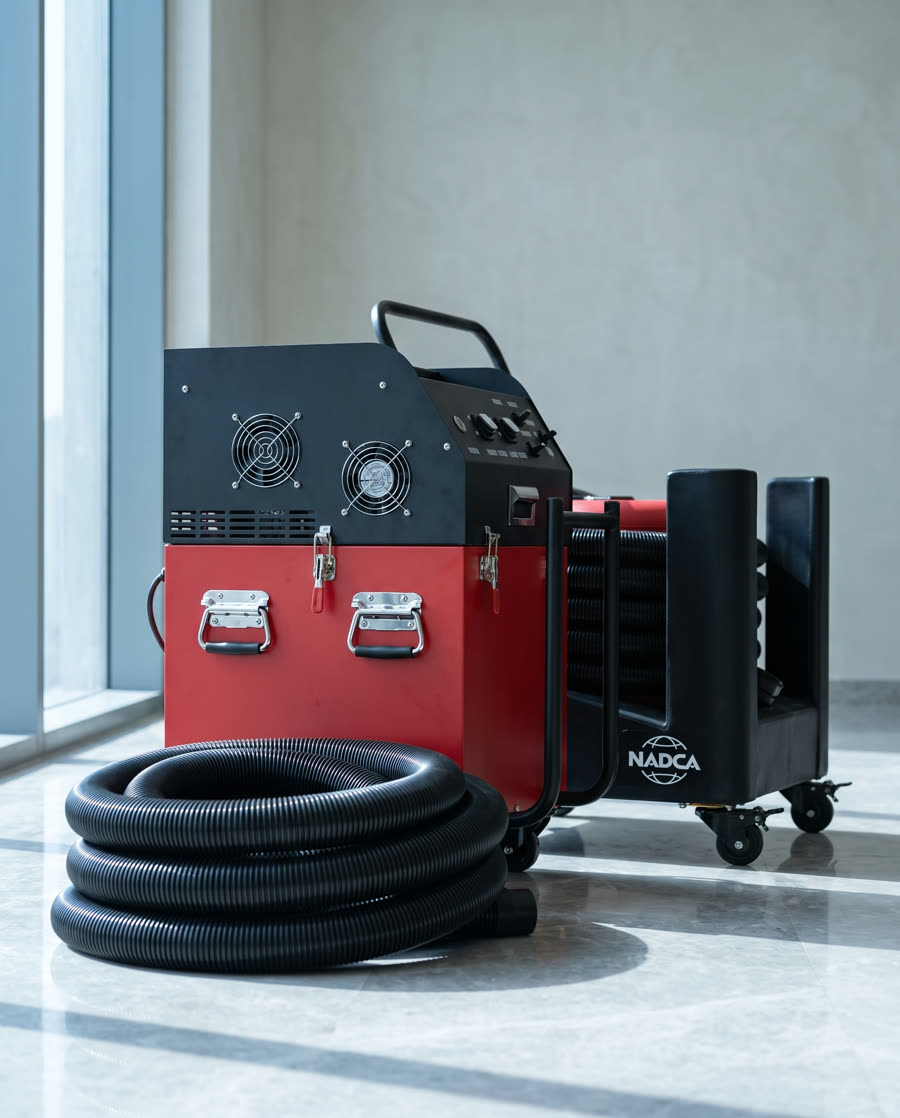
Write down which parts are included: grilles and diffusers removed and washed, filters, ducts cleaned by brush and suction, fan coil units, condensate trays and drains. Ask who does it: the cleaning company’s own technician, or a subcontractor. Our guide on who pays for AC duct cleaning helps you decide which parts belong in your contract at all.
Dubai Municipality’s indoor air guideline, which by its own scope covers office premises, names minimum intervals: condensate trays at least every month and based on condition, coils and condensate pipes at least every six months, and an inspection of the building and its HVAC system at least every three months. It also asks that records be kept of all maintenance work, stating when and what was done.2 The guideline uses “should”, so it is guidance rather than a fine schedule. A useful contract clause follows from it anyway: after the clean, you receive a short written record of what was done to the AC and when.
Who has to arrange it depends on your lease. Dubai Law No. (5) of 2025 obliges the owner of a building to carry out cleaning on a continuous basis, to measure indoor air quality, to keep it within acceptable limits and to maintain the building regularly.3 In a multi tenant building, the central system is usually the landlord’s or the facility manager’s; units serving only your office may be yours. Check before you book. And keep repairs apart from cleaning: if a fault turns up, the repair or gas refill is a separate job, agreed with you first.
How do you agree acceptance and handle complaints?
Decide in advance how “done” is checked, by whom and by when. Without that, every opinion the next morning counts as a complaint.
Before the clean, record what is already there: permanent stains on carpet tiles, worn chair fabric, scratches on desks, dark lines along carpet edges at doorways. A few photos on the walkthrough save an argument later. Our guide to dark lines along carpet edges explains why some marks in office carpet do not come out completely.
After the clean, agree one of two routes: a walkthrough with your office manager at the end of the night or first thing in the morning, or a photo report on WhatsApp if nobody is on site. Then write down:
- The reporting window, for example the next working day, and the channel, such as WhatsApp with photos.
- What happens next: the missed area is re-cleaned by the same team, at an agreed time, without charge.
- What does not count as a defect: anything recorded before the clean, items excluded from the scope, and stains that were declared permanent on the day.
What about damage and liability?
Agree how damage is reported, and ask about insurance in writing. You do not need to read the policy. You need to know that it exists and how a claim works.
- Damage noticed by the team is reported the same night, with photos, not left for you to find.
- You declare fragile, valuable or specially treated items before the clean, such as a leather boardroom sofa or a stone reception counter.
- The company confirms in writing whether it holds liability insurance and how you would make a claim.
If your lease, your landlord or your own insurer has requirements for contractors working on the premises, put those into the contract as well.
How should price, changes and cancellations be agreed?
As one fixed price for the written scope, with a simple rule for anything that changes it. Office cleaning is quoted per job rather than by the hour once the scope is clear: floor area and layout, washrooms and pantries, floor types, upholstered chairs, AC grilles and the time window all move the number.
Write down three things beyond the price. What happens if the scope changes on the night, for example an extra floor or a room that was locked: the team asks first, and nothing extra is done or charged without your agreement. How rescheduling works if the building withdraws access. And, for regular cleans, the dates for the year and how much notice either side gives to move one.
If you want a starting point, the twelve checks before booking a cleaning company cover the questions to ask before you get to a contract. Our office cleaning in Dubai is office deep cleaning outside working hours, with the AC grilles and ducts handled by our own technician through our AC cleaning service on the same visit. We agree one fixed price on WhatsApp before we start, with no extra charges on the day.