
The sofa looks clean, the carpet smells fresh, and the team is packing up. Then comes the question everyone asks at the door: when can we sit on it again? Search online and you find very different answers, often for the same method. Few of them mention that a carpet cleaned in Dubai in August dries in a completely different room climate from one cleaned in January. This guide explains what really decides drying time, what the one official benchmark says, and what our own analysis of ten years of humidity data for Dubai and Sharjah means for your sofa and your rugs.
Why can no cleaner give you one honest drying time?
Because the time is decided by four things, and only one of them is the cleaner’s method. The IICRC upholstery cleaning standard, the industry reference for this work, names them: the fibre, the fabric construction, the amount of moisture that went in, and the temperature and humidity of the room1. A company that quotes the same number of hours for every sofa in every month is quoting a template, not your sofa.
What each factor does in practice:
| Factor | Dries faster | Dries slower |
|---|---|---|
| Fibre | Polyester, polypropylene and other synthetics | Wool, cotton, viscose and other fibres that take up water |
| Construction | Thin, tightly woven fabric, low pile | Thick pile, dense backing, deep foam or fibre filling |
| Water used | Dry soil removal first, low moisture rinsing | Shampoo plus heavy rinsing, or a sofa soaked through |
| Room | Dry air moving across the surface | Humid, still air, windows open on a humid day |
The fibre column is not a detail. The Woolmark Company, the wool industry’s own body, states that wool “can absorb up to 35% of its weight before feeling wet”7. That is a strength in clothing, and it is one reason a wool rug that feels dry on top can still hold water deep in the pile. Synthetic fibres take up very little water themselves, so most of what remains sits between the fibres, where moving air reaches it faster.
Is there an official benchmark for how fast a carpet should dry?
Yes, and it comes from Dubai itself. Dubai Municipality’s indoor air guideline advises to “thoroughly clean and dry liquid spills on porous surfaces such as carpet within 24 hours or discard the material”2. The same guideline advises discarding carpet or similar porous material that has a persistent musty odour2.
The US EPA says much the same about water in the home in general: “If wet or damp materials or areas are dried 24-48 hours after a leak or spill happens, in most cases mold will not grow”3. Neither rule was written for professional cleaning: the Dubai rule is about spills, the EPA statement about leaks and spills, and the EPA says “in most cases”, not always. We apply 24 hours as our own target after a wet clean, in Sharjah as well, because we found no comparable published guideline there.
What the benchmark is not: a promise that every carpet will be dry in 24 hours whatever happens. A wool rug in a closed room with the AC switched off in September can miss it. That is why the method and the room set up after the clean matter as much as the clean itself.
What happens if a sofa or carpet stays damp too long?
The fabric is not the only thing at risk. The IICRC standard names four problems that slow drying causes in upholstery: browning of cellulose fibres such as cotton and viscose, dye migration, shrinkage and wicking1. The same standard asks for a magnet test on buttons, because buttons with an iron backing can rust through the fabric while a cushion dries slowly1.
Wicking is the one people notice without knowing the word. Water that went deep into the filling or the backing can travel back to the surface as it dries and carry dissolved soil with it. Days later a brown ring or a shadow appears where the fabric looked perfect on the day. Often it is not a new stain but the old one coming back up.
A smell is the other signal. A musty smell that stays after a rug is dry can point to a moisture problem and should be looked into. For a persistent musty odour, the Dubai Municipality guideline advises discarding the porous material2. Our guide on a musty smell in the apartment covers the other places that smell can come from.
Does Dubai’s humidity really change drying time?
Yes, but not in the way most people think. The usual humidity figure in a weather app is relative humidity, and in Dubai it is higher in winter than in summer. In our analysis of ten years of hourly ERA5 data, the average outdoor relative humidity in central Dubai was 66 percent in January and 54 percent in July4. Read naively, that suggests summer is the better month for drying. It is the other way round once the air is inside your home.
The figure that matters is the dew point. The US National Weather Service defines it as “the temperature to which air must be cooled in order to reach saturation”, and adds that “a higher dew point indicates more moisture present in the air”5. If the outdoor dew point is 24 °C and your living room is 24 °C, outdoor air that comes in through an open window is saturated the moment it reaches room temperature. It cannot take any more water out of your carpet.
In central Dubai the outdoor dew point was at or above 24 °C in 54 percent of all hours in July and in 53 percent in September, never between December and March, and in only a handful of April hours4. We then calculated, for every hour, the relative humidity that outdoor air would have if it were brought to 24 °C without adding or removing water, using the standard formula for saturation vapour pressure from the World Meteorological Organization6. The threshold of 60 percent is the one Dubai Municipality and the EPA both use as the upper limit for indoor humidity23.
| Month | Dew point at or above 24 °C, Dubai | Dew point at or above 24 °C, Sharjah | Outdoor air above 60 % RH if brought to 24 °C, Dubai | Same, Sharjah |
|---|---|---|---|---|
| January | 0 % | 0 % | 15 % | 16 % |
| February | 0 % | 0 % | 25 % | 26 % |
| March | 0 % | 0 % | 43 % | 43 % |
| April | 0 % | 0 % | 56 % | 57 % |
| May | 7 % | 6 % | 79 % | 81 % |
| June | 40 % | 39 % | 91 % | 92 % |
| July | 54 % | 54 % | 96 % | 97 % |
| August | 52 % | 53 % | 91 % | 92 % |
| September | 53 % | 54 % | 89 % | 90 % |
| October | 24 % | 25 % | 87 % | 88 % |
| November | 1 % | 0 % | 64 % | 65 % |
| December | 0 % | 0 % | 34 % | 34 % |
Share of hours, rounded to whole percent, ERA5 reanalysis via Open-Meteo, 2015 to 2024, grid points nearest central Dubai and central Sharjah, own analysis4. Model values, not readings from a station next to your building. The last two columns are a calculation: in a real room, air also mixes with indoor air and the AC may remove water.
Two things stand out. From May to November, outdoor air brought to 24 °C would be above 60 percent relative humidity in most hours, and from June to October in close to nine out of ten. And Sharjah and Dubai behave almost identically, which is no surprise for two cities on the same stretch of coast.
What does that mean for drying a carpet in Sharjah?
The same as in Dubai: in the humid months, the AC usually does more for drying than the window. A carpet cleaned in Sharjah in July or September sits in outdoor air that is at least as humid as Dubai’s, so a balcony door left open “to air the room” in those months often adds moisture that the AC then has to remove4. Airing only dries a room when the outdoor dew point is lower than the indoor one. Keep doors and windows shut and let the AC run.
The building matters as well. Many apartments in Sharjah and Dubai are cooled by a central chiller system with a fan coil unit in each flat, and some villas use split units. A working unit can remove moisture from the air as condensate while it cools; how much depends on the system and how it runs. A unit that is switched off during the day while you are out does nothing for a damp rug. If your flat feels humid even with the AC on, that is a separate problem, and our guide on a humid apartment with the AC on explains the usual causes.
For rugs, how we choose the method in Sharjah, wool, viscose and silk included, is on our carpet cleaning in Sharjah page. The short version: the more delicate and absorbent the fibre, the less water we use, and some rugs belong in a specialist workshop rather than on a living room floor.
How do we keep drying time short?
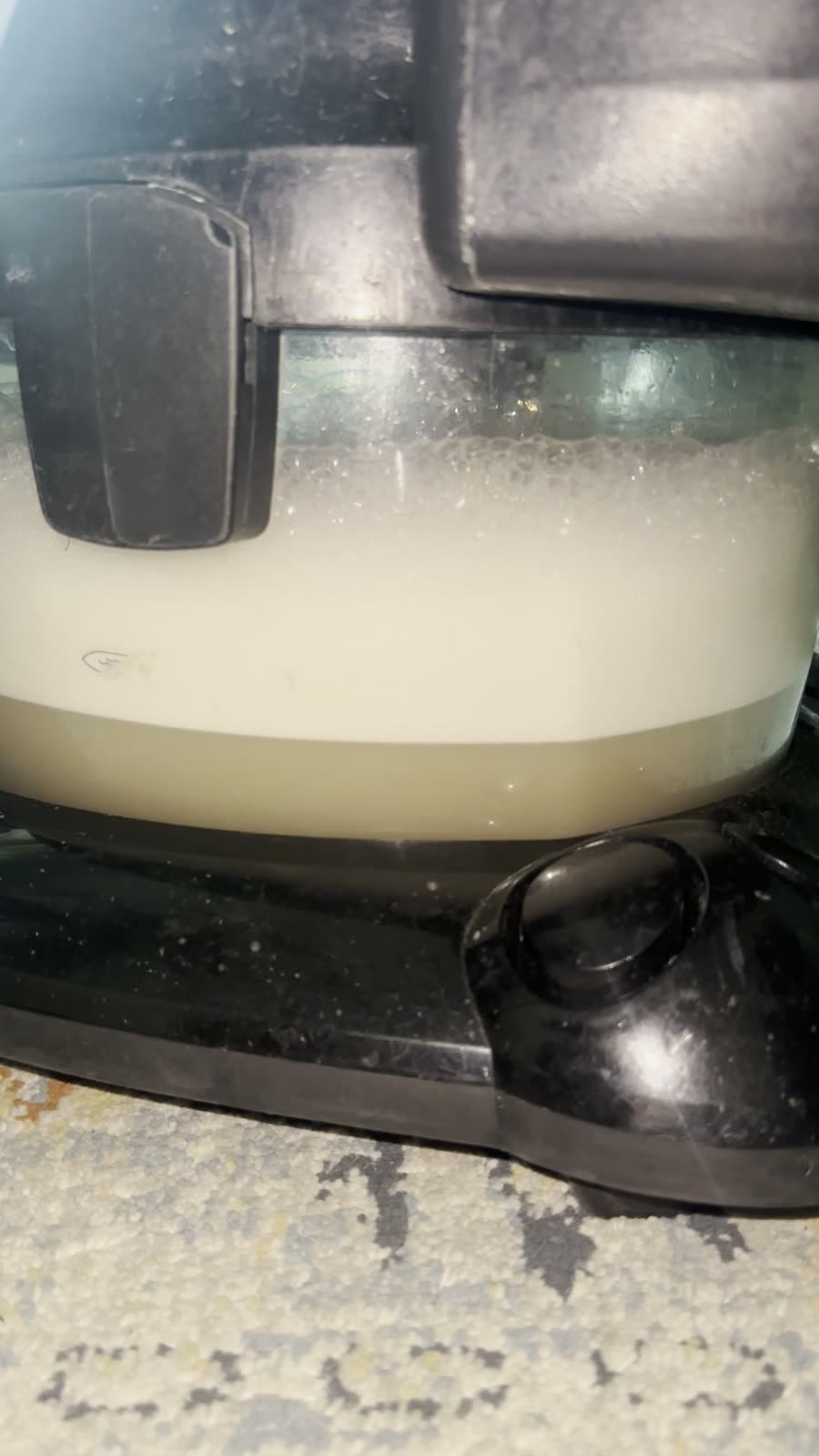
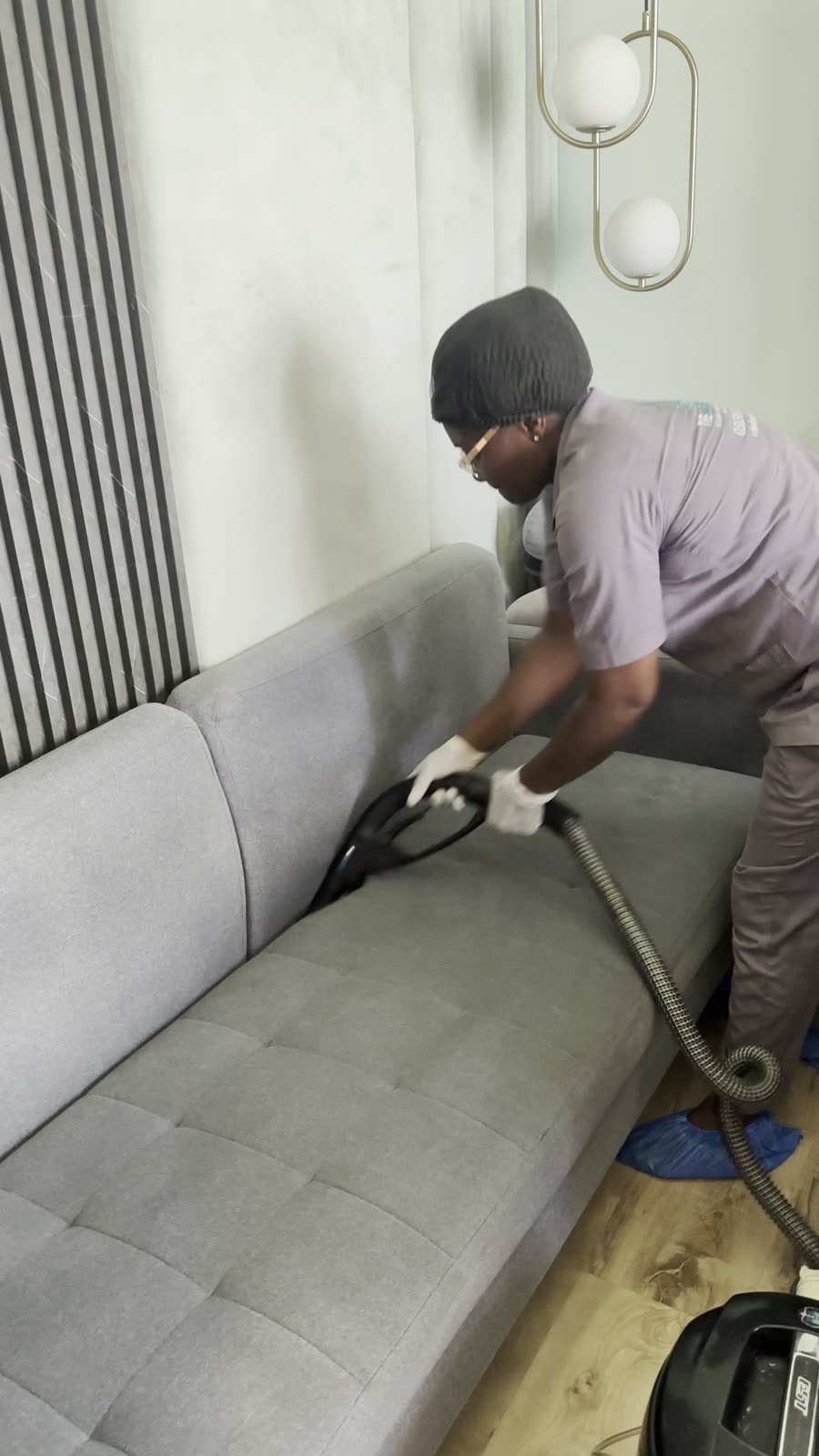
By putting less water in, not by drying faster afterwards. This is the sequence our carpet cleaning in Dubai follows, and our sofa cleaning follows the same order, HYLA vacuuming first, then as little moisture as the fabric needs:
- Fibre and label first. We check what the carpet or sofa is made of, and test colour fastness in a hidden spot. Viscose and some cotton fabrics get low moisture methods only. For what the cleaning codes on a sofa label really mean, see our guide to sofa cleaning codes.
- Dry soil out before any water goes in. We vacuum slowly with the HYLA water filtration system. Dry grit that is still in the pile when water arrives turns to mud and needs more rinsing.
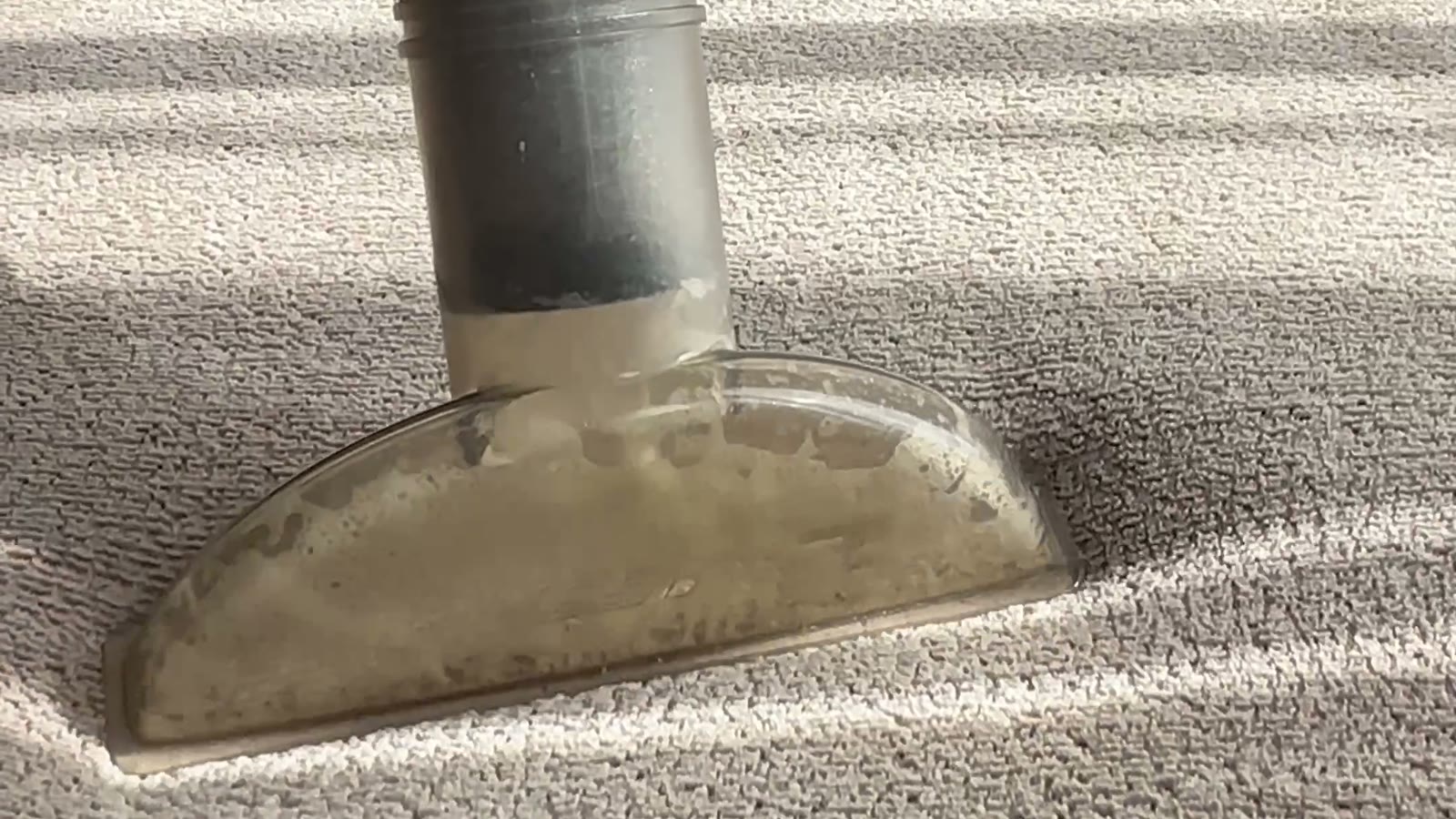
- As little water as the job allows. Low moisture rinsing where it is enough, extraction where the fibre can take it, never shampoo worked into the pile.
- Pile groomed, airflow set up. We comb the pile so it dries evenly, lift rug edges where needed, set the AC and the airflow before we leave, and tell you on the day what to stay off and for how long.
What we do not do is quote a fixed number of hours before we have seen the piece. On a sofa cleaning in Dubai job, a synthetic three seater and a cotton covered majlis can need very different times, even in the same room.
What should you do after a sofa or carpet clean?
Most of drying time is in your hands once the team has left. A short checklist:
| Do | Why |
|---|---|
| Keep the AC running in that room, doors and windows shut from May to November | The AC can take moisture out of the room air; humid outdoor air usually adds it |
| Leave cushions and rug edges where they were placed | They were set up so air reaches the wet parts |
| Stay off with shoes; walk on a carpet in clean socks only if you must | Damp pile picks up soil and flattens more easily |
| Keep pets and children off until it is dry | Less pressure on damp fibres, fewer new marks |
| Do not cover the sofa with throws or plastic | Covers trap moisture and slow drying |
| Do not put furniture back on a damp carpet | Wood can stain the pile, metal feet can leave rust marks |
| Check the next day by hand: seat, back, arms, rug centre | Still damp after 24 hours misses our target: tell us |
| Send a photo on WhatsApp if a ring or shadow appears | Wicking can show up days later and can be treated |
From December to February the picture changes. Outdoor air in Dubai and Sharjah, brought to 24 °C, stays below 60 percent relative humidity in most hours of those months4, so opening windows for an hour or two often helps, as long as there is no dust in the air and it does not feel more humid outside than inside. The rest of the list stays the same.
When is drying not your problem any more?
When the damp comes back by itself. A carpet that dried well after cleaning and is damp again weeks later, a sofa against a wall that always feels cool and clammy, or a musty smell that returns in the same room point to a moisture source, not to the cleaning. Water from a leaking pipe, condensation behind furniture or an AC drain that does not drain belongs to the building. In a rented flat, check your tenancy contract and raise it with your landlord. No cleaning will fix it permanently.
If your sofa or your rugs are simply due for a clean, the best time is when the room can dry them: our recommendation for heavy wool rugs and large majlis sets is the cooler months from December to February, and for everything else any month with the AC running. If you would like us to look at a piece first, send a photo on WhatsApp and we tell you which method fits and what drying to expect.