
The hood filter is sticky to the touch, the oven door has a brown film between the glass panes, and the stainless steel looks worse after you wiped it than before. Most kitchens do not need more effort, they need a better order and the right product on the right surface. This guide is for doing it yourself: the sequence that saves time, the products that quietly damage stone, steel and filters, and the point at which a professional is the better choice.
In which order should you deep clean a kitchen?
Soak first, then top to bottom, dry before wet, floor last. Grease and dirt fall downwards, so every surface you clean too early has to be cleaned twice.
- Clear the room. Empty the worktops, take everything out of the cupboards you plan to clean, switch off the fridge if you are doing it today.
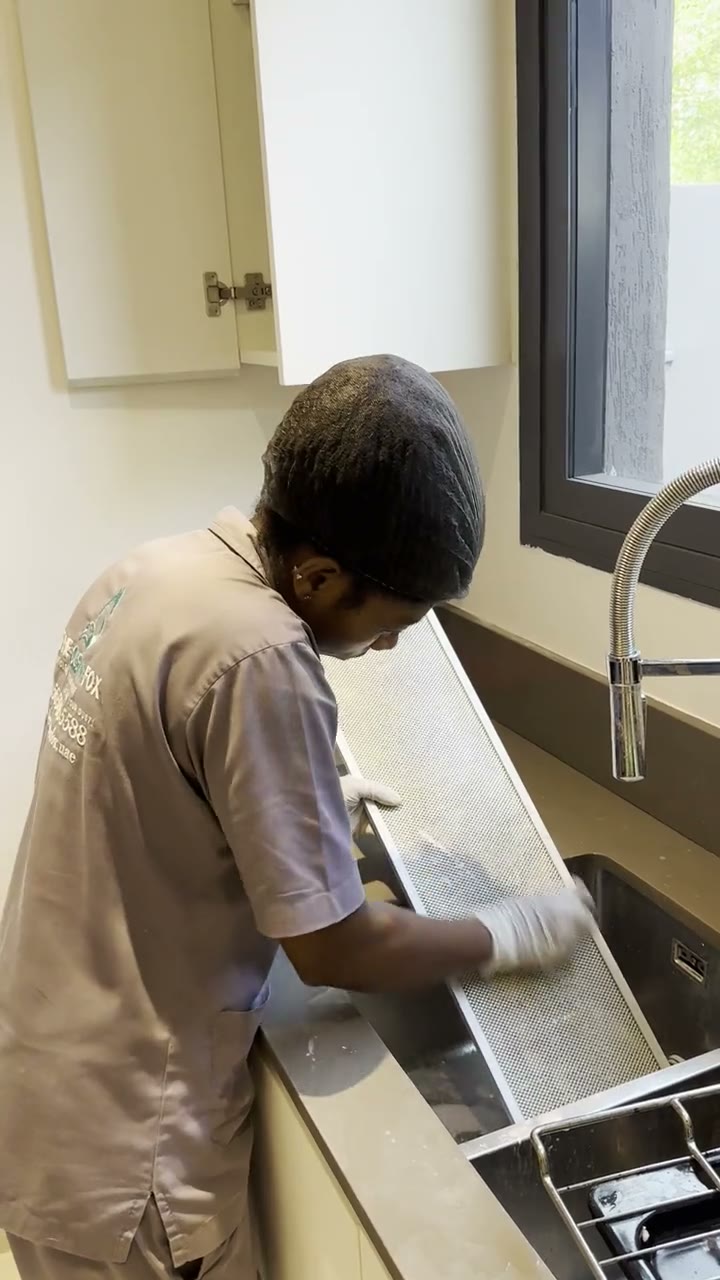
- Start the soaks. Hood filters, oven racks, trays, hob pan supports and burner caps go into hot water with a degreaser or a strong dishwashing liquid. A bath or a large tub works. They loosen while you do everything else.
- Dry dust first. Vacuum or wipe the tops of the wall cupboards, the top of the hood and any shelves before anything wet touches them.
- Hood. Outside, underside, light cover, then the inside rim where the filters sit.
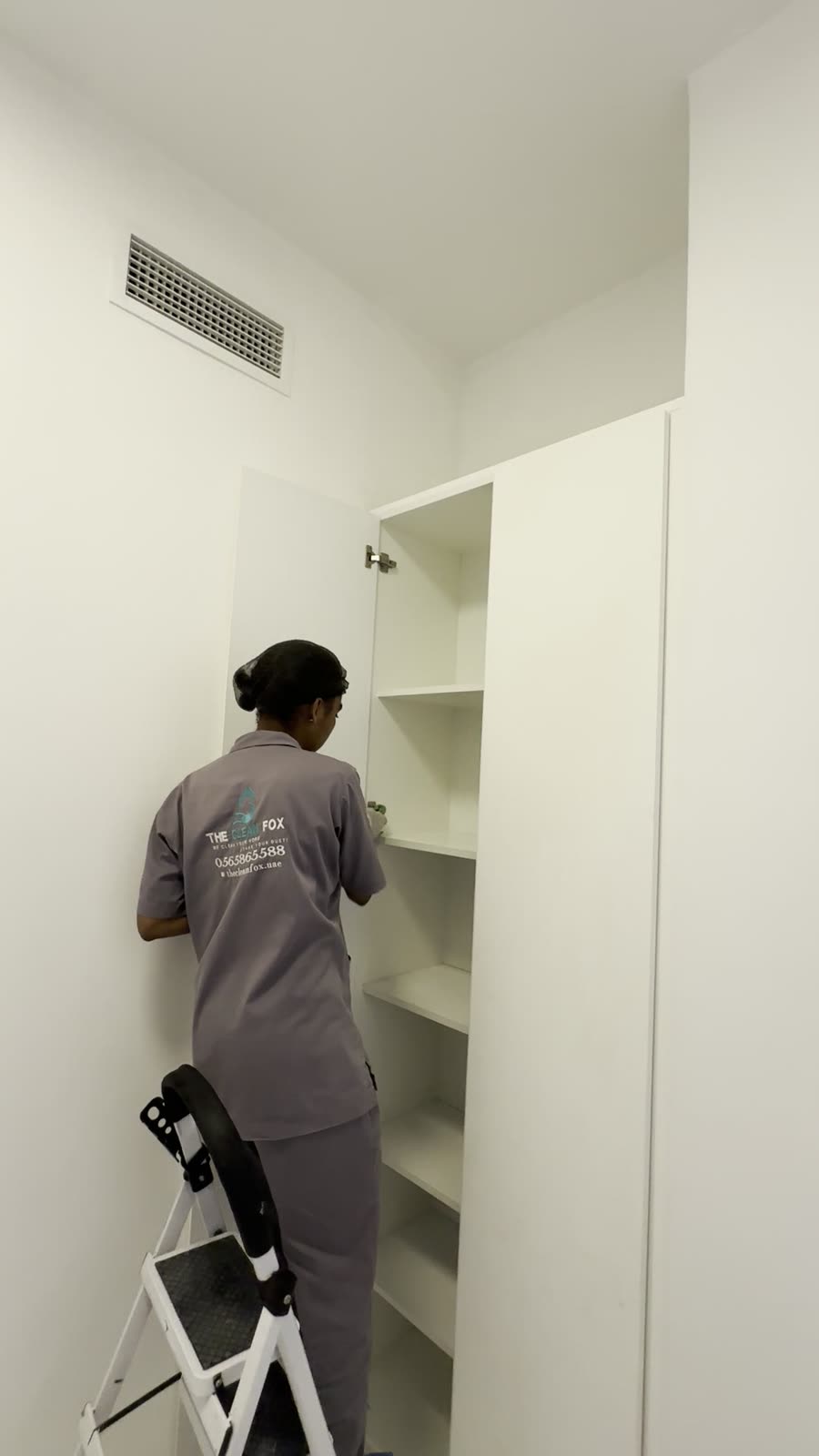
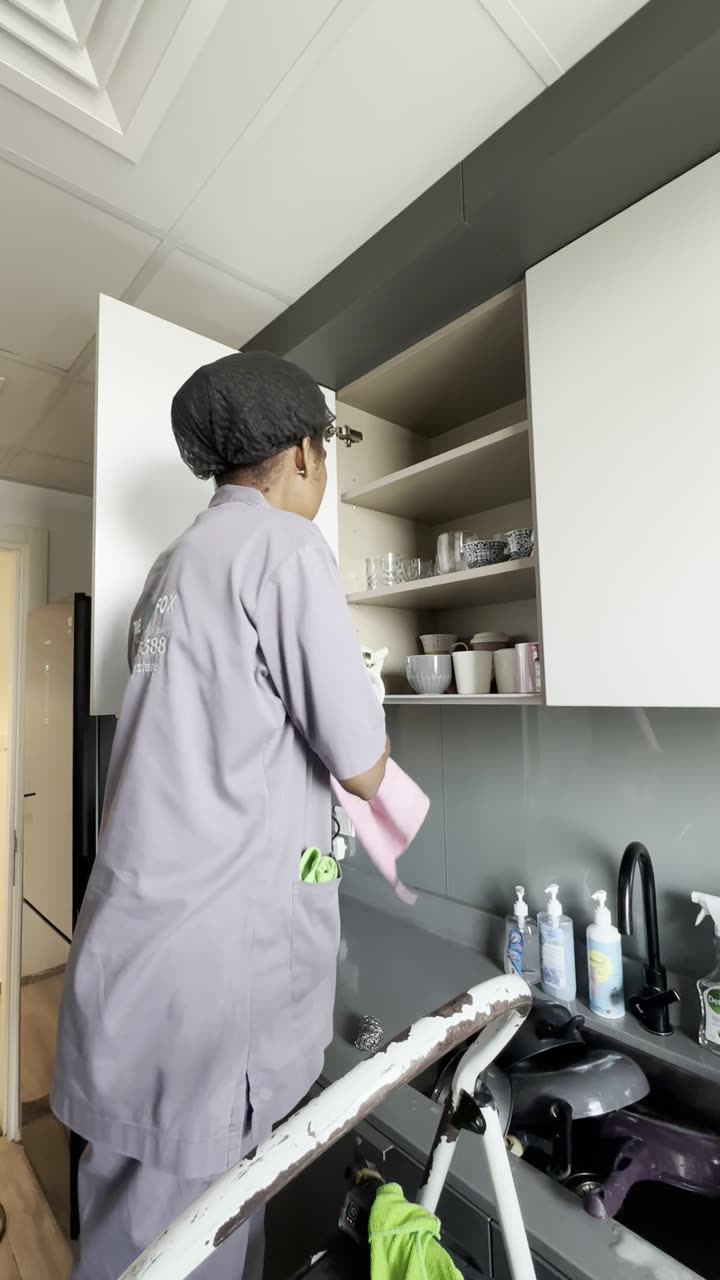
- Wall cupboards, inside then fronts and handles.
- Oven, inside, door, then the storage drawer underneath.
- Hob, then the splashback and worktops.
- Fridge, microwave, dishwasher and any small appliances.
- Sink and tap, descaling where the surface allows it.
- Base cupboards, inside then fronts, including the plinths at floor level.
- Rinse and refit the soaked parts, all completely dry.
- Floor last, edges and corners by hand, then the open area.
The dry step matters more in Dubai than elsewhere. Household dust here is largely mineral. A 2023 study of twenty Dubai homes found calcium at an average of 14,170 mg/kg in indoor dust, with potassium, magnesium, aluminium and iron also present.1 Mixed with kitchen grease, that grit turns into a fine paste. Wiped dry across stainless steel or a gloss cupboard front, it scratches.
Which products damage which kitchen surfaces?
Acids damage natural stone, abrasives damage steel and glass, and strong alkaline cleaners damage aluminium and some coatings. Most kitchen damage comes from one product used everywhere. Check the surface before you check the dirt.
| Surface | Avoid | Use instead |
|---|---|---|
| Marble, limestone, travertine | Vinegar, lemon, descalers, any acid; abrasive pads | pH neutral stone cleaner, soft cloth, dry immediately |
| Granite | Abrasive powders, scouring pads, strong acids | Mild detergent, microfibre; check if it is sealed |
| Quartz and composite worktops | Strong solvents, bleach, scouring pads, very hot pans set down directly | Mild detergent, follow the manufacturer’s care sheet |
| Stainless steel | Steel wool, scouring powder, chlorine bleach, rubbing across the grain | Microfibre with the grain, mild degreaser, a dedicated steel care product to finish |
| Glass ceramic and induction hobs | Green scouring pads, abrasive powders | A hob scraper held flat for burnt spots, then a hob cleaner and soft cloth |
| Enamel oven interior | Metal scrapers on the enamel, sharp blades | Oven cleaner or a paste, time to work, a plastic scraper |
| Catalytic oven liners | Oven cleaner, scrubbing | Wipe only; they are designed to break down grease with heat |
| Aluminium hood filters | Oven cleaner, caustic soda, strong alkaline sprays | Hot water and dishwashing liquid or a mild degreaser |
| High gloss and lacquered cupboard fronts | Abrasives, solvents, magic sponges, dry wiping | Damp microfibre with mild detergent, dry with a soft cloth |
| Painted or matt cupboard fronts | Heavy scrubbing, too much water at the edges | Barely damp cloth, test in a hidden spot first |
| Solid wood worktops | Standing water, strong degreasers | Mild soap, dry immediately, re-oil when it looks dry |
| Rubber door seals | Solvents, sharp tools | Warm water and a little detergent, a soft brush in the folds |
Two habits prevent most problems. Test any new product in a hidden spot first, and never mix products, least of all bleach with acids or ammonia.
How do you clean extractor hood filters and the hood itself?
Soak the filters in hot water with a degreaser, brush gently, rinse and let them dry completely. Then clean the hood from the outside in, without letting water reach the motor or the lights.
Know which filter you have before you start:
- Metal mesh filters are layers of aluminium mesh. They clean well by soaking but darken with harsh alkaline products. Brush along the mesh, not across it, so the layers do not bend.
- Baffle filters are sturdier stainless steel panels with slots, common on larger hoods. They tolerate more, and many manufacturers allow the dishwasher.
- Charcoal filters sit in recirculating hoods that do not vent outside. They hold odours and in most cases cannot be washed. They are replaced, following the interval in the manual.
For the hood body, spray degreaser onto a cloth rather than onto the hood, so nothing runs into the switches or the light housing. The underside and the rim where the filters sit usually carry the thickest film. Stainless steel fronts are finished by wiping with the grain.
Grease in a hood is fuel sitting directly above a heat source, which is the best reason not to let it build up. If the hood does not draw well even with clean filters, or the motor is loud or dead, that is a technical fault, not a cleaning job.
How do you deep clean an oven without damaging it?
Find out what kind of oven it is, take out everything that comes out, and let the product do the work rather than your arm. Most damage to ovens comes from scraping and from the wrong cleaner on the wrong wall.
- Check the type. A plain enamel oven can take an oven cleaner. An oven with catalytic liners, the slightly rough panels on the sides or back, should only be wiped. A pyrolytic oven has a self clean programme; run it according to the manual and wipe out the ash afterwards.
- Take out the racks, side rails and trays. Many side rails unclip. Put them in the soak from the first step.
- Apply, wait, wipe. Oven cleaner or a paste of bicarbonate and water, given time to work, does far more than scrubbing. Keep it off the door seal, the fan cover and the heating elements. Ventilate the kitchen, and wear gloves.
- The door. The brown film between the glass panes is a classic. Many doors let you lift the inner pane out or remove the whole door; the manual shows how. Do not force clips you cannot see.
- The storage drawer underneath. Crumbs and grease collect in the drawer and on the floor under it. On many freestanding cookers the drawer pulls out fully, which also gives you access to the floor below the oven.
- The hob. Glass ceramic and induction: scraper flat, then hob cleaner. Gas: pan supports and burner caps into the soak, burner heads wiped dry, nothing poked into the gas outlets.
When it is done, run the oven empty for a short while with the window open, so any remaining cleaner does not end up flavouring your next meal.
How do you get stainless steel and taps clean without streaks or limescale?
Remove grease first, limescale second, then dry and polish. Streaks on stainless steel are nearly always leftover grease or detergent, and white marks on taps are nearly always dried water.
For stainless steel, wipe with a damp microfibre cloth and a little degreaser, always in the direction of the grain, then rinse with a clean damp cloth and dry. A steel care product applied at the end evens out the look. Scouring pads leave fine scratches that collect dirt faster than before.
For limescale on taps, aerators and the sink, apply a descaler or diluted vinegar, give it a few minutes, rinse thoroughly and dry. Unscrew the aerator at the tap outlet and soak it separately. Keep acids away from natural stone around the tap: a single drop of vinegar can leave a dull mark on marble that no cleaner removes. The cheapest way to keep taps clear in Dubai is to wipe them dry after use.
What about the fridge, dishwasher, microwave and the space behind the appliances?
Each appliance has one part people forget: the fridge drain, the dishwasher filter, the microwave ceiling and the floor behind everything.
| Appliance | The part that gets forgotten | How to deal with it |
|---|---|---|
| Fridge and freezer | The small drain hole at the back of the fridge compartment, the folds of the door seal, the vegetable drawers | Shelves and drawers out and washed, a pipe cleaner through the drain hole, the seal cleaned fold by fold |
| Dishwasher | The filter at the bottom, the spray arms, the door edges | Twist out the filter and rinse it, check the spray arm holes, wipe the edges and seal |
| Microwave | The ceiling and the turntable support | Heat a bowl of water until it steams, leave the door closed for a few minutes, then wipe |
| Washing machine in the kitchen | Detergent drawer and its cavity, the rubber door seal | Pull the drawer out fully and wash it, wipe inside the seal folds |
| Freestanding cooker, fridge, washing machine | The floor and wall behind them | Only pull out what moves freely, on a cloth to protect the floor, and with the cables and hoses slack |
| Built-in appliances | The gaps beside and under them | Leave them in place; vacuum the gaps with a crevice tool |
Before pulling any appliance out, check that the power cable, water hose or gas connection has enough slack. If it does not, leave the appliance where it is.
Where should do-it-yourself stop?
At gas, electrics, the hood motor and anything you have to dismantle to reach. A kitchen deep clean is cleaning, and some of the jobs that look like cleaning are really technical work.
Leave these to the right people:
- Gas connections and burners beyond the removable parts. A gas smell or a burner that does not light properly is a job for a gas technician or your building, not for a stronger cleaner.
- The hood motor, wiring and ductwork. Dubai’s public health law lists, among an Owner’s duties, providing appropriate means to vent gaseous emissions, vapours and heat from activities in a building.2 In a rented home, a faulty extractor is usually a matter for the landlord or the building rather than for you. Check your contract.
- Removing built-in appliances. Built-in ovens, fridges and dishwashers are fixed and connected. Taking them out is installation work.
- Commercial kitchen exhaust and grease ducts. Restaurant hoods and grease ducts are a different scale of job, planned around the kitchen’s operating hours. We clean them for restaurants and commercial kitchens as a separate job.
A professional kitchen deep clean makes sense when the build-up is years old and has carbonised, when the oven needs to be taken apart, before guests or a handover when time is short, or when you would rather spend the day differently. Steam is particularly useful on hobs, grout, seals and around taps because it loosens grease and limescale with very little water; our guide on what steam cleaning can and cannot do explains where it fits and where it does not.
If you hand it over, our kitchen deep cleaning in Dubai covers the hood, oven, hob, appliances and cupboards inside, and it is also part of every home deep clean. For what else a full deep clean covers, see what a home deep clean includes. We agree one fixed price on WhatsApp before we start, with no extra charges on the day.