
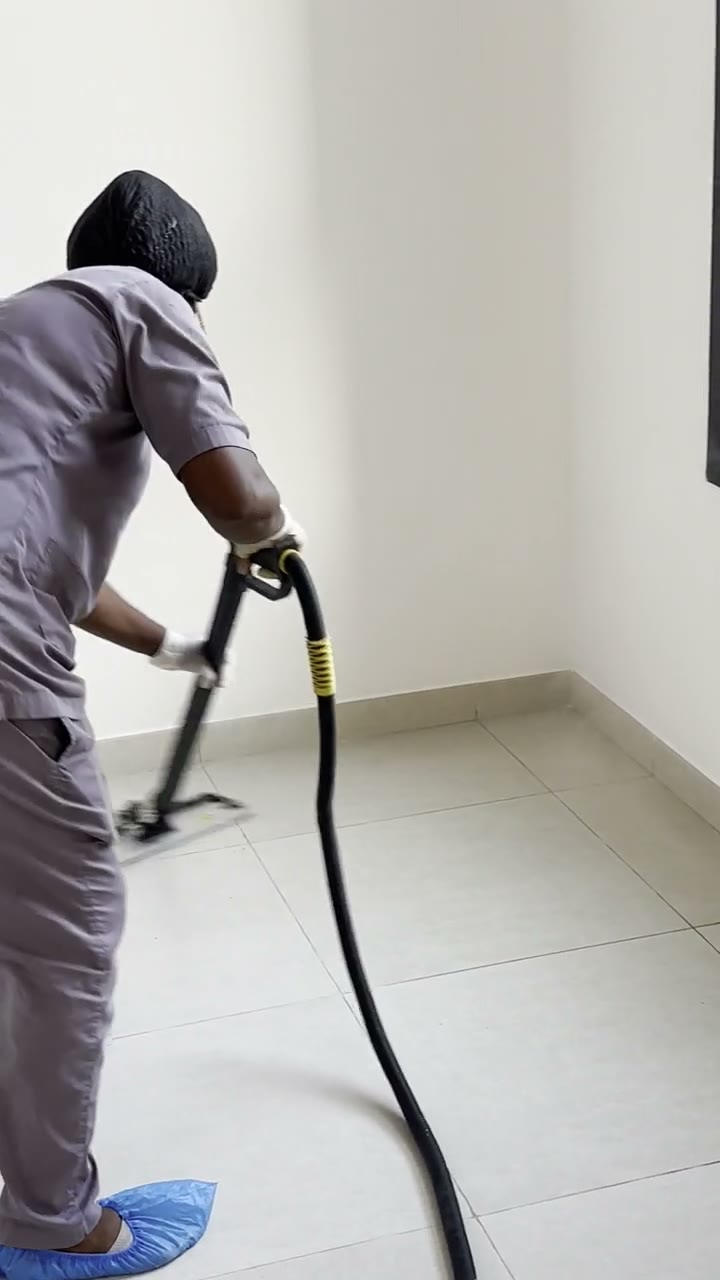
“Steam cleaning” is one of the most used phrases in Dubai cleaning ads, and one of the least precise. It is used for real steam machines, for carpet extraction machines that use no steam at all, and for household steam mops. The result is that people book steam cleaning for surfaces it can damage, and avoid it on surfaces where it is the best tool there is. This guide explains what dry steam at up to 180 °C actually does, where it belongs and where it does not.
What is steam cleaning, and what is it not?
Steam cleaning means a machine heats water in a boiler until it becomes steam and blows it through a nozzle onto a surface. The heat and a small amount of moisture loosen grease, limescale and grime, and a cloth, a pad or a vacuum takes them away. Steam on its own moves dirt. Removing it is a second step.
It is not hot water extraction, the method most often sold as “sofa steam cleaning” or “carpet steam cleaning”. Extraction sprays heated water into the fabric and sucks it back out. The IICRC upholstery standard is explicit that in this method “no live steam is employed in the cleaning method, only pressurized rinse water”1. Both have their place, but they behave very differently, especially in how much water stays behind.
| Dry steam | Hot water extraction | Water filter vacuum | |
|---|---|---|---|
| What it uses | Steam from a boiler | Heated water sprayed and sucked back | Air drawn through a water bath |
| Water left behind | Very little | Considerable, needs drying time | None |
| Best for | Tiles, grout, hobs, taps, glass, tracks, seams, heat tolerant fabrics | Heavily soiled carpets and water tolerant upholstery | Dry dust from floors, carpets, sofas and mattresses |
| Not for | Laminate, unsealed wood, silk, coated fabrics, leather, electronics | WS, S and X coded fabrics, delicate fibres | Wet spills or bound dirt on its own |
On a deep clean we use the three together: vacuum the dry dust first, steam where heat helps, and rinse or extract only where the material allows it.
What does “180 °C” actually mean?
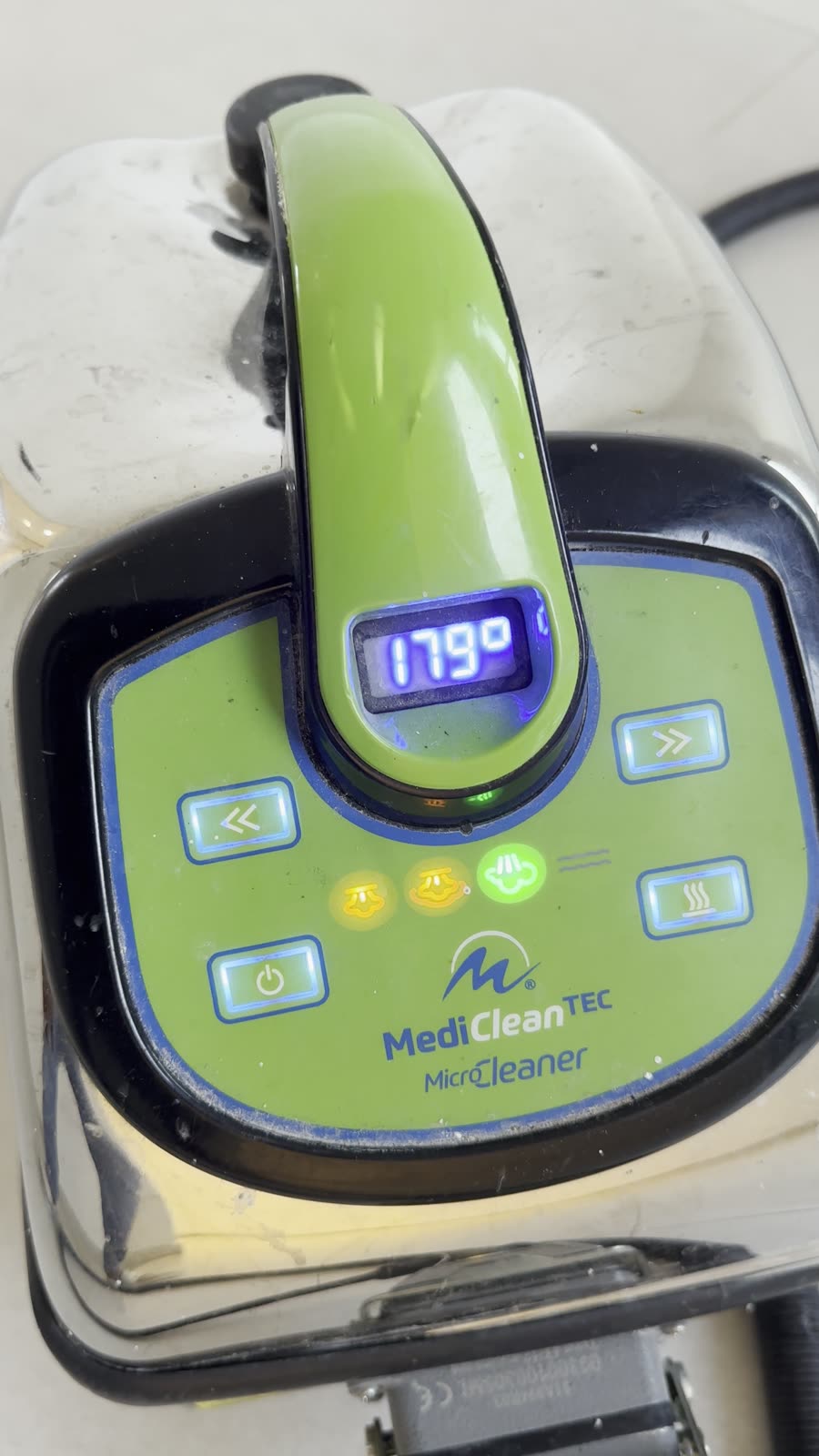
It describes the steam in the machine, not the temperature on your tiles. Our machine shows 179 °C on its display during a job, which is our own reading, and the manufacturer specifies over 180 °C2.
Steam starts to cool the moment it leaves the nozzle and mixes with room air. What reaches the surface depends on the distance, the tool and how fast it moves. We have not measured surface temperatures, so we do not publish one, and we would be careful with any company that quotes a surface figure without saying how it was measured.
What the machine does give you is very dry steam, with almost no liquid water in it. That is why a steamed tile is dry within minutes, while a mopped one is not.
What can steam do well in a home?
Steam is at its best wherever dirt is stuck to a hard, sealed surface or sits in a gap a cloth cannot reach. Heat softens grease and loosens mineral deposits, and the jet gets into corners and joints.
- Kitchen: hob surrounds, the edges of hood filters, oven door seals and hinges, tile joints behind the stove, sink drains and taps.
- Bathrooms: limescale on taps and shower glass, grout lines, the base of the toilet, the corners of the shower tray. Our guide to what a home deep clean includes shows where this fits in the full job.
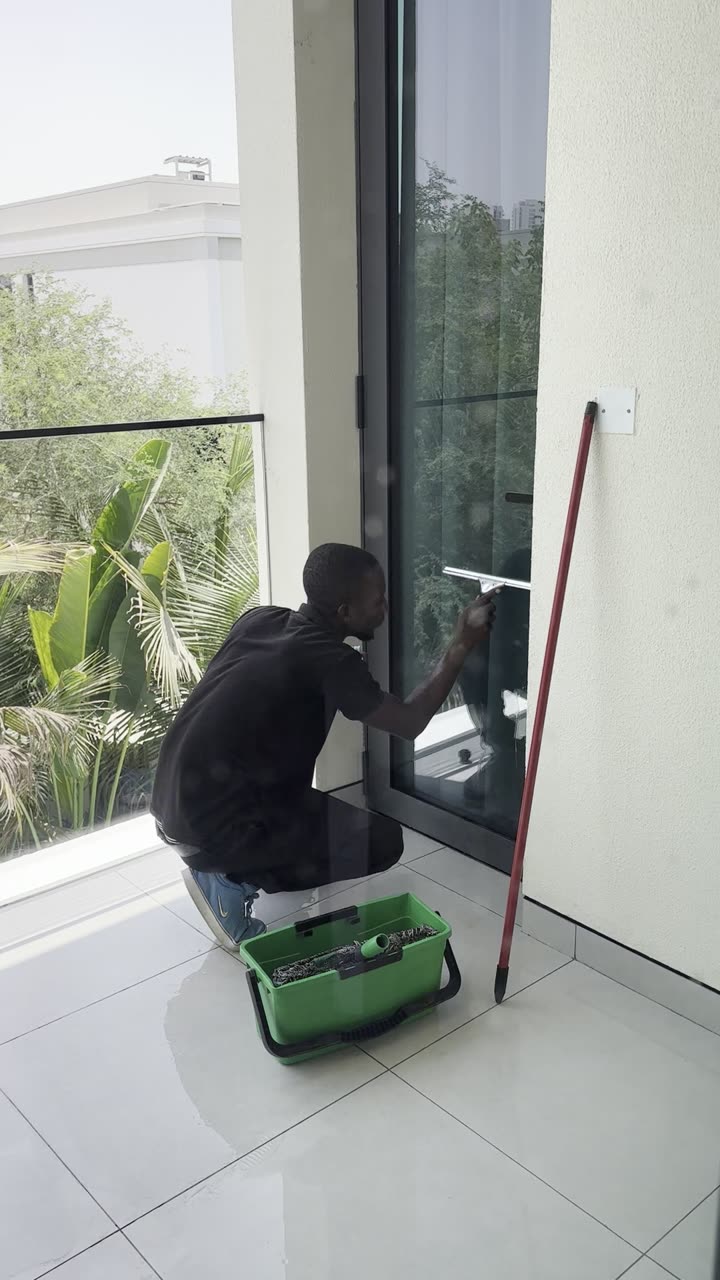
- Windows and doors: sliding door tracks and window channels full of fine sand, which a cloth only pushes around.
- Floors: porcelain and ceramic tiles and their grout.
- Soft furnishings: seams, piping and the surface of heat tolerant upholstery and mattresses, followed by thorough vacuuming.
- Outside: BBQ grates, outdoor tiles and furniture frames.
The common thread is little water and a lot of heat. That makes steam useful on sofa cleaning and mattress cleaning jobs where the fabric tolerates heat, because the material is not soaked.
What can’t steam do?
Steam cannot replace removal. Dirt that has been loosened and left on the surface dries back on, so every steamed area needs a cloth, a pad or a vacuum straight after.
It does not fix permanent damage either. Etched glass, grout that has absorbed colour, burnt marks on a hob, dye transfer on a fabric and sun fading look better clean, but they do not disappear. For heavily soiled carpets with dirt bound deep in the pile, extraction does a job steam cannot.
And we describe what steam does to dirt, not to your health. We do not make claims about what steam does beyond cleaning, and you should be wary of anyone who promises results they cannot measure in your home. If you are interested in dust mites specifically, our guide to dust mites in UAE homes covers what the studies say.
Where should steam never be used?
On anything that heat, moisture or pressure can damage, and that list is longer than the ads suggest.
| Surface | Why not | What instead |
|---|---|---|
| Laminate floors | Moisture and heat get into the joints and the core swells | Vacuum, then a barely damp mop |
| Unsealed, oiled or waxed wood | Heat and moisture lift the finish, raise the grain, leave marks | Dry methods and the product the finish needs |
| Silk, and delicate fabrics such as some viscose velvets | Heat and moisture distort and mark the fibre | Vacuuming and a specialist |
| Coated fabrics and faux leather | Heat can soften, wrinkle or crack the coating | Mild, damp wipe after a test |
| Leather | Leather needs its own care | A gentle, water based, pH balanced leather cleaner3 |
| Sofas coded WS | The industry standard advises against steam for WS4 | Low moisture cleaning after a test |
| Sofas coded X | Nothing wet at all4 | Vacuuming or light brushing only |
| Electronics, sockets, switches, appliance control panels | Moisture gets into electrics | Dry or slightly damp cloth, power off |
| Painted walls and wallpaper | Paint softens, paper lifts | Dry dusting, gentle spot cleaning |
The fabric codes are explained in our guide to sofa cleaning codes W, S, WS and X. When in doubt, a test in a hidden spot comes first, every time.
Why is steam useful in Dubai’s climate?
Because it cleans with very little water in a city where anything soaked dries slowly for half the year. In ten years of hourly data, the outdoor dew point in Dubai was at or above 24 °C in more than half of all hours in July, August and September5. Fabrics, grout and mats that are cleaned with a lot of water stay damp much longer in those months.
Dubai Municipality’s indoor air guideline advises cleaning and drying liquid spills on porous surfaces such as carpet within 24 hours6. Steam fits that logic: the heat does the work, the water stays minimal, and the room is usable again soon after.
How is steam used on a professional deep clean?
As one step in a sequence, never on its own. The order matters more than the machine, because steam on a dusty surface turns dust into paste.
- Look and test. Check what each surface is made of, note existing damage, and test fabrics and finishes in a hidden spot.
- Dry dust out first. Vacuum floors, tracks, grout lines, sofas and mattresses before any moisture goes in.
- Steam section by section. Work a small area at a time, so loosened dirt does not dry back before it is taken off.
- Remove straight away. Microfibre cloth on hard surfaces, vacuum on textiles, a squeegee on glass.
- Rinse only where needed. Some residues, such as old soap film, need a rinse after steaming. Fabrics that tolerate water may get a low moisture rinse.
- Leave the room drying. AC on, doors open between rooms, upholstery uncovered until it is dry.
On many hard surfaces, steam does the loosening a chemical degreaser or descaler would otherwise do, so less product is needed. Where a product is still the right tool, for example on heavy limescale, you can ask which one is used and why.
Should you use a home steam mop or book a professional?
A home steam mop is fine for sealed tiles and occasional use. The difference with a professional machine is a hotter, drier steam and nozzles for joints, tracks and seams, which matter more than the floor itself.
If you use one at home, keep it moving, never point it at sockets or appliance panels, and stay off laminate and wood entirely. Steam burns, so keep children and pets out of the room while it runs. For a full reset, a home deep clean in Dubai combines steam with vacuuming and rinsing, each where it belongs.